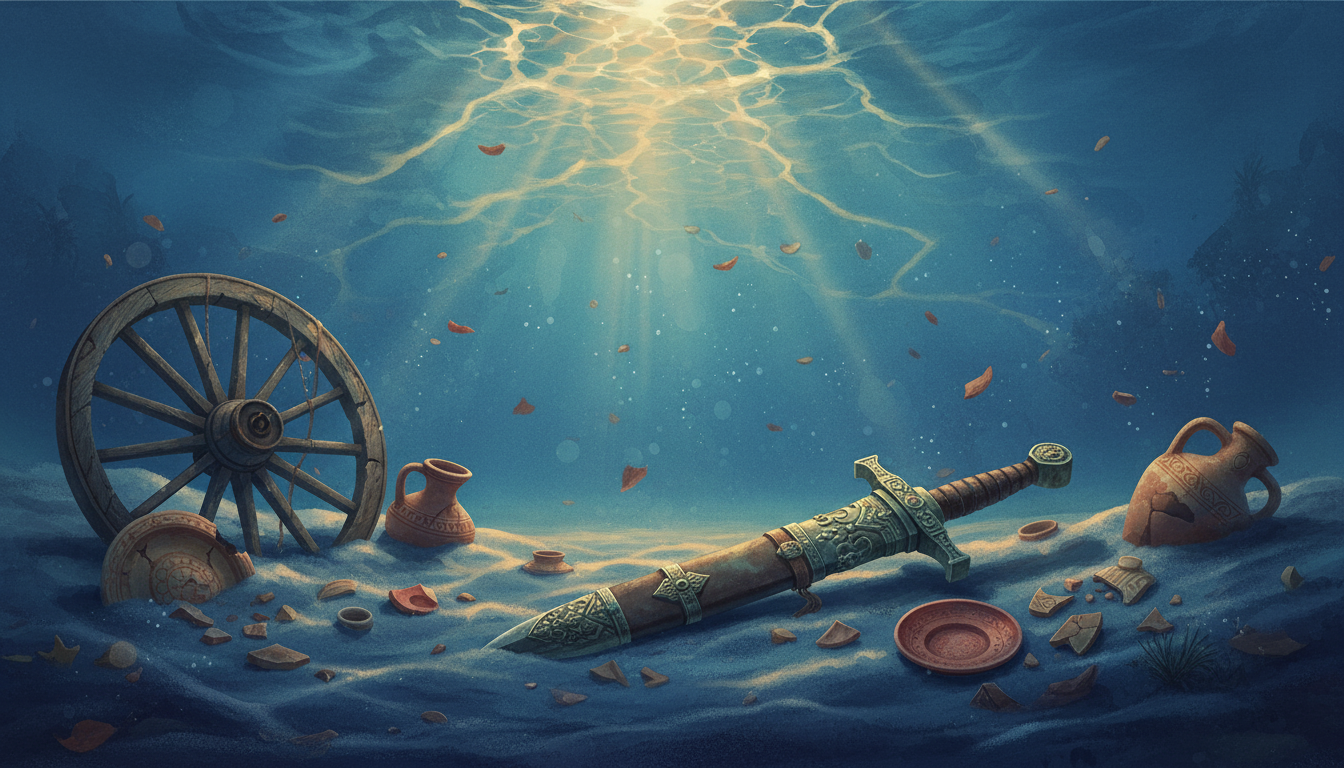
You know, sometimes the most profound insights don’t come from grand philosophical tomes, but from, well, a bunch of old pots and swords. I was just reading about this truly wild discovery out of Lake Neuchâtel in Switzerland – a Roman shipwreck, right there, at the bottom, just chilling for two millennia. They found it in 2024, actually, using drone surveys of all things. Can you even imagine? Suddenly, the lakebed isn’t just mud and water; it’s a time capsule, a silent witness to a moment frozen in time.
What really got me, though, wasn’t just *that* they found it, but *what* they found. It wasn’t some emperor’s treasure, not really. Nope, this was a merchant ship, probably on a supply run to a Roman legionary camp up north. Think about it: 2,000 years ago, someone was loading up this boat with everyday stuff. Dishes, plates, cups – regionally produced, mind you – and even amphorae of olive oil, all the way from Spain! There were metal tools, a pickaxe even, and parts for horse-drawn carts, the kind you’d see rattling down dusty Roman roads, wheels and all. And yes, three swords, one still tucked neatly in its leather scabbard. Oh, and a fibula brooch, which is basically a fancy Roman safety pin, helping them date the whole shebang.
It’s like looking at someone’s ancient shopping list, isn’t it? Mundane items, crucial for daily life, destined for soldiers at a camp called Vindonissa. The boat itself is gone, a mystery, but archaeologists reckon a sudden, fierce gust of wind – those Alpine lakes can be sneaky – might’ve just caught the crew off guard, sending everything tumbling to the depths. A catastrophic loss then, undoubtedly, but now, a magnificent window into their world. They’ve recovered about 1,200 objects, which, frankly, blows my mind.
The 508 Takeaway
This discovery, these ordinary objects from an extraordinary past, really hammered home something simple for me: how much we share across the ages. Those Roman soldiers needed plates to eat from, tools to work with, and perhaps a brooch to fasten their cloaks, just like we need our own everyday essentials. It makes you pause, doesn’t it? To think about the fleeting nature of our own lives, yet the enduring human spirit that connects us. It’s a gentle reminder to find that quiet awe in the everyday, to appreciate the simple things right in front of us – because even a common dish, lost for centuries, can become a profound treasure, a testament to shared humanity and a nudge to live mindfully in our own precious present.
This story was originally reported by Andy Corbley. You can read the full original article here.