You know, sometimes, a single moment in history just *sticks* with you. Not a grand battle or a scientific breakthrough, but something deeply, profoundly human. I was recently reminded of one such instance, and honestly, it just warms my soul, makes me think about what truly matters.
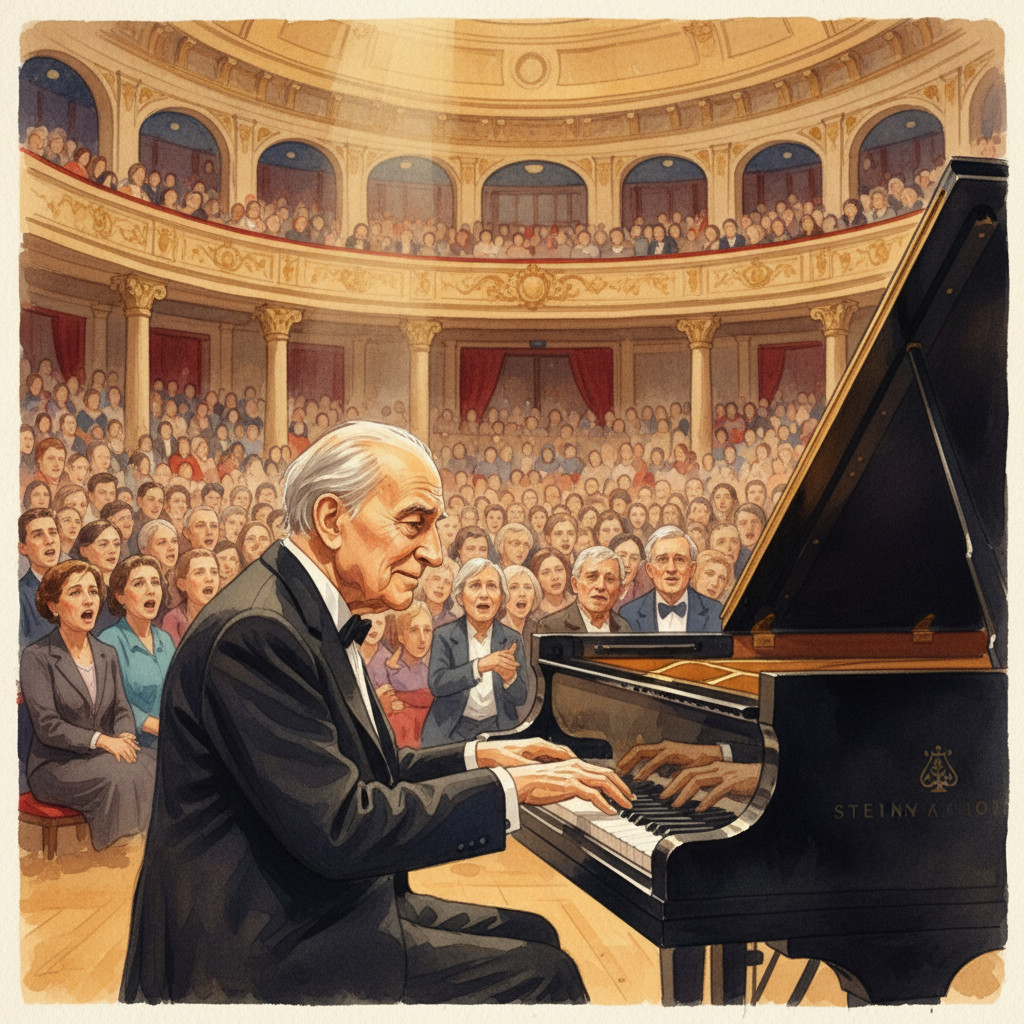
Picture this: It’s April 20, 1986. The world, particularly the two superpowers, was just starting to thaw a little, you know? And into this cautiously optimistic atmosphere steps Vladimir Horowitz, then 82 years young, one of the absolute titans of classical piano. He hadn’t set foot in his Russian homeland for *sixty-one years*.
Sixty-one years! Just try to wrap your head around that. Decades of life lived elsewhere, away from the streets and sounds of his youth in Moscow. And now, he was back, not as a tourist, but to perform. Can you even imagine the weight of that moment? The memories, the anticipation, the sheer, unfathomable emotion swirling through that concert hall?
They say most of the tickets went to the Soviet elite, which, *pah*, meant a bunch of determined Moscow Conservatory students actually crashed the place, bless their hearts. You could hear it, apparently, on the internationally televised broadcast! But the magic, the *real* magic, was Horowitz himself. He sat down at that piano, and what poured out wasn’t just music; it was a lifetime of longing, of artistry, of coming home.
His performance? Utterly astonishing. Riveting. He wasn’t just playing notes; he was pouring his very soul into every key, every crescendo, every delicate phrase. It was almost as if the decades melted away, and he was simply a man, sharing his profound gift with his people, his city. Charles Kuralt even featured it on ‘Sunday Morning,’ which, for those of us who remember, meant it was a *big deal*. The resulting album, ‘Horowitz in Moscow,’ topped the classical charts for over a year. It was a testament to the power of music, yes, but also to the enduring spirit of connection, of belonging.
The 508 Takeaway
This story, for me, really underscores something beautiful about life, about our own journeys. Horowitz, at 82, didn’t just revisit a place; he reconnected with a part of himself, a fundamental piece of his identity. It reminds us that it’s never too late to return to things that truly feed our spirit, whether it’s a forgotten hobby, a lapsed friendship, or simply a deep breath in a moment of quiet reflection. There’s a profound joy in allowing ourselves to be fully present, to share our authentic selves, and to embrace the emotional resonance of our own personal histories. Sometimes, the most powerful acts of kindness are simply showing up, being vulnerable, and offering the world the unique music of *our* own heart, no matter how many years have passed.
This story was originally reported by Good News Network. You can read the full original article here.