I was reading about Florida’s Everglades the other day, specifically a spot called Picayune Strand, and it just got me thinking about how much we can learn when we finally stop trying to control everything. Imagine, if you will, a vast, wild expanse of south Florida, so inherently *wet* and untamed that even ambitious developers, armed with grand plans and bulldozers, couldn’t bend it to their will.
Back in the 1950s, a real estate company, Gulf American, bought this massive chunk of wetland. Their vision? Golden Gate Estates, touted as America’s largest suburban housing development. They carved out huge canals, built crisscrossing roads on raised causeways, all to dry out the land. But here’s the thing: Picayune Strand sits, on average, two feet lower than the surrounding area. That seemingly small difference meant constant flooding; nature simply kept pushing back. The company went bankrupt, leaving a scarred, half-developed landscape.
Fast forward, and this very same area became a star player in the Everglades Restoration Plan. Since ’85, conservationists have been tirelessly buying back all that privately-owned land—talk about tedious legal work! By 2004, it was consolidated, ready for a different kind of engineering: *reverse* engineering. They tore up those old roads, literally chucking the materials back into the canals they’d come from. The goal? To restore the natural “sheet flow,” that unique, slow, steady movement of water across the “river of grass.”
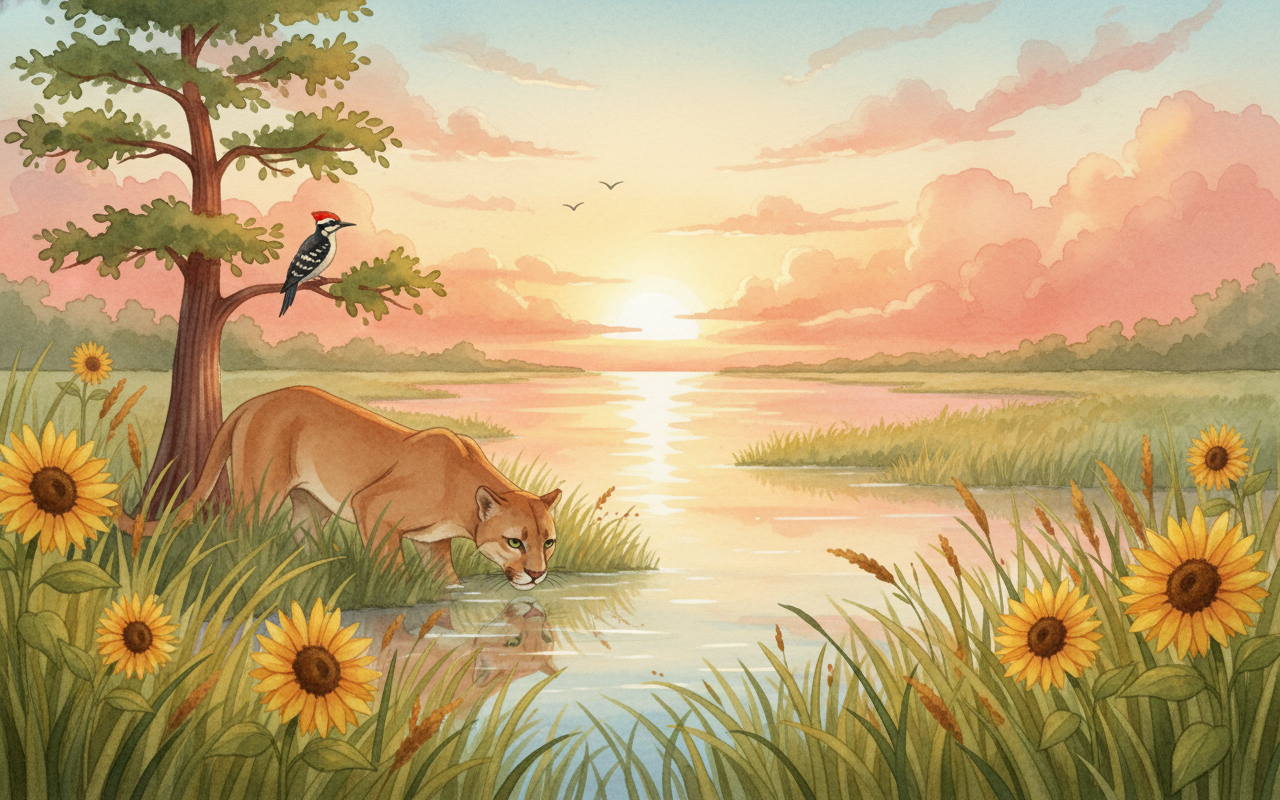
And it’s working, beautifully. Ecologists like Michael Duever say it’s “90 plus-or-minus percent” restored. Think about that resilience! Vegetation is returning, even native wild sunflowers. Endangered species – the magnificent Florida panther, the elusive red-cockaded woodpecker, and the impressive bonneted bat – are all benefiting. This project, this stubborn comeback, truly feels like a microcosm of hope for the entire Everglades.
The 508 Takeaway
This story whispers a profound lesson in humility and patience, doesn’t it? How often do we, in our own lives, try to force situations, to bend things to our will, only to find ourselves fighting a losing battle against the natural current? Picayune Strand reminds us that sometimes, the most powerful act isn’t to conquer, but to *undo* what was done, to step back, and simply allow life to find its own way. There’s a quiet strength, a deep wisdom, in letting nature lead, in trusting the flow. It’s about finding peace not in control, but in connection.
This story was originally reported by Andy Corbley. You can read the full original article here.