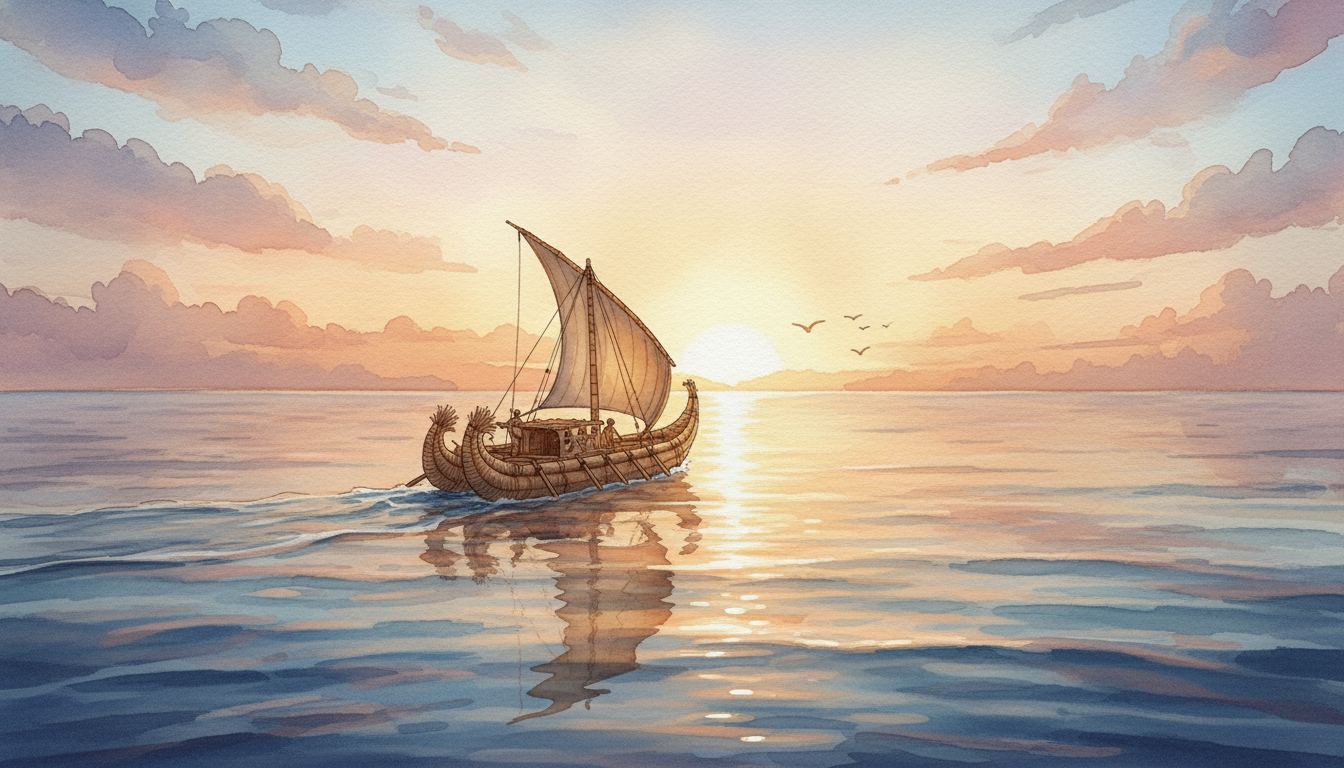
Imagine, if you will, being absolutely convinced of something, a historical theory so audacious it made most academics roll their eyes. Not just a little eye-roll, mind you, but a full-on, “Are you serious, mate?” kind of eye-roll.
That, my friends, was Thor Heyerdahl, a Norwegian ethnologist, back in the late 1960s. He had this wild idea: ancient Egyptians, he reckoned, might’ve actually crossed the Atlantic in papyrus boats. Yep, papyrus. Like, the stuff scrolls are made of! Most folks thought he was, well, a bit crackers. But Heyerdahl, he wasn’t one for just writing papers; he wanted to *prove* it. So, he built a boat, Ra I, based on ancient Egyptian drawings, and set sail from Morocco with a diverse, international crew. Talk about a leap of faith, right?
Now, here’s where it gets interesting, and honestly, a little humbling. After sailing over 4,000 miles, Ra I started to sag. It turns out, they’d missed a crucial detail in the ancient designs: a specific tether that kept the stern high and flexible. Whoops. The water and storms eventually caused it to break apart, and they had to abandon ship, just a hundred miles shy of the Caribbean islands. A real curveball, wouldn’t you say? But Heyerdahl? He wasn’t deterred. Not one bit.
The very next year, 1970, he tried again. This time, he enlisted Bolivian boat builders from Lake Titicaca—masters of papyrus craft, no less—to construct Ra II. They incorporated that missing tether, that little, yet vital, piece of knowledge. And guess what? Ra II, with Heyerdahl and his crew, successfully crossed the Atlantic. Landed it! Proved his theory, sailing all the way to Barbados, vindicating his audacious undertaking.
The 508 Takeaway
What a story, huh? It’s so easy to get discouraged when the first attempt, or even the second, doesn’t quite pan out. Life throws us these little, or sometimes not-so-little, failures. But Heyerdahl’s journey with Ra I and Ra II? It’s such a beautiful, tangible example of what it means to truly *persevere*. It reminds me that sometimes, the “failure” isn’t a dead end; it’s just really good feedback. It’s a chance to learn, adapt, and then, with a renewed understanding, try again. Maybe that’s where the real joy lies—not just in the destination, but in the unwavering belief in your path, even when others scoff, and especially when you stumble. It’s about finding that small, crucial detail, that little tether, that makes all the difference in keeping your own dreams afloat.
This story was originally reported by Good News Network. You can read the full original article here.