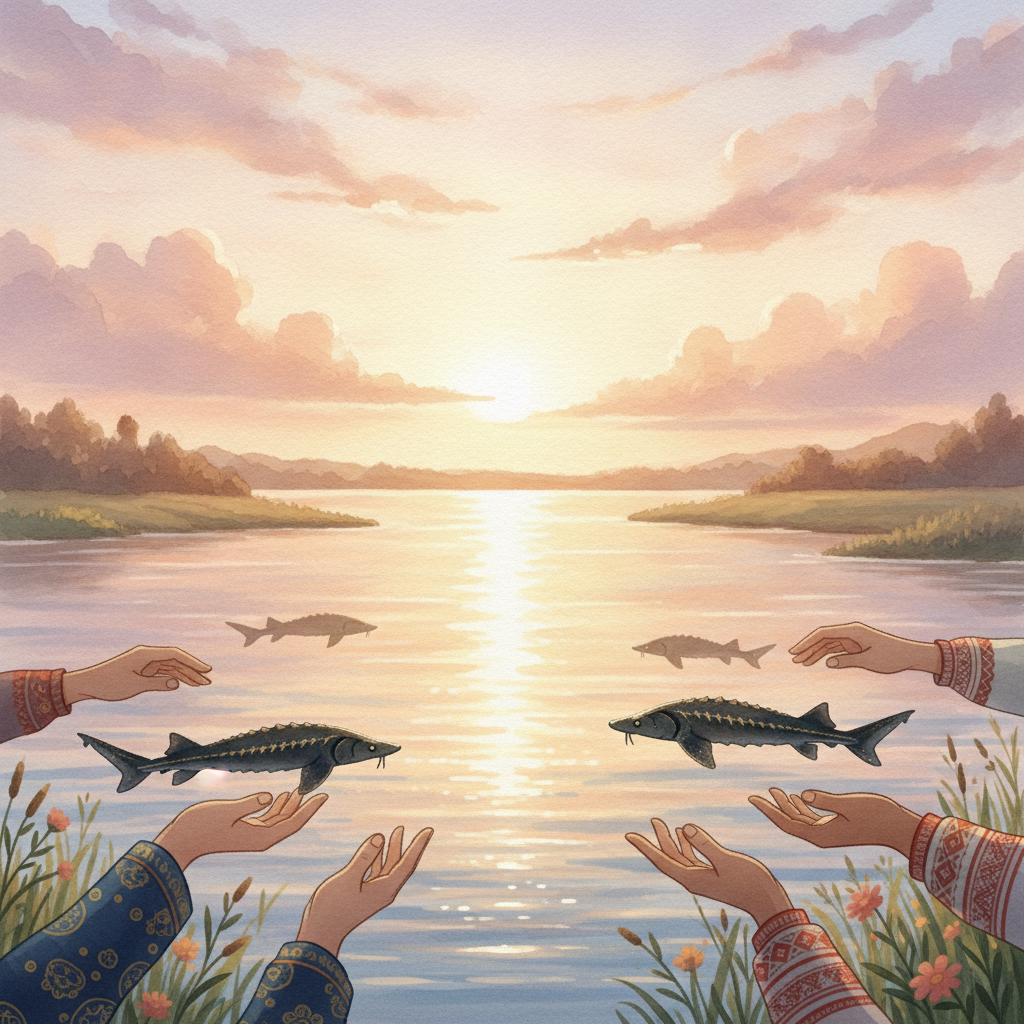
There’s this image stuck in my head, you know? Bags upon bags, maybe half a million tiny, wriggling lives, all being gently poured back into the vast, flowing embrace of the Amur River. Not just any fish, mind you. We’re talking sturgeon. Ancient, magnificent creatures that have graced our planet for millions of years, practically living fossils. And for a long time, their future in that mighty river, shared by China and Russia, looked truly bleak, teetering on the brink.
It wasn’t that long ago, back in 2008, when some folks from the BBC went looking for the Amur’s famed giant sturgeon, the kind that can grow to astonishing sizes. What they found, though, was heartbreaking: none. Zero. Overfishing had, quite frankly, decimated them. The river, which the Chinese call Heilongjiang, or ‘Black Dragon River,’ had lost its dragons.
But here’s where the story takes a hopeful turn, a real testament to what happens when we decide to care. Both China and Russia, seeing the writing on the wall, decided enough was enough. They started these incredible captive breeding programs, a dedicated effort to turn the tide. And just this July, in a truly heartwarming display of cross-border cooperation, they released nearly half a million juvenile Amur sturgeon and kaluga – another magnificent sturgeon species – into the river. Can you imagine the sheer scale? That’s not even counting the 5.2 million other fish fry they added to the mix.
Now, I won’t lie, it’s been a tough road. Past releases, even millions of fry, didn’t always stick. The sheer resilience needed for these efforts, it’s humbling. But there’s fresh, good news! Scientists are now seeing monitored sturgeon living to five years, even eight years old. Eight years! That’s the age when male sturgeon finally contribute to spawning, a real game-changer. Just a few years ago, that simply wasn’t happening.
And it’s not just the biologists feeling this surge of hope. A fisherman named Li Changyou, who’s seen decades pass on that river, put it beautifully. He said these releases make him ‘truly happy,’ not just for the fish, but because it preserves ‘a way of livelihood for fishermen like us and future generations.’ That’s it, isn’t it? It’s about more than fish; it’s about connection, legacy, and a shared future.
The 508 Takeaway
For us, living mindfully on ‘508 Life,’ this story of the Amur sturgeon is such a potent reminder. Sometimes, when things look utterly dire, when a problem feels too big, too entrenched, it’s easy to throw up our hands. But this collaboration, this persistent, quiet work across borders, shows us the power of not giving up. It’s about seeing the value in every single life, even the tiniest fry, and understanding that collective, consistent kindness—whether to our planet, our communities, or ourselves—can, slowly but surely, bring about a healing, a return to balance. What a beautiful, sprawling metaphor for hope, wouldn’t you say?
This story was originally reported by Andy Corbley. You can read the full original article here.