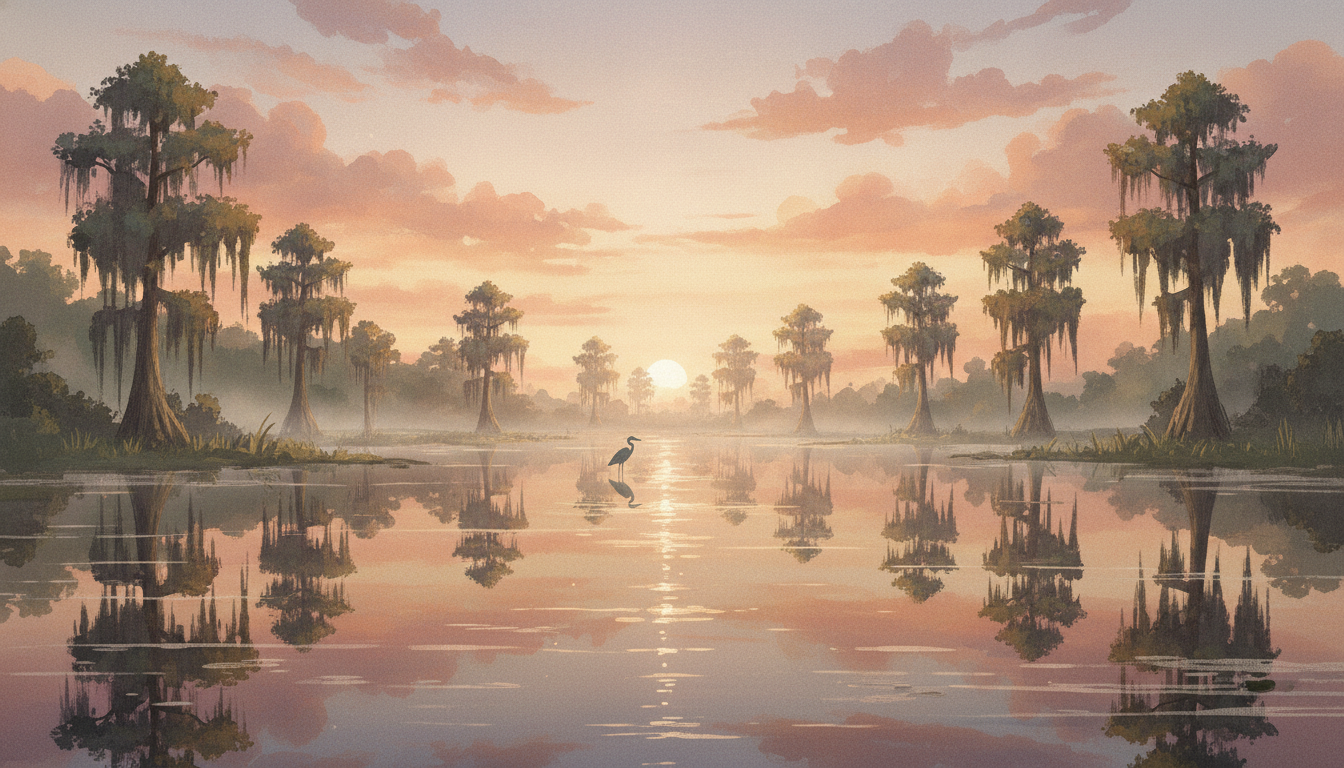
Imagine the air, thick and humid, carrying the scent of cypress and damp earth. You might even hear a low gator rumble, somewhere out there in the murky, mysterious depths. That, for me anyway, is the Okefenokee Swamp. This vast, ancient place, a true American wild heart, just got some big news – UNESCO World Heritage status. And honestly? It made my own heart do a little happy skip, a quiet flutter for wildness.
It’s kind of incredible, isn’t it? The Okefenokee now stands shoulder-to-shoulder with places like the Grand Canyon and Yellowstone. Think about that for a second. It’s not just another park; it’s a globally recognized treasure, reflecting the stunning, often-overlooked biodiversity of our “blackwater” swamps. Most of this incredible landscape is protected within the Okefenokee National Wildlife Refuge, which, get this, is the most-visited NWR east of the Mississippi. People *do* care, even if they don’t always know it.
The swamp’s journey to this recognition wasn’t exactly overnight, either. Conservation efforts here stretch way, way back to 1918, after a million cubic meters of timber had already been logged. Can you even imagine? The federal government stepped in, acquiring most of it in ’36, then designating it an NWR a year later. It’s been slowly, patiently gathering designations ever since – Federal Wilderness, Wetland of International Importance – until Georgia finally put it up for UNESCO in 2023. What a long, slow victory.
Why all the fuss, though? Well, it’s the largest lowland, freshwater peatland in the entire subtropical world, an absolute powerhouse of an ecosystem. This isn’t just a pretty marsh; it’s a living, breathing archive, with peat deposits holding secrets of paleo-environmental history, not to mention critical carbon storage. It’s a veritable riot of life too: 856 plant species (including those endangered longleaf pines!), 48 mammal species, 238 birds, 39 fish, and 90 types of reptiles and amphibians. And yes, a truly noteworthy diversity of carnivorous plants. It’s a place shaped by an intricate dance of water, fire, vegetation – a 20-to-30-year cycle of drought and flame that allows this unique wetland to simply *be*. It’s resilient, you see, in the most profound way.
The 508 Takeaway
So, what does a swamp in Georgia getting a fancy new title have to do with us, here, now? I think it’s a profound reminder of patience, of the quiet power of simply existing, and of our deep, often forgotten, connection to the natural world. The Okefenokee, with its slow, ancient rhythms and incredible resilience, asks us to pause. To consider the long view. To appreciate the intricate web of life that thrives even in places we might deem ‘swampy’ or ‘unpretty.’ It’s about finding awe in the unexpected, recognizing that every corner of this planet, when nurtured, holds immense value. And perhaps, just perhaps, it inspires us to protect a little wildness in our own lives, and certainly, in the world around us. A gentle push, really, to be more mindful of the beauty that’s always been there, waiting for us to notice.
This story was originally reported by Andy Corbley. You can read the full original article here.