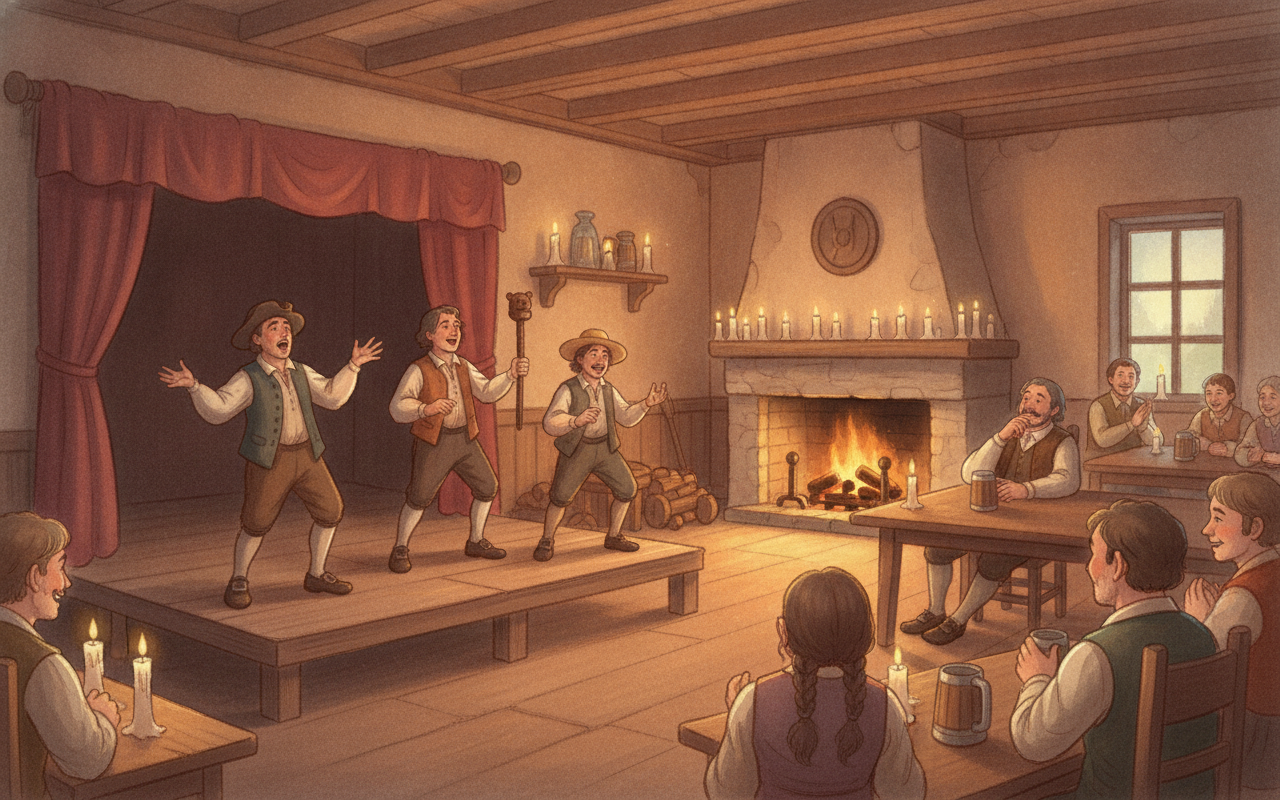
Picture this: it’s August 27th, 1665. Not on Broadway, not in some grand London theatre, but right here in colonial America, specifically Fowkes Tavern in Accomack County, Virginia. Just a regular old tavern, probably smelling of ale and woodsmoke, but on this particular day, something truly extraordinary happened: the very first play in English North America was performed.
It was called ‘Ye Bare and Ye Cubb.’ Yeah, the title itself just oozes rustic charm, doesn’t it? It just makes me smile, thinking about it, how these three blokes – Cornelius Watkinson, Philip Howard, and William Darby – probably cobbled together some costumes, maybe a few props, and put on a show for their neighbors. Imagine the nerve of it! A real play, right there, breaking the monotony of colonial life.
But then, oh boy, did things take a turn. Someone, a self-appointed critic with perhaps a little too much time on their hands, decided this theatrical endeavor was ‘blasphemous and profane,’ especially since it might’ve been performed on a Sunday. And guess what? They ended up in court! Charged with creating something… well, *too* entertaining, apparently.
And get this: the *second* performance of ‘Ye Bare and Ye Cubb’ actually happened right there in court! The judge, probably curious as all get-out, demanded to see it for himself. So, in what must have been the most unexpected theatrical review of all time, the trio performed their play again, likely in the very same tavern, which often doubled as the courthouse. After watching these fellows, presumably doing their best with whatever lines they’d cooked up – because, tragically, no script survives – the judge didn’t just dismiss the case. Oh no. He declared the play not blasphemous at all, but ‘entertaining.’ And then, the cherry on top, he *fined the critic* for wasting everyone’s time. Talk about a standing ovation, colonial style!
The 508 Takeaway
This quirky little historical tidbit, a real-life tale, reminds me that sometimes, the greatest acts of courage aren’t grand gestures, but simply daring to create, daring to bring joy, even when others might judge. It’s a beautiful lesson in not letting fear of criticism stifle our own unique expressions or moments of shared delight. The judge, in his wisdom, chose open-mindedness over rigid condemnation, validating the simple human need for stories and laughter. What a powerful, mindful reminder to embrace the ‘entertaining’ in life, to support creativity, and perhaps, to be a little less quick to judge. We all have a ‘play’ within us, waiting to be shared; let’s not let the critics, internal or external, stop our curtain call.
This story was originally reported by Good News Network. You can read the full original article here.