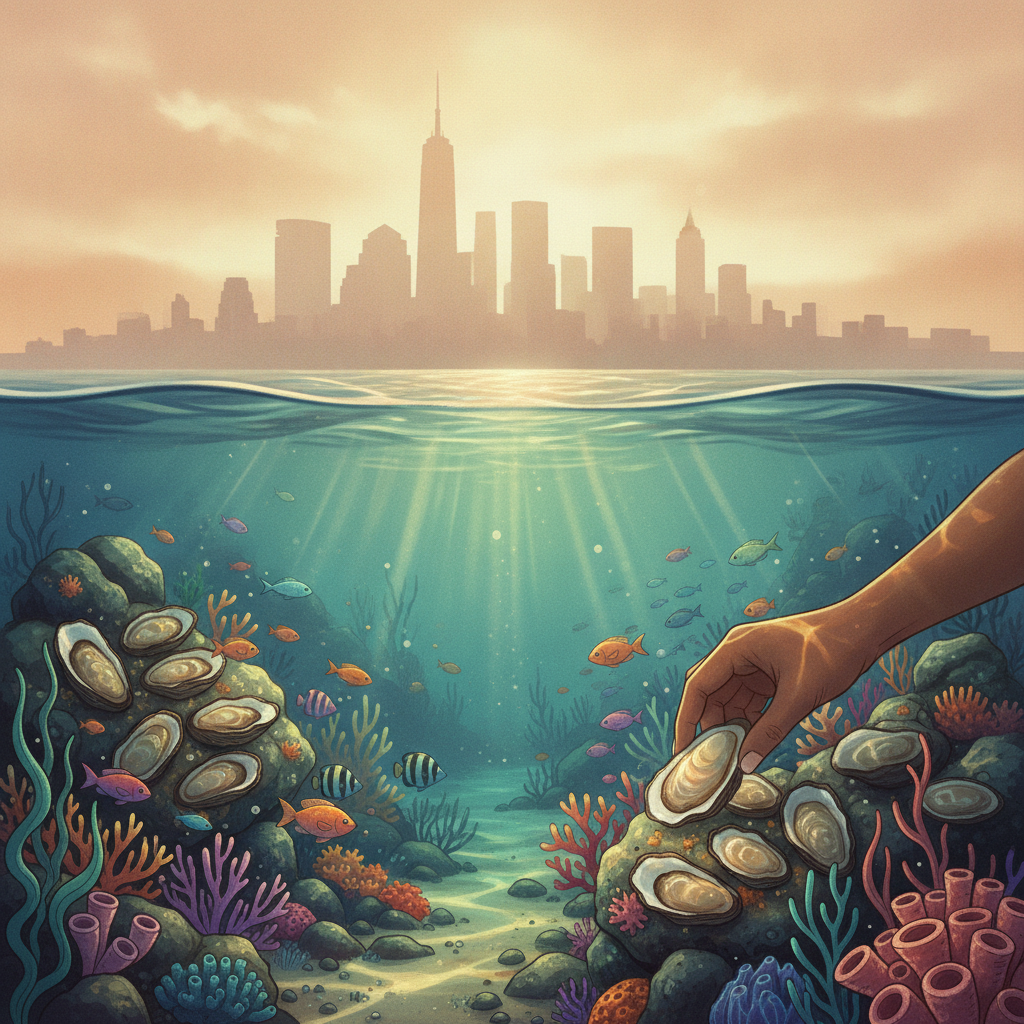
Picture this: a bustling New York City restaurant, plates clinking, laughter echoing, and then, the inevitable mountain of discarded oyster shells. What happens to them? For most of us, it’s out of sight, out of mind, right? Into the bin they go. But what if those very shells, the remnants of a delicious meal, held the secret to transforming an entire harbor?
Well, my friends, that’s exactly what the truly incredible folks at the Billion Oyster Project on Governor’s Island are doing. They’re not just tossing those shells; oh no, they’re meticulously collecting them from dozens of partner restaurants across the city. Think about it: millions of oysters devoured, and instead of ending up in some landfill, those shells get a second, utterly vital, life.
It’s a whole process, you know. First, these shells go to a special ‘shell pile’ to cure. This isn’t just any old dump; it’s a careful, patient waiting game to make sure there’s no bacteria, no unwelcome hitchhikers. Once they’re pristine, they head to the hatchery. And this is where the real magic happens. Tiny oyster larvae are introduced to these aged shells, latching on, growing, acclimatizing to the very waters they’re destined to clean.
They can raise, like, ten million baby oysters at a go! And then, by the bagful, these little heroes are trucked out and gently released into reef sites all over the harbor. It’s wild, isn’t it? These aren’t just pretty creatures; oysters are what scientists call a ‘keystone species.’ That means if oysters are thriving, everything else around them – all that beautiful biodiversity – starts to flourish too. They’re nature’s own water filters, each one capable of cleaning gallons and gallons of water. And not just that, these growing reefs actually absorb wave energy, which, especially with our changing climate, is a huge deal for reducing flood risks.
The goal, a billion oysters by 2035, might sound absolutely bonkers, but they’re already a fifth of the way there. Imagine, 200 million oysters already filtering tens of trillions of gallons of water across nearly twenty acres of restored reefs. Just think about the sheer impact. It’s truly mind-boggling, a testament to what a little ingenuity and a lot of collective effort can achieve.
The 508 Takeaway
This project, it really got me thinking. How often do we look at something we consider ‘waste’ or ‘done with’ and just discard it? Whether it’s an old piece of furniture, a leftover meal, or even an idea we thought was past its prime. The Billion Oyster Project reminds us that there’s often hidden potential, a second act, in things we’ve written off. It’s a beautiful lesson in mindfulness, isn’t it? To pause, to really *see* what’s around us, and to consider how even the smallest, most unassuming elements – like an oyster shell – can be part of something truly grand and kind for our world. It’s about seeing possibility where others see an ending.
This story was originally reported by Andy Corbley. You can read the full original article here.