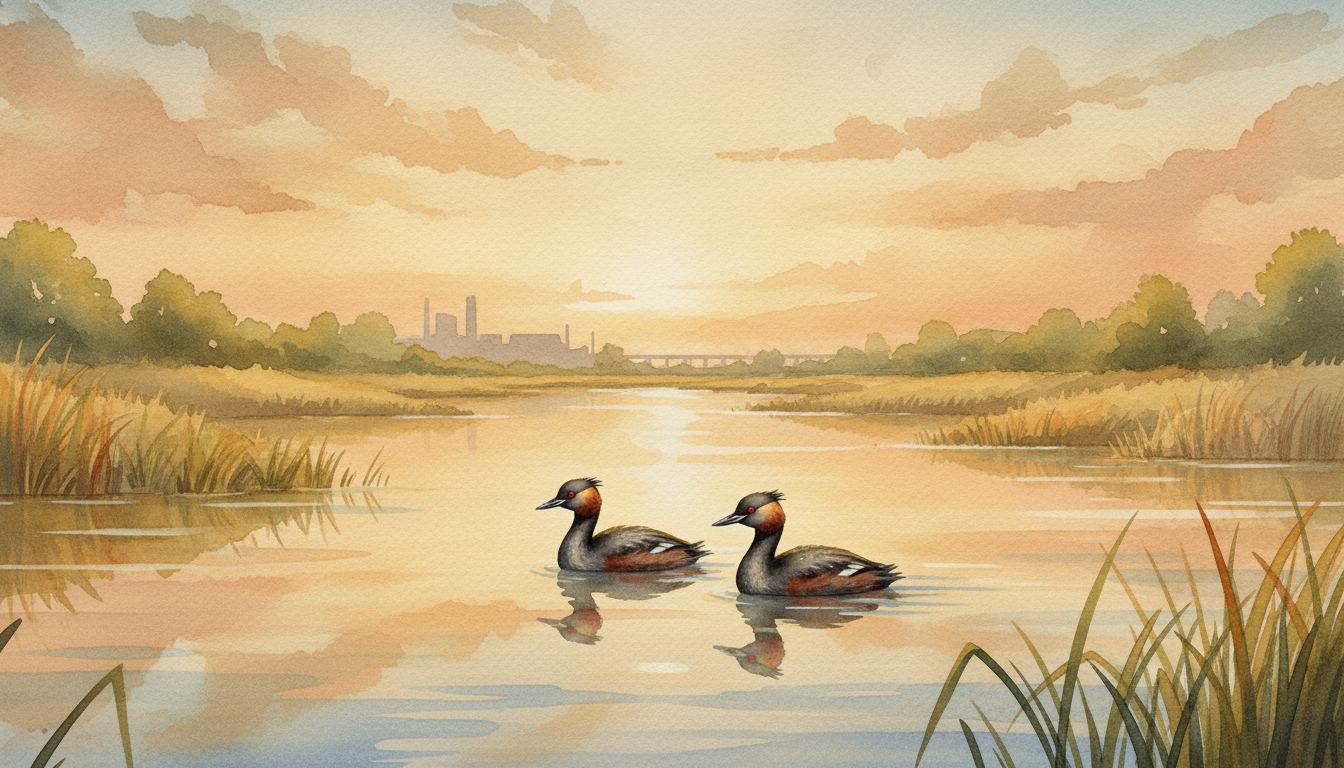
You know, sometimes a story just catches you off guard, grabs hold, and whispers, ‘Hey, pay attention.’ That’s exactly what happened to me when I stumbled upon the tale of Woolston Eyes Nature Reserve in the UK. Seriously, it’s one of those feel-good bits of news that makes you truly believe in the power of intention, and maybe, just maybe, a little bit of magic.
Picture this: a vast, nearly thousand-acre stretch of land, not so long ago, was basically a giant landfill. We’re talking about a dumping ground for millions upon millions of cubic meters of sludge and earth, all dug up during the creation of the Manchester Ship Canal back in the late 1800s. Just industrial waste, right? A place you’d probably drive past without a second glance, thinking, ‘Well, that’s that.’
But oh, how wrong that thought would be! Fast forward to 1979, and a brilliant group, the Woolston Eyes Conservation Group, stepped in. They saw past the industrial detritus, past the forgotten landscape, and imagined something else entirely. They partnered with the canal company, and over the decades, through sheer dedication and elbow grease, they started to coax life back into the land. It wasn’t instant, mind you. These things rarely are. But slowly, steadily, freshwater pools formed, reedbeds flourished, and willow scrub started to reclaim the rough earth.
And then, something truly spectacular began to happen. The black-necked grebes, these absolutely stunning waterfowl with those fiery ruby-red eyes and ochre-golden feathers – they started to show up. Not just one or two, but in droves! These fascinating creatures, who actually prefer to nest near black-headed gulls for protection, found a haven here. In 2023, four pairs nested, producing 15 young. By 2025? Thirty-five pairs! Twenty-nine of them right there in the newly restored wetlands. That’s 64% of ALL breeding black-necked grebes in the entire UK, folks. Can you even fathom that? From a literal dump to the primary breeding ground for a rare species. It’s wild, isn’t it? Other species, like the willow tit and grasshopper warbler, have made it home too. It’s a testament to what happens when we *give nature a chance*.
The 508 Takeaway
This story, for me, really underscores a profound truth about mindfulness and kindness: the power of seeing potential where others see only waste or impossibility. It’s so easy to dismiss things, isn’t it? A difficult situation, a forgotten corner of our own lives, even a challenging emotion. But Woolston Eyes reminds us that with patience, intentional effort, and a willingness to nurture, even the most barren or discarded places can transform into vibrant ecosystems of joy and beauty. What ‘dumping grounds’ in your own life, or in your community, might just be waiting for a little kindness, a little mindful attention, to bloom into something extraordinary? Perhaps it’s a neglected hobby, a strained relationship, or even just a corner of your garden. Let this be our gentle nudge to look closer, to believe in the possibility of rebirth, and to remember that every small act of care, no matter how insignificant it seems, can contribute to a truly magnificent transformation.
This story was originally reported by Andy Corbley. You can read the full original article here.