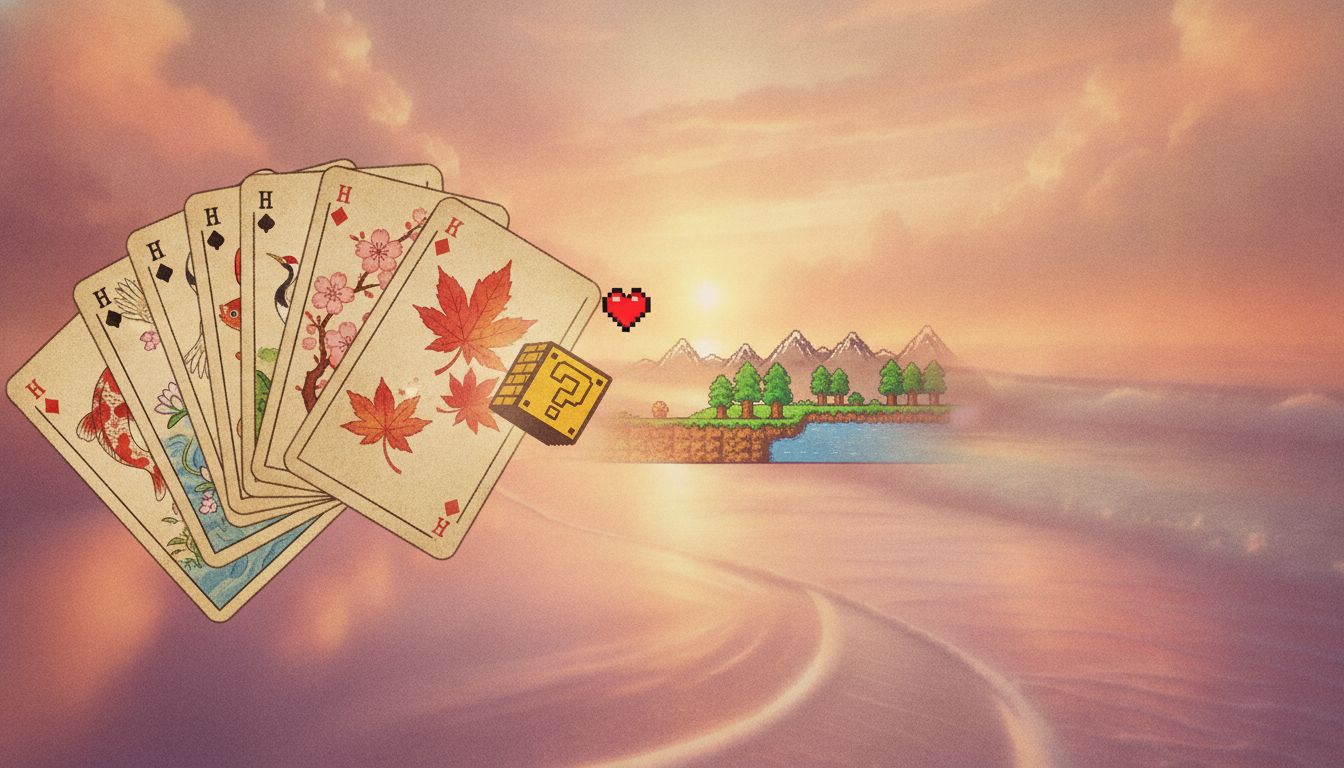
Okay, confession time: I spent way too many hours, probably whole chunks of my childhood, glued to a screen, navigating Mario through warp pipes or trying desperately to catch ’em all. Sound familiar? Most of us, I reckon, have some kind of Nintendo memory, a little pocket of pixelated joy tucked away. But here’s a thought that genuinely blew my mind the other day – a little nugget of history that makes you pause and grin: Nintendo, the gaming behemoth, actually started out making *playing cards*. Seriously. Not even electronic ones, just good old-fashioned paper cards.
Imagine Kyoto, Japan, way back in 1889. Electricity? A distant dream for most folks. That’s when Fusajiro Yamauchi founded ‘Nintendo Karuta,’ a shop dedicated to crafting Hanafuda cards. These weren’t your typical poker decks; they were thick, beautifully illustrated cards featuring nature scenes—koi, cranes, flowers—and were one of the few forms of gambling tolerated back then. In fact, ‘Nintendo’ is thought to mean “the temple of free hanafuda,” a nod to their legal, albeit niche, market.
And talk about perseverance! This little card company navigated tough times: new taxes, the Russo-Japanese War, even a family succession issue where Yamauchi had to adopt his son-in-law to keep the business going. After World War II, the company, now led by grandson-in-law Hiroshi, even partnered with Walt Disney to put beloved characters on their card sets. Can you picture it? Mickey Mouse on a Hanafuda card! It really shows a willingness to adapt, doesn’t it?
It wasn’t until the 1980s, when integrated circuits and electronic screens became viable, that Nintendo made its legendary pivot. From paper cards to Game & Watch, then to the NES, and all the magical consoles that followed. The rest, as they say, is history – a history of unexpected turns leading to incredible, widespread joy.
The 508 Takeaway
What I find truly beautiful in Nintendo’s story isn’t just the sheer scale of their success, but the unexpected, winding path they took to get there. It’s a wonderful reminder that true innovation, and even the creation of widespread joy, often comes from humble, almost forgotten beginnings. It teaches us to stay open, to adapt, and to keep an eye out for how old skills or simple pleasures — like a deck of cards — can evolve into something entirely new and wonderful. Sometimes, the most profound impact starts with just a small, creative spark, a willingness to play, and a whole lot of heart.
This story was originally reported by Good News Network. You can read the full original article here.