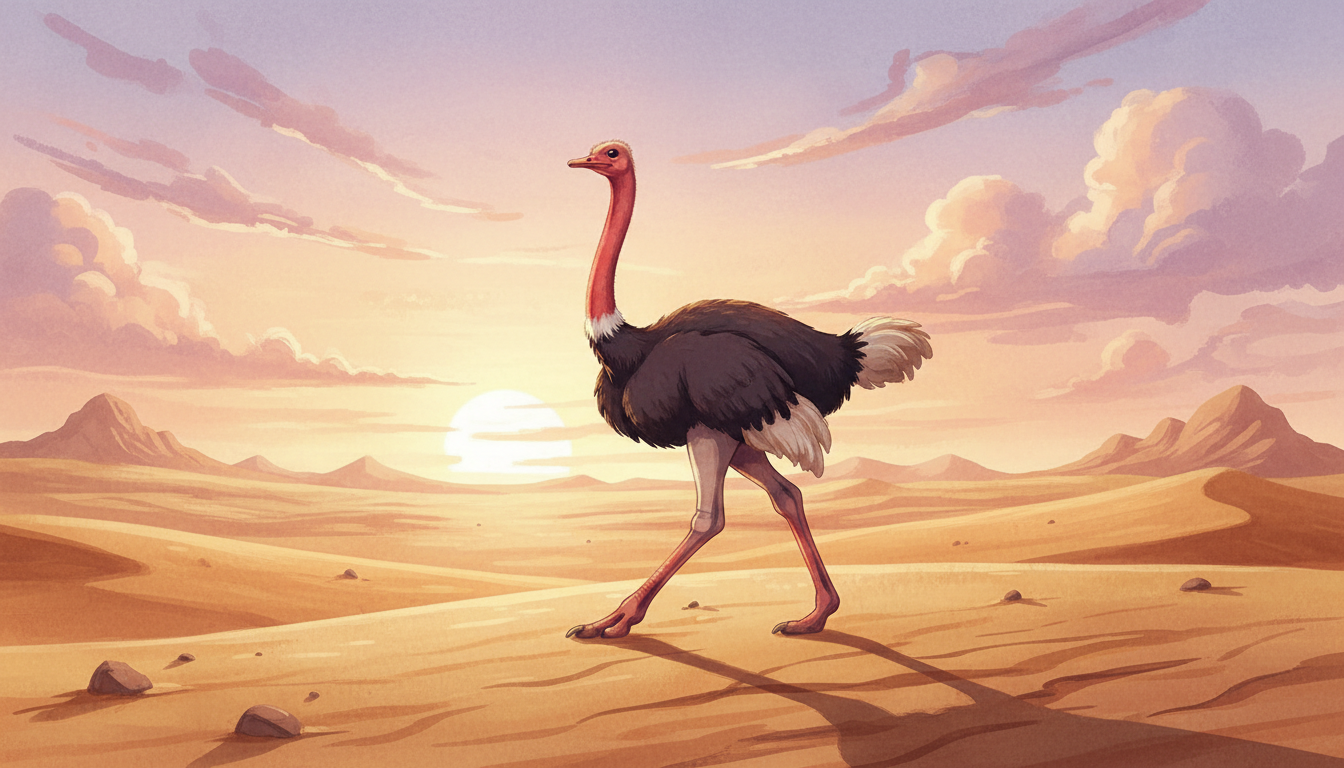
You know, sometimes a news story just… it just *hits* you differently. I was scrolling through headlines the other day, probably looking for something to make me smile, and there it was: ‘Ostriches Return to Saudi Desert After 100-year Absence.’ A century! Can you even imagine that? It instantly painted a picture in my mind’s eye – vast, shimmering desert, and then, these incredible, long-legged creatures, once again striding across the landscape they called home for millennia, after being gone for so, so long.
Turns out, we’re talking about the red-necked ostrich, sometimes called the ‘camel bird’ back in the day, a nod to its incredible desert endurance. For a hundred years, these magnificent birds were just… gone from the Arabian Peninsula’s wild, a silent chapter in its natural history. They were celebrated by ancient poets, revered for their strength and speed, and then, poof. Vanished. But thanks to a really ambitious program called ReWild Arabia, a small population of five — yep, just five — were whisked back into the Prince Mohammed Bin Salman Royal Reserve, a huge, six-million-acre stretch of land. It’s a big, big desert, perfect for them to roam.
This isn’t just about five ostriches, though; it’s part of a much grander vision. These folks are spearheading the return of 23 native megafauna species, and the ostrich is the twelfth success story, following others like the Persian onager. Andrew Zaloumis, the CEO there, he put it so beautifully when he said it carries “deep emotional, ecological, and cultural significance.” It truly does. These birds aren’t just pretty faces; they’re vital cogs in the ecosystem, you see. Their nomadic wanderings help disperse seeds, regenerating plant life and boosting genetic diversity across those arid lands. Plus, their foraging aerates the soil, even flushing out insects that other species rely on. It’s a whole, intricate dance, and they’re bringing back a crucial rhythm. It really got me thinking, you know, about what it means to bring something back from the brink.
The 508 Takeaway
This story, for me, is such a powerful reminder of nature’s incredible resilience, and our capacity, as humans, to mend what’s been broken. It’s a quiet testament to patience, to long-term vision, and to the profound impact of intentional kindness – not just to each other, but to the world around us. In our own lives, when something feels lost or a dream seems too far gone, maybe we can take a page from this rewilding effort. Sometimes, the smallest, most deliberate steps, taken over a long, long time, can bring back something truly magnificent. It’s about holding onto hope, even when the wait is a century long, and understanding that every living thing, every ecosystem, has a right to flourish. What a thought, huh?
This story was originally reported by Andy Corbley. You can read the full original article here.