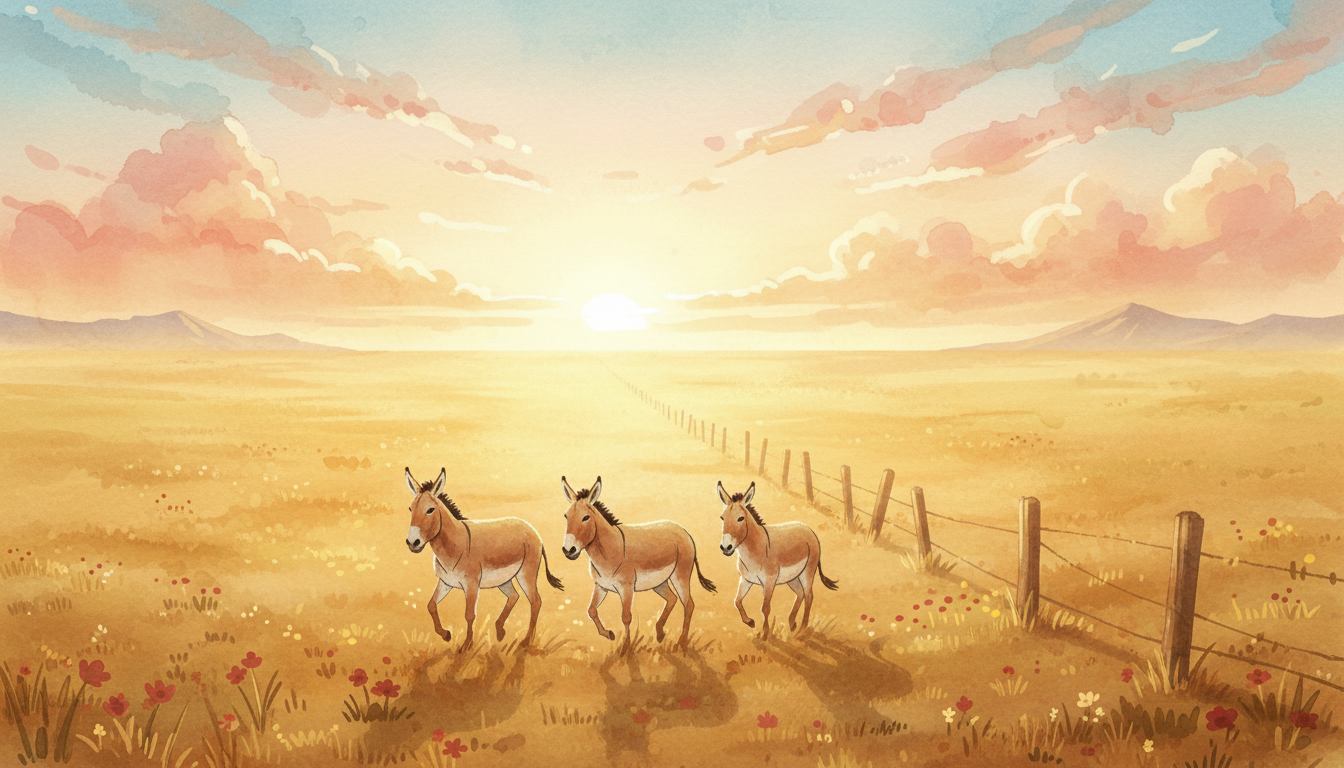
For sixty-five long years, a silent, almost invisible line had sliced right through the heart of the eastern Mongolian steppe. Not a river, not a mountain range, but a stretch of fencing, part of the Trans-Mongolian Railway, that had, for all intents and purposes, utterly choked off the ancient pathways of the magnificent Asiatic wild ass, or khulan, as the locals lovingly call them. Imagine that! Generations of these incredible creatures, cut off from ancestral lands, from vital grazing spots, from crucial water sources—all because of human-made barriers. It’s a sobering thought, isn’t it?
But here’s the truly wonderful bit, the part that just makes your spirit do a little happy dance: the khulan are back! After decades of absence, they’re not just peeking across the old divide; they’re actually recolonizing their former territories. This isn’t just a hopeful whisper in the wind; it’s a roaring success story, backed by some incredibly dedicated folks. Think about it: the Wildlife Conservation Society, the Mongolian government, even some private partners – they all put their heads together, rolled up their sleeves, and started systematically taking down those fences along several stretches of the railway. They even carved out a special, monitored ‘safe passage’ zone near the China-Mongolia border, completely free of any barriers. Pretty neat, right?
And the proof is, well, out there on the steppe. Findings recently published in the journal *Oryx* confirm what the trackers have been seeing: these wild asses are regularly present, in multiple groups, east of the TMR. Hundreds of them, actually! It’s not just a fleeting visit; they’re settling in, making themselves at home once more. Buuveibaatar Bayarbaatar, a senior scientist with the WCS, put it perfectly, calling it an “extraordinary conservation breakthrough.” And it really is. It shows us that when we actively work to restore connectivity in landscapes that we’ve, perhaps unwittingly, fragmented, nature often responds with a vibrant, resilient comeback. We’re talking about one of the most wide-ranging terrestrial mammals on Earth, needing vast spaces to thrive, to move between seasonal grazing and water, especially in such an arid, changeable environment. Their return isn’t just good for them; it’s a huge win for the entire steppe ecosystem, a true testament to what happens when we choose to mend rather than sever.
The 508 Takeaway
This story, to me, isn’t just about wild asses and fences; it’s a powerful metaphor for our own lives. How many invisible fences do we erect, either around ourselves or between us and others? Sometimes, these barriers are old habits, stubborn assumptions, or even just plain fear. They keep us from connecting, from exploring new possibilities, from finding joy in the vast, open ‘steppes’ of our own experiences. The khulan’s journey reminds us that sometimes, the most profound acts of kindness – toward ourselves, toward nature, toward our communities – involve the simple, yet courageous, act of taking a barrier down. It’s about creating space, fostering connection, and trusting that when we do, life, in all its wild, beautiful forms, will rush right in and flourish.
This story was originally reported by Andy Corbley. You can read the full original article here.