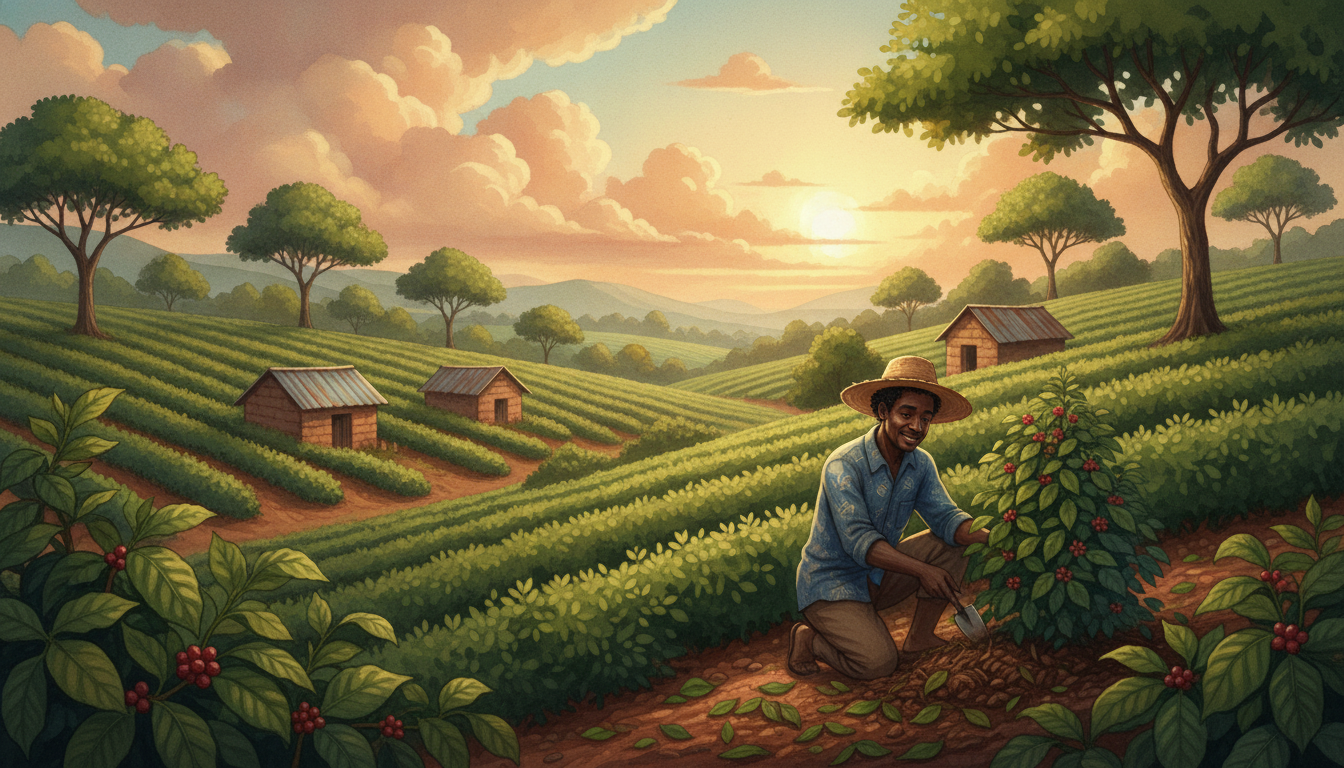
I was scrolling through news the other morning, my own coffee steaming beside me, and a story from Uganda just stopped me cold. You know how it is when you read something that truly resonates, something that feels like a quiet, profound whisper? This was one of those moments, a real gem amidst the usual churn.
It was about these amazing robusta coffee growers in Uganda’s Masaka region, folks who’d been staring down the barrel of erratic rainfall and brutal droughts, just like so many farmers globally. But here’s the kicker: their coffee plants? They’re actually thriving, producing bigger, tastier yields. And get this: it wasn’t some high-tech, futuristic solution. Nope. It was something called regenerative agriculture – a fancy term for some truly clever, age-old wisdom.
Think of it like giving the earth its own cozy blanket and a healthy snack, all at once. Things like mulching, which is basically tucking a layer of organic material around the plants, and cover cropping, where you grow other, non-food plants between the coffee trees. These aren’t just pretty ideas; they’re incredibly practical. They help the soil hold onto moisture when the rains are shy, stop erosion from washing away precious nutrients, and even feed the tiny, vital microbes that make the soil sing. Plus, shade trees! They protect the soil, add more organic goodness when their leaves fall, and the ground? Never tilled. It’s like, you know, letting nature do its thing, but with a little thoughtful guidance.
A coalition of groups, including the Global Environment Facility, Nespresso, and the International Union for the Conservation of Nature, came together to set up these “model farms.” They taught growers, hands-on, the ins and outs of these methods. Nakalisa Mary Fatuma, one of the smallholder farmers, put it beautifully: “My coffee is stronger and more promising, and so is my family.” Isn’t that just a testament to the power of working *with* nature, instead of against it? It makes all the difference, truly. Farmers are reporting better yields, healthier trees, and, crucially, more stable incomes. It’s a real shot in the arm for their communities.
The 508 Takeaway
This story, for me, isn’t just about coffee or farming; it’s a powerful lesson in resilience and mindful living. These farmers, facing immense challenges, didn’t just give up. They leaned into ancient wisdom, adapted, and found a way to not only survive but truly flourish. It reminds me that sometimes, the answers to our biggest problems aren’t about more, or faster, or shinier, but about reconnecting with fundamental principles – in this case, the earth’s own rhythm. What if we approached our own lives, our own struggles, with that same spirit of regenerative care? Nurturing our ‘soil’ – our minds, our relationships, our communities – with kindness, patience, and a willingness to adapt. Maybe our own ‘yields’ – our joy, our peace – would become just as robust and promising.
This story was originally reported by Andy Corbley. You can read the full original article here.