You know those moments? The ones where something utterly ordinary, almost overlooked, suddenly clicks into place and reveals a profound secret? Well, archaeologist Phil Harding had one of those “aha!” flashes, a truly goosebump-inducing revelation, while simply examining some survey maps. He was working near Wiltshire, just a stone’s throw – well, three miles, actually – from the iconic Stonehenge, on what seemed like a fairly routine preservation dig. The site itself? Not exactly flashy: just two ancient post holes in the ground and a couple of middens, basically Stone Age rubbish dumps. He could’ve easily, *easily*, missed it.
But thank goodness he didn’t. Phil, with a ruler and pencil in hand – talk about low-tech genius! – decided to connect those two unassuming points on his map. What he saw next must’ve sent a jolt right through him: the line was roughly 50 degrees off true north. “Pretty much the line of the midsummer sunrise,” he recalled, bubbling with excitement. Can you even imagine that feeling? He’d stumbled upon something extraordinary, dating back to 2,950 BCE, a full five centuries before the enormous trilithon stones of Stonehenge itself were even raised.
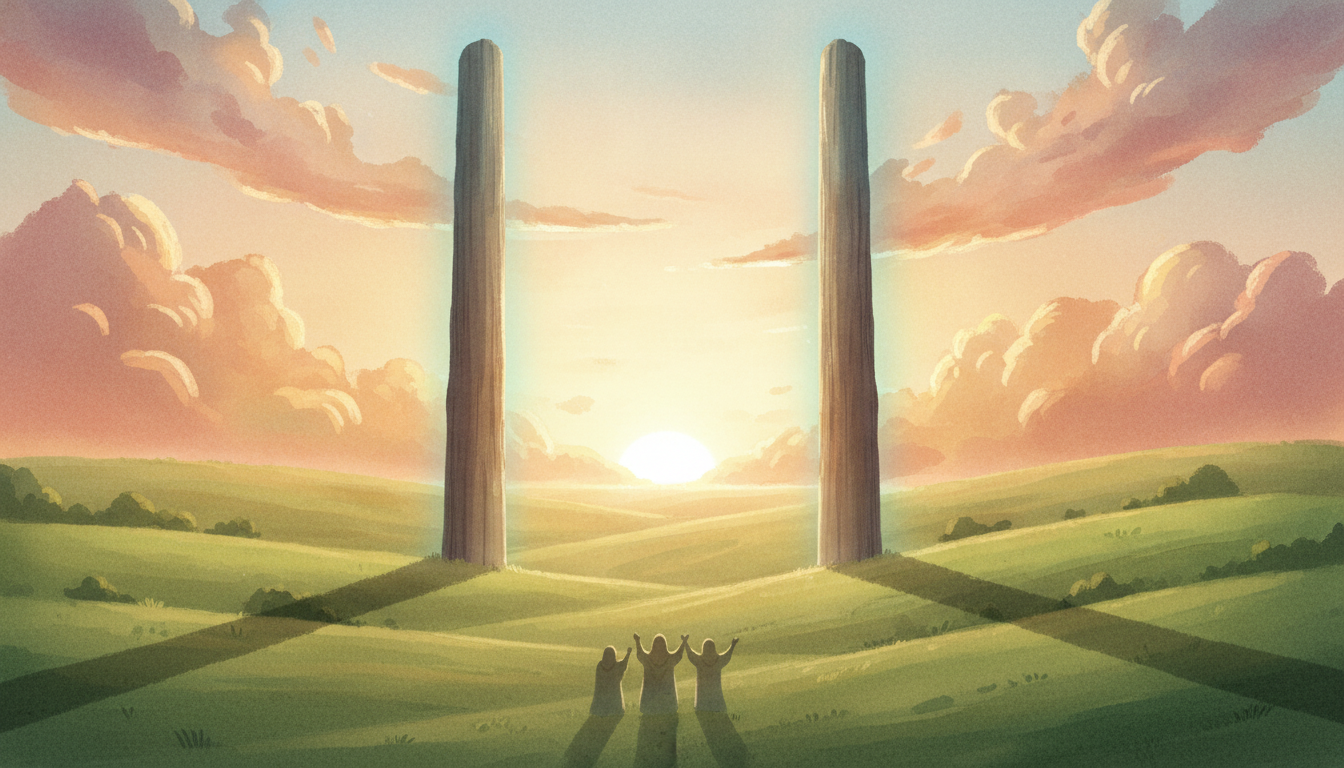
Carbon dating from the refuse heaps and those post holes strongly backed up the timeline. These weren’t just random pits; they once held massive wooden poles, probably three or four meters tall, standing proudly 120 meters apart. So, what were they? A kind of grand-scale, ambitious trial run for Stonehenge, perhaps? A prototype, a first draft, if you will, for humanity’s enduring fascination with the sun’s journey? Or maybe, just maybe, it was a temporary camp for the very same folks who started building the first stage of Stonehenge, a place where they paused, observed, and dreamt big. Matt Leivers, a senior research manager at Wessex Archaeology, articulated it so well: “What we’re seeing here is the religion of the Stone Age made manifest in the ground.” We might never truly grasp *what* the sun meant to them, but the sheer effort, the millennia-long commitment to marking its movements across that vast Wiltshire landscape? That, my friends, speaks volumes about their deep-seated need to understand their place in the universe.
The 508 Takeaway
And isn’t that just it? This ancient discovery, these simple holes in the ground, remind us of a fundamental human yearning: to connect, to understand life’s grand rhythms, and to find meaning. In our bustling modern lives, it’s so easy to rush past the subtle cues, the quiet wonders nature offers daily – the shifting light, the changing seasons. But those Stone Age people, they paused. They observed. They built monuments, even simple ones, to honor these cosmic dances. Perhaps we can take a cue from them, can’t we? To slow down, to really *see* the world, and find our own profound connections, our own everyday solstices, right here, right now. It’s about being present, isn’t it? About looking a little closer, because sometimes, that’s where the most breathtaking revelations hide.
This story was originally reported by Andy Corbley. You can read the full original article here.