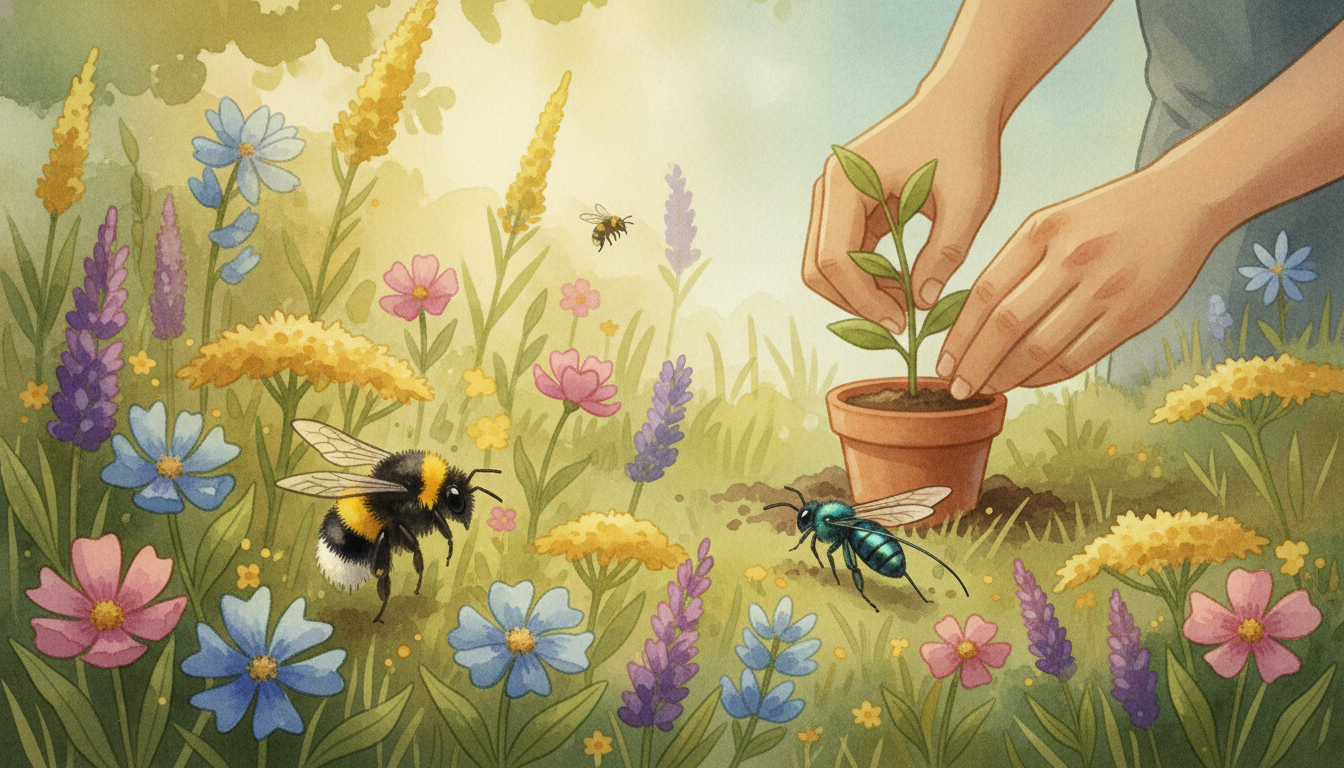
I remember, oh, maybe a decade ago, feeling that familiar pang of helplessness whenever news about bee die-offs would pop up. It was always so grim, so overwhelming, like a problem too immense for any single person—or even a whole state—to tackle. You know the feeling, right? That knot of worry about the planet, about these tiny, vital creatures disappearing.
But then, just the other day, I stumbled upon a piece of news out of Oregon, and honestly, it just warmed my heart right down to my toes. It’s a story about a quiet, steady kind of miracle, proof that when people really put their heads, and hearts, into something, profound change is absolutely possible. Turns out, Oregon hasn’t had *any* pesticide-related bee deaths since 2021. None. For five whole years! That, my friends, is quite a feat, especially for a state boasting one of the most diverse and specialized bee populations in the entire country.
This wasn’t some happy accident, though. It all started back in 2013, after a truly heartbreaking mass-mortality event in a parking lot. It was a wake-up call, a real kick in the pants for the state legislature, leading them to set up a Task Force on Pollinator Health. Oregon State University stepped up, developing all sorts of educational materials to help everyone—from big businesses to home gardeners—understand how to use pesticides safely, or better yet, avoid them altogether, to protect our buzzing friends.
Then, in 2018, things really kicked into high gear with the Oregon Bee Project. They didn’t just make materials; they *shared* them. Thousands upon thousands of landscapers and agriculturalists got trained. Schools got involved. They even created the Oregon Bee Atlas, which, get this, is the largest species inventory of bees in *any* state in the union. Five hundred sixty-seven species, folks! It helps communities pick the right plants and make better habitat decisions, which, let’s be real, is just brilliant. And to top it all off, they even issued commemorative license plates that raised a whopping $800,000 for the project. Talk about commitment, right?
And you know what? It worked. This incredible, community-wide outreach, this steadfast dedication, has totally paid off. As Andony Melathopoulos, a pollinator expert at OSU, put it, they’ve built “one of the strongest bee survey and education networks in the country.” What a testament to what we can achieve when we decide to really care.
The 508 Takeaway
This whole Oregon bee story, it really got me thinking about the ripple effect of intention. It’s so easy to feel small, to think our actions don’t matter much in the grand scheme of things. But here’s this beautiful, undeniable proof that even seemingly small, consistent efforts—educating, listening, adapting—can lead to monumental shifts. For our ‘508 Life’ approach, it’s a powerful reminder: mindfulness isn’t just about our own inner peace; it’s about being mindfully present and kind in the world around us. It’s about noticing the plight of something as tiny as a bee and understanding that its well-being is intrinsically linked to ours. When we choose to act with kindness, not just to people, but to the very fabric of nature, we don’t just protect, we create. We cultivate joy, not just for ourselves, but for generations to come. It’s a beautiful, buzzing blueprint for how we can all make a difference, one mindful choice, one kind action at a time.
This story was originally reported by Andy Corbley. You can read the full original article here.