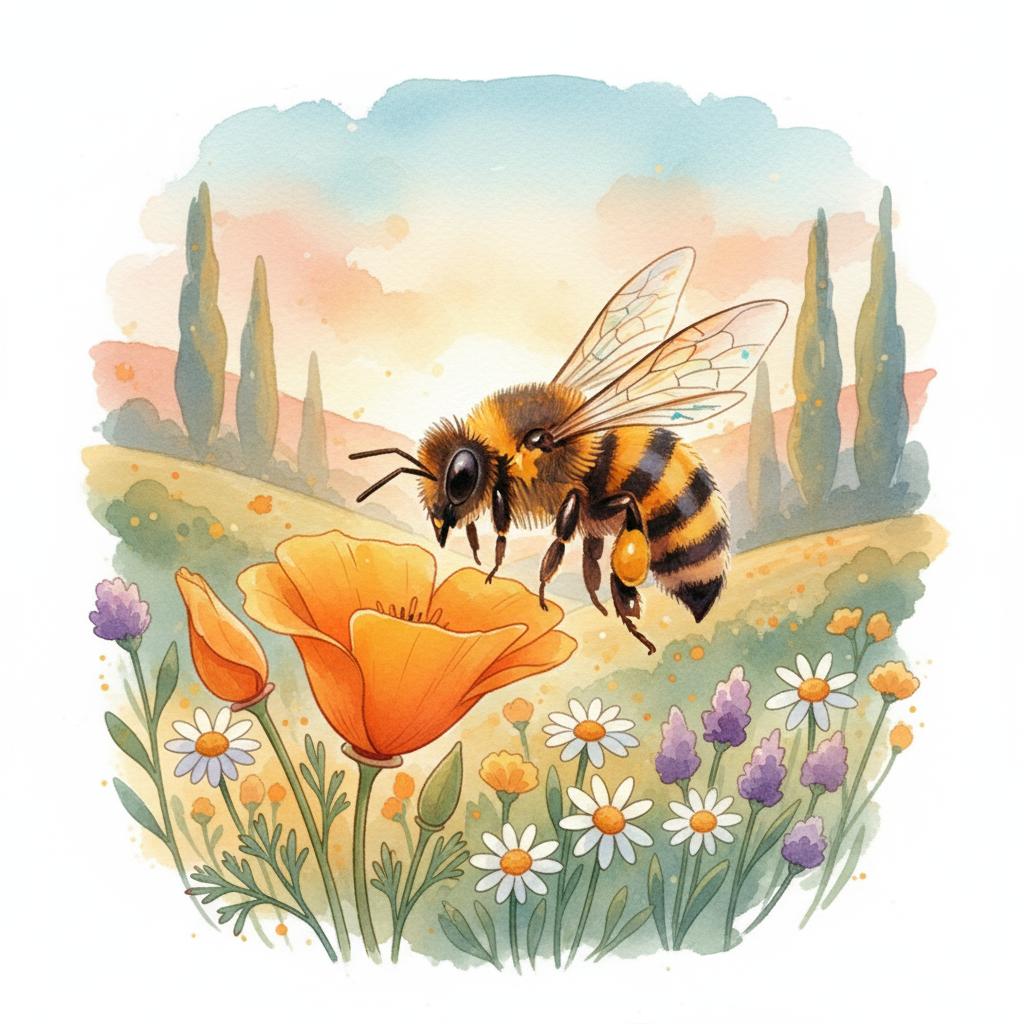
You know, sometimes the most profound lessons come from the smallest, busiest creatures. Just the other day, I was reading about these incredible honeybees in Southern California – not the ones you see in perfectly aligned commercial apiaries, mind you, but the wild, scruffy, *feral* colonies tucked away in eucalyptus trees and forgotten corners. And what I learned? Well, it absolutely buzzed with hope.
For years, it’s been a real heartbreaker, right? Commercial honeybee populations everywhere have been struggling, literally collapsing under the relentless attack of something called Varroa mites. These tiny parasites are like miniature vampires, feeding on the bees’ vital ‘fat body’ tissue – imagine if your liver, pancreas, and immune system all got compromised at once. It weakens them, shortens their lives, and spreads nasty viruses. Beekeepers have been fighting a losing battle with chemicals, which often stop working over time. It just feels… overwhelming.
But here’s the kicker, the truly astonishing bit: scientists from the University of California–Riverside, led by a grad student named Genesis Chong-Echavez, kept hearing whispers. Anecdotes, really, that these *Californian* bees were just… surviving. Thriving, even, with way fewer interventions. So, they decided to rigorously test them. And what they found, published in *Scientific Reports*, blew me away. Colonies led by these local hybrid queens had a whopping 68% fewer mites on average than commercial ones! They were five times less likely to need chemical treatments. Five times!
Turns out, these aren’t just any bees. They’re a beautiful, diverse mix, a hybrid population with ancestry from African, Eastern European, Middle Eastern, and Western European bees. A real melting pot, if you will, and it seems that genetic stew gives them an edge. The biggest surprise? The resistance isn’t just about adult bee behavior. Even at the larval stage – when mites usually invade to reproduce – these Californian larvae were less attractive. It suggests this superpower is built right into their genetic makeup, a deep, inherent resilience. It makes you think, doesn’t it?
The 508 Takeaway
This story really got me thinking about our own lives, you know? How often do we face our own ‘Varroa mites’ – those nagging worries, unexpected challenges, or persistent stresses that just seem to chip away at our peace? We often look for external ‘treatments,’ quick fixes, or someone else to solve things. But these bees, these truly remarkable little creatures, remind us that sometimes the solution, the resilience, is already within us. It’s in our unique blend of experiences, our inherent strength, our ability to adapt and find strength in our own ‘local’ wisdom. Perhaps mindfulness isn’t about eradicating every single ‘mite,’ but about cultivating that inner immunity, that deep-seated capacity to not just survive, but to truly thrive, even when things get tough. It’s a hopeful buzz, indeed, for finding joy in our own quiet, resilient moments.
This story was originally reported by Good News Network. You can read the full original article here.