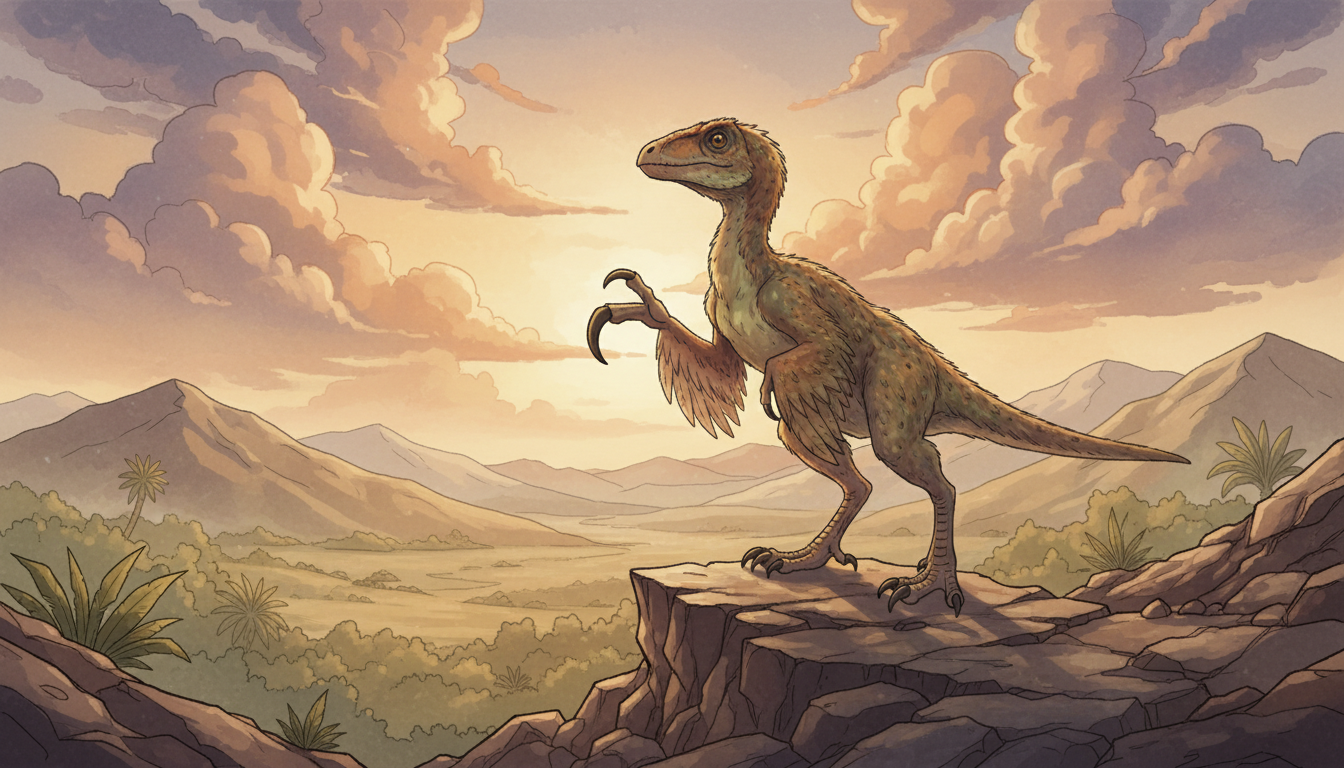
You know, sometimes the biggest insights – the ones that genuinely make you pause and just, well, *think* – come from the most unexpected, often smallest, places. Like, seriously small. I was just reading about this little feathered friend, or rather, a bird-like dinosaur, called *Alnashetri cerropoliciensis*, and it absolutely blew my mind a little.
Picture this: a creature, weighing less than two pounds, scurrying around ancient Patagonia ninety million years ago. Ninety million! That’s a timeframe that’s almost impossible to truly grasp, isn’t it? This particular little dino, recently brought to light by an international team of scientists, isn’t just another fossil; it’s being hailed as a “paleontological Rosetta Stone.” Pretty cool, right? It’s not the grand ‘dinosaur-to-bird’ missing link everyone talks about, but it’s crucial for understanding a whole mysterious group of small, widespread prehistoric animals called Alvarezsaurs.
For decades, these Alvarezsaurs, famous for their tiny teeth and those peculiar stubby arms ending in a single, large thumb claw, have been a real puzzle. Most of the good fossils were found in Asia, leaving the South American records fragmented and, frankly, baffling. But then, in 2014, in the northern reaches of Patagonia, Argentina, this nearly complete skeleton of *Alnashetri* was unearthed. It was like finding the instruction manual after years of trying to assemble something with just a blurry diagram. Peter Makovicky from the University of Minnesota and his Argentinean colleague, Dr. Sebastian Apesteguía, led the charge, and they’ve spent a decade meticulously preparing and piecing together these incredibly delicate bones.
That painstaking work, that decade-long dedication, finally allowed them to map out the group’s strange anatomy. It’s helping them understand how these tiny creatures evolved, shrank, and somehow spread across the ancient supercontinent of Pangea. What’s even wilder is that *Alnashetri* had longer arms and bigger teeth than its later relatives, challenging previous ideas that all Alvarezsaurs developed specialized features for an “ant-eating” diet right off the bat. It really just goes to show, doesn’t it, how much we still have to learn, and how one small piece can completely shift our perspective on a much larger story.
The 508 Takeaway
This whole thing, it just really makes you think about how often we might be missing crucial pieces of our own personal puzzles, or even the grander tapestry of human connection, simply because we haven’t looked closely enough, or perhaps haven’t been patient enough to piece things together. Just like those scientists with *Alnashetri*, sometimes the most profound understandings – about ourselves, about our relationships, about the world – emerge from paying deep, sustained attention to what seems small or fragmented. It’s a gentle reminder that every ‘missing link’ in our lives, every unanswered question or seemingly insignificant detail, holds the potential for a breakthrough, for an ‘aha!’ moment that can rewrite our own narratives and foster a deeper, more mindful appreciation for the intricate, beautiful connections that bind us all.
This story was originally reported by Andy Corbley. You can read the full original article here.