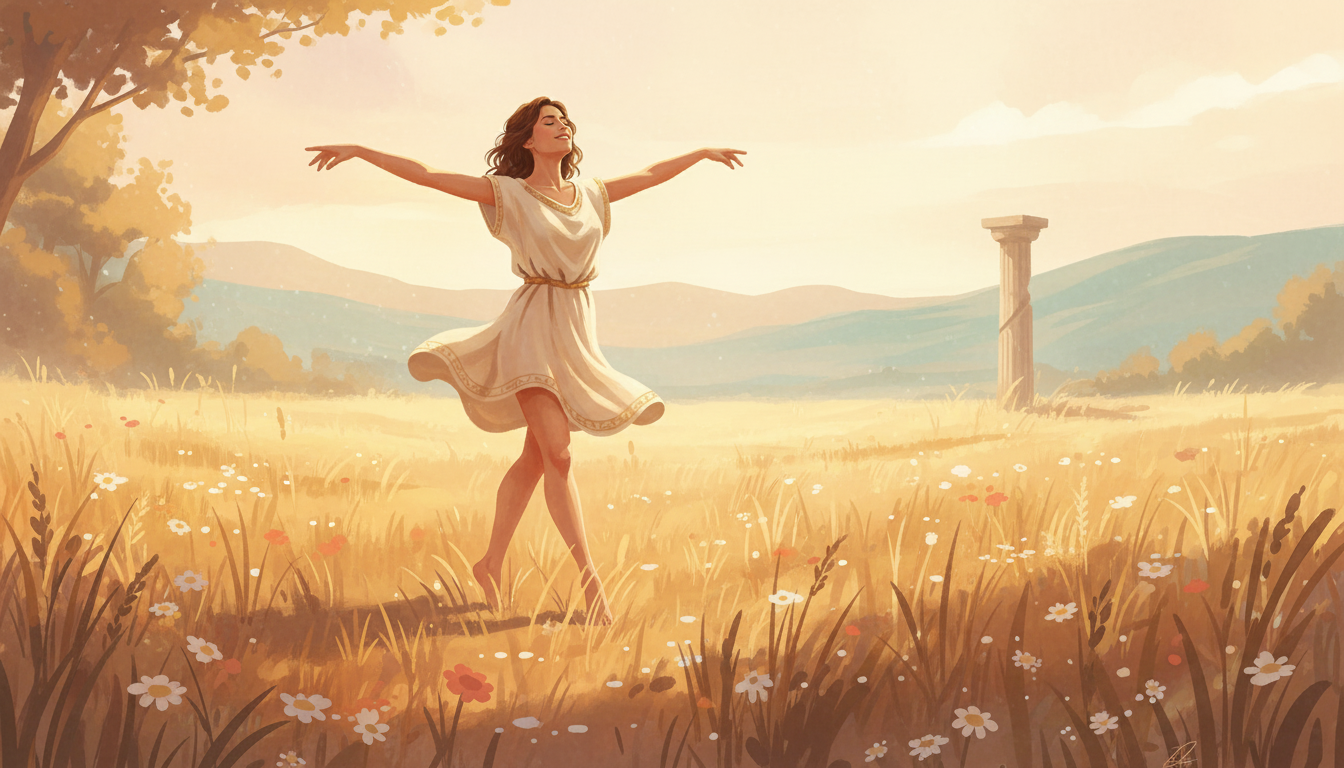
You ever just feel like you’re going through the motions? Like there’s a script, a certain way you’re *supposed* to move through life, and anything outside those lines feels… well, a bit scary, perhaps even wrong? I’ve certainly felt it, this quiet pressure to conform, to be polished. Then, I stumbled upon a piece of history that really got me thinking, a story about a woman who absolutely refused to dance to anyone else’s tune.
Imagine London, 1900. Picture a stage, but without the elaborate backdrops or the frilly costumes you’d expect. Instead, there’s just Isadora Duncan. Barefoot. Underdressed, by the standards of the day. Solo. She wasn’t telling some grand, tragic fairy tale. Oh no. She was just *moving*, right there, for everyone to see, a raw, spontaneous expression of what the music — Chopin’s piano preludes, Mendelssohn’s ‘Spring Song’ — actually *felt* like to her. It was radical. People were, to put it mildly, captivated, and a little flummoxed. They instinctively wanted to label it as scandalous, hyper-erotic even, but deep down, they knew it was so much more than that. It was pure, unadulterated feeling.
She famously called ballet a “false and preposterous art,” claiming it deformed muscles and bones. Instead, Isadora spent hours studying ancient Greek statues, those figures both solid and weightless, finding inspiration in their natural, feminine forms. And when she danced, people like the sculptor Rodin, who called her the “greatest woman the world has ever known,” saw this ‘imperfect perfection’ — slightly fleshy limbs, yes, but radiating supreme confidence. It wasn’t about precision; it was about presence. Her style, because it was never recorded, became a ‘dead art,’ passed only through those who witnessed it. What a thought, right? That such profound beauty could be so fleeting, so utterly tied to the moment it was created. It really makes you pause, doesn’t it?
The 508 Takeaway
This story, for me, isn’t just about dance; it’s a powerful whisper about how we choose to live. In a world that often demands we fit into neat little boxes, Isadora Duncan offers a different path: one of unapologetic authenticity. It’s a reminder that true joy, real mindfulness, often comes when we shed the layers of expectation and simply *be*. What if we allowed ourselves a little more of that ‘imperfect perfection’ in our everyday? What if we listened to our own inner ‘Spring Song’ and moved, even just a tiny bit, with that same spontaneous expression? It might not be a grand performance on a London stage, but it could be a moment of genuine laughter, an uninhibited walk in the park, or simply letting ourselves feel a feeling fully, without judgment. That, I think, is a beautiful, radical act of kindness – to ourselves and, ultimately, to the world.
This story was originally reported by Good News Network. You can read the full original article here.