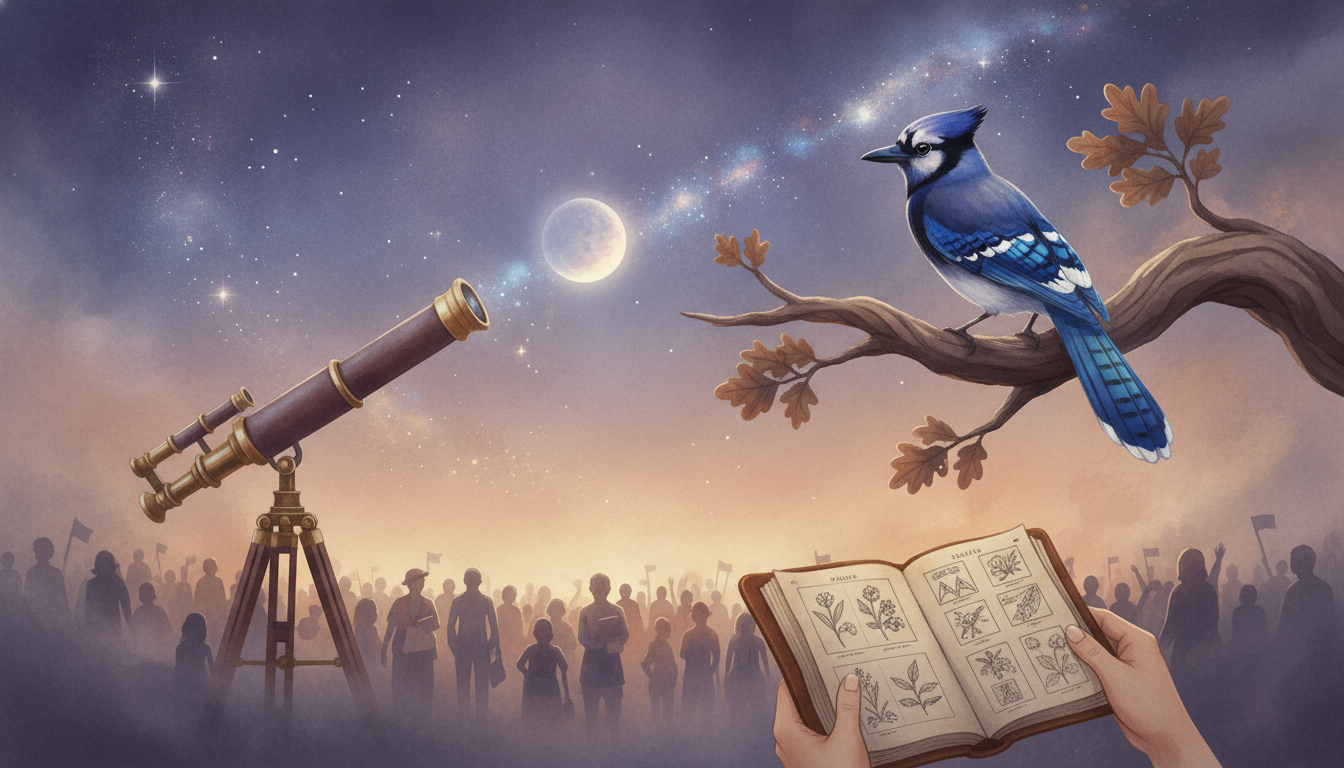
I was out on my porch this morning, sipping coffee, when a flash of brilliant blue caught my eye. A stellar jay, bold as brass, swooped through the oak tree, landing on a branch just a few feet away. It made me think about how often we just *see* things, but don’t really *look*, you know? Like, truly observe.
And then I remembered something pretty cool about August 28th: it’s the birthday of Roger Tory Peterson, the guy who basically invented the modern field guide. Born way back in 1908, his *Guide to the Birds*, published when he was just 25, totally changed how we engage with nature. Seriously, its first printing sold out in a week! Peterson didn’t just list birds; he created this ingenious “identification system” that focused on “field marks”—those obvious, tell-tale visual features. It wasn’t about scientific jargon; it was about helping *us*, the regular folks, actually identify a bird without needing a degree in ornithology. He sparked this incredible curiosity, didn’t he? Made the natural world accessible, almost like a treasure hunt right in your own backyard.
But wait, there’s more! On this very day, centuries earlier in 1789, a German astronomer named William Herschel spotted Enceladus, one of Saturn’s moons. Now, get this: Herschel wasn’t just some stuffy scientist. He was a professional musician—an oboist, a harpsichord player, a composer of *dozens* of symphonies! Talk about a career pivot, right? He taught himself mirror-making, turned his apartment into a messy, soot-filled workshop, and built his own massive telescopes. Can you even imagine? This guy, with his hands probably still smelling of rosin and wood, was grinding glass, peering into the inky blackness, and *discovering* new worlds. And the kicker? Years later, NASA’s Cassini spacecraft found evidence of a *liquid ocean* under Enceladus’s icy surface, with plumes suggesting geothermal activity. We’re talking about a potential home for life, glimpsed first by a musician-turned-stargazer. It just blows your mind, doesn’t it?
And then, shifting gears entirely but staying with the theme of profound human vision, August 28th also marks the day in 1963 when Martin Luther King, Jr. delivered his iconic “I Have a Dream” speech. Standing there, before 250,000 people, he painted a picture of a world where people would be judged “by the content of their character.” It was a dream of racial harmony, of a nation living up to its ideals. A moment that, truly, propelled the Civil Rights Movement forward.
The 508 Takeaway
What strikes me about these seemingly disparate moments is the sheer power of human observation, passion, and vision. Whether it’s Peterson teaching us to truly *see* the birds in our park, Herschel meticulously crafting tools to *gaze* at the cosmos, or King daring us to *envision* a more just world—it all boils down to a profound engagement with life. These stories remind us that mindfulness isn’t just about quiet meditation; it’s also about active curiosity, about leaning in, looking closer, and finding the extraordinary in the seemingly ordinary, or even daring to dream of a world that doesn’t yet exist. What little spark of wonder, what quiet passion, are *you* nurturing today?
This story was originally reported by Good News Network. You can read the full original article here.