I don’t know about you, but sometimes the sheer scale of global problems just makes my head spin. Microplastics, for instance. You hear about them everywhere – in our oceans, our soil, even inside us, for goodness sake. It’s a truly invisible menace, one that often feels too vast, too ingrained, for any one person or even a small team to really tackle, isn’t it?
Well, get this: three incredible 16-year-olds from India – Vivaan Chhawchharia, Ariana Agarwal, and Avyana Mehta – decided to look for answers not in some high-tech, gleaming lab, but right there in their very own kitchen larders. Their secret weapon? Powdered tamarind seed. Yes, the same stuff many of us use in curries and chutneys! Just incredible, really.
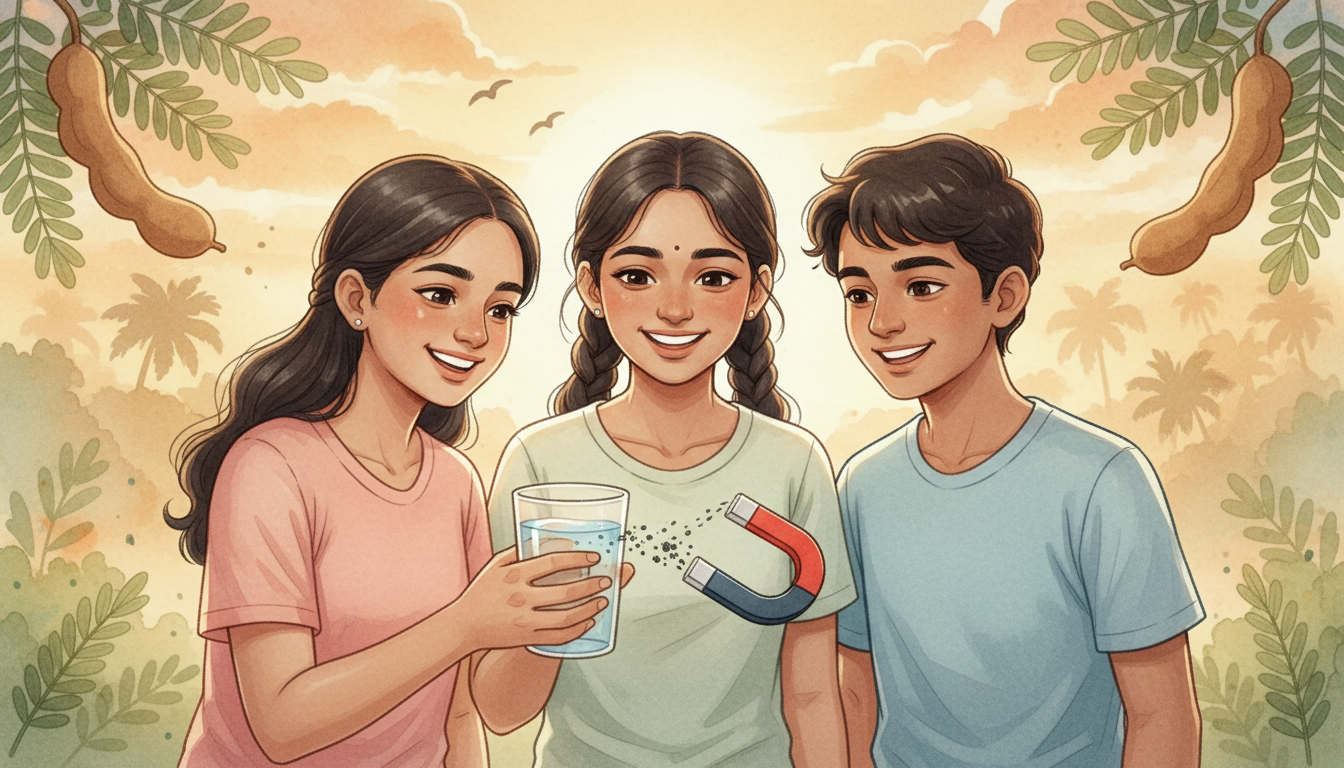
They discovered that this humble seed, when powdered, acts as an all-natural clumping agent for those impossibly tiny plastic particles. A little agitation, and poof! The microplastics bind together with the tamarind, forming visible clumps. And the truly genius part? You can then just whisk them away with a simple magnet. No electricity needed, no complex filtration systems. Just tamarind and a magnet. They called their invention ‘Plas-Stick,’ and honestly, it’s a real game-changer.
This simple, elegant solution is especially vital for the 2.2 billion people globally who lack access to safely managed drinking water infrastructure. These brilliant minds were justly crowned Asia Winners of The Earth Prize 2026, bagging a cool $100,000 to develop their creation further. It all sparked, they say, after observing how folks in rural communities stored drinking water in shared containers, often without any advanced filtration. A real ‘aha!’ moment, I bet.
“Plas-Stick was designed to be simple, affordable and accessible,” the trio shared, and this support means they can scale it beyond pilot schools, reaching many more communities that need it most. It’s not just some lab experiment, mind you; it’s a practical, sustainable pathway to cleaner water, using a crop that thrives naturally.
The 508 Takeaway
What strikes me most about Vivaan, Ariana, and Avyana’s story isn’t just the clever science, though that’s certainly inspiring. It’s the profound lesson in mindfulness and kindness it offers us all. They didn’t just see a problem; they *observed* it in real communities, they *listened* to the specific needs, and they *looked* for solutions in the most wonderfully unexpected places. It reminds us that often, the answers we seek aren’t always grand or complicated; sometimes they’re right there, hidden in plain sight, like a common kitchen spice. This whole endeavor is a beautiful act of kindness, making clean water accessible to those who need it most, and it truly exemplifies how curiosity, coupled with a genuine desire to help, can transform overwhelming challenges into tangible hope. It’s a gentle nudge, I think, to keep our eyes open, to question the obvious, and to believe that even small, everyday things can hold extraordinary power for good in our world.
This story was originally reported by Andy Corbley. You can read the full original article here.