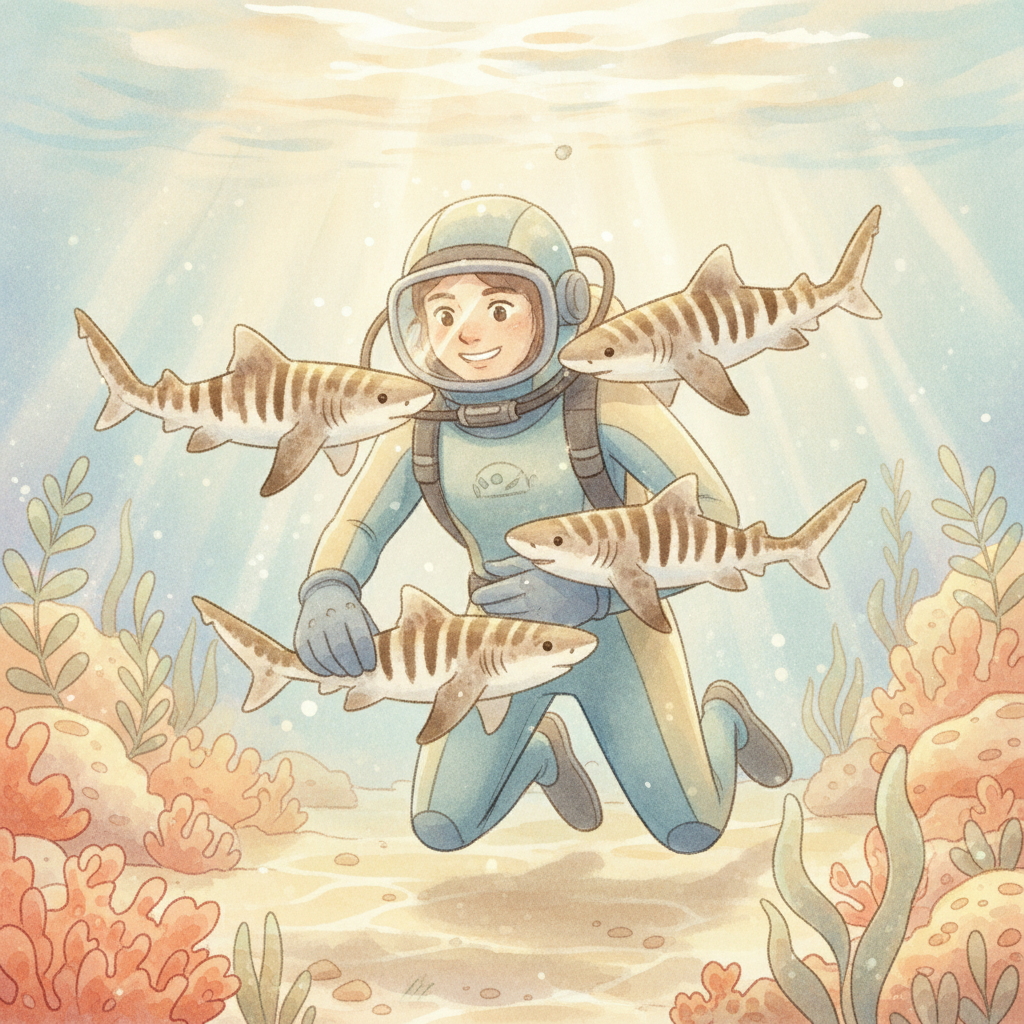
Shark nannies. Just the phrase, right? It conjures up images that are… well, a little unexpected. But it’s a real thing, a vital role in a quiet, monumental effort unfolding right now in the crystal-clear waters of Indonesia. And honestly, it’s a story that just fills my cup.
You see, zebra sharks—those gorgeous, striped bottom-dwellers, also known as Indo-Pacific leopard sharks—were in a bit of a pickle. Overhunted, their numbers plummeted. Down to perhaps only 20 adults in Raja Ampat by 2019, according to Mark Erdmann from ReShark. Can you imagine? It’s like finding out your favorite bookstore is down to its last few copies of beloved classics, and no new ones are being printed. Heartbreaking, really.
But then, a glimmer of hope, a truly ingenious idea birthed from a seemingly overwhelming problem: too many zebra shark eggs in captivity. Staff at Singapore’s SEA Aquarium, bless their hearts, found themselves with an abundance of viable eggs, more than their tanks could handle. Instead of just letting nature take its course in an overcrowded environment, they reached out. And that, my friends, was the spark.
What followed? A global consortium, ReShark, involving 60 aquariums across 15 countries, all banding together. Their mission: to rewild these incredible creatures, a feat typically reserved for mammals, not marine life. But zebra sharks lay eggs, which makes them uniquely suited for this kind of intervention. Eggs, you see, can travel. They’re shipped in special containers to nurseries in Raja Ampat and Phuket, Thailand, where those dedicated ‘shark nannies’—rigorously trained aquatic animal husbandry specialists, by the way—rear the pups in protected environments.
Eighty-two of these captive-bred pups, now about a meter long, have already been released into a vast marine sanctuary near Raja Ampat. Satellite tags are helping ReShark track their progress. And guess what? They’re doing beautifully. Foraging well, staying within the sanctuary boundaries, learning to be wild sharks. It’s a painstaking process, requiring immense patience; it’ll be 2028 at the earliest before we know if these rewilded sharks reproduce in the wild, which is the ultimate, crucial test of this whole endeavor. They’re even getting local fishermen involved, helping them understand the sharks’ vulnerability and their importance to the ecosystem. It’s a testament to what focused, global kindness can achieve, truly.
The 508 Takeaway
This whole story, it just resonates, doesn’t it? It’s a powerful reminder that even the biggest, most daunting challenges can be met with ingenuity, with patience, and with a whole lot of heart. In our own lives, when we face something overwhelming, maybe we can take a page from the shark nannies’ playbook. Instead of despairing, we can look for the small, actionable steps. We can nurture what needs nurturing, even if the payoff is years down the line. It’s about understanding that every tiny effort, every moment of dedicated care, contributes to something much larger, a ripple effect of kindness that can bring joy and hope back into the world, one tiny, striped shark pup at a time. That, to me, is true mindfulness in action.
This story was originally reported by Andy Corbley. You can read the full original article here.