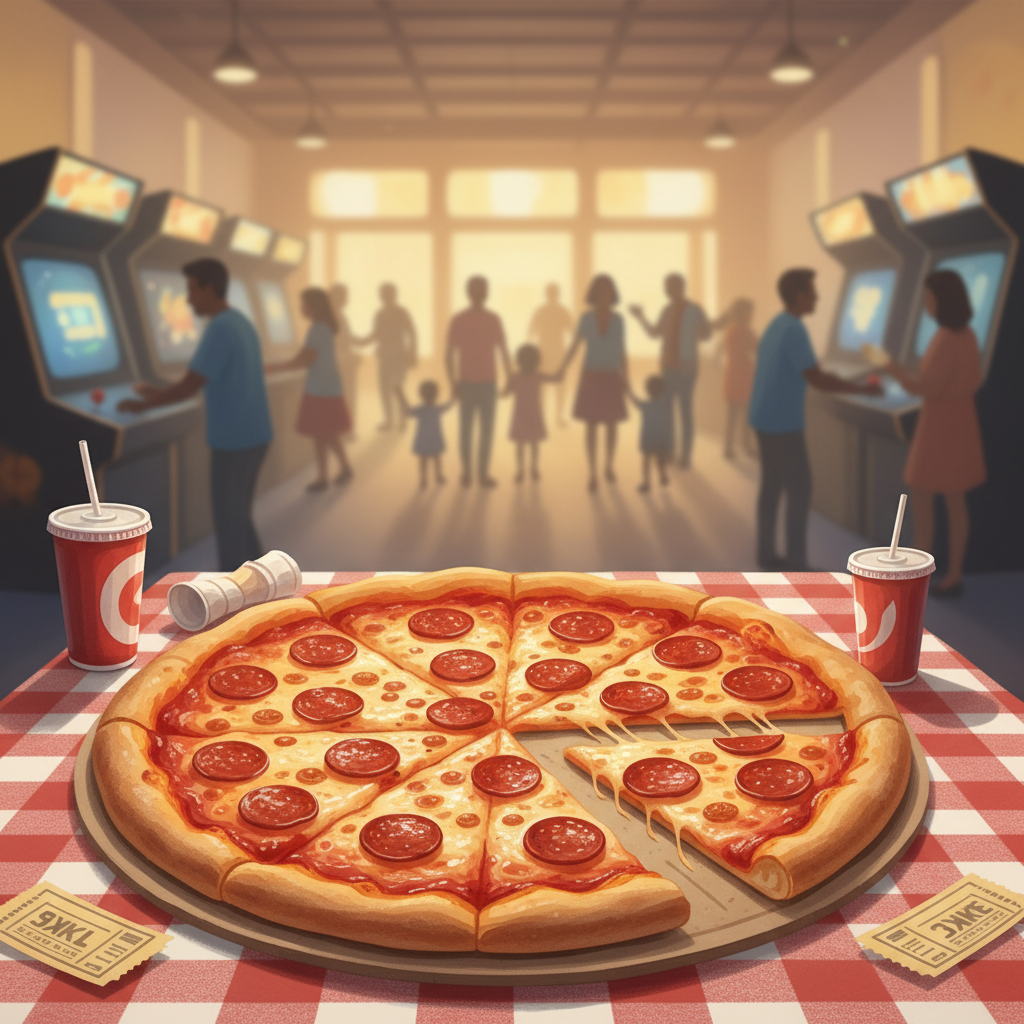
Picture this: a bustling Tokyo office, late 1970s. A young game designer, Tōru Iwatani, is taking a much-needed break, probably contemplating the state of arcades at the time. They were, let’s be honest, pretty intimidating places. Dark, noisy, filled predominantly with guys huddled over games about shooting aliens and blowing things up. Not exactly a welcoming vibe for, well, *anyone* else. Tōru had a different vision, a quieter yearning to create something more inclusive, something that might even entice women and couples into the arcade scene. He dreamt of a game that wasn’t about violence, but about, dare I say, *eating*?
Then, it happened. He glances down at a half-eaten pizza box. One slice, perfectly removed, leaving this iconic, mouth-like shape. And just like that, in a flash of pure, unadulterated genius, Pac-Man was born. Seriously, a pizza slice! It’s one of those stories that just makes you grin, isn’t it? From that humble, delicious inspiration, Tōru Iwatani crafted ‘PuckMan,’ as it was first known in Japan, later becoming the beloved Pac-Man for the rest of the world.
His idea was simple: a little yellow circle, gobbling up dots, navigating a maze, all while dodging colorful ghosts. It was intuitive, it was fun, and crucially, it was non-violent. A brilliant little stroke of genius, really. This simple concept, born from a desire for inclusion and a moment of everyday observation, didn’t just become the most successful arcade game of all time; it fundamentally changed the landscape of gaming. It showed that games could be for everyone, a communal experience, a source of pure, unadulterated joy. It’s a testament to how the smallest, most unexpected observations can sometimes lead to the biggest, most beautiful innovations.
The 508 Takeaway
What strikes me about the Pac-Man story, beyond the sheer creativity, is the profound intention behind it. Tōru Iwatani didn’t just stumble upon a good game idea; he *chose* to design for joy, for inclusivity, for a gentler kind of fun in a world that, even then, felt a bit too aggressive. It makes you think, doesn’t it? How often do we look at our own ‘pizza slices’ – those mundane, everyday moments – and see not just what *is*, but what *could be*? We can all be designers of joy in our own lives, shaping our interactions and our environments with a mindful intent to bring a little more kindness, a little more warmth, into the world around us. It’s about finding inspiration in the ordinary and using it to create something extraordinary, something that genuinely connects people and makes them smile.
This story was originally reported by Good News Network. You can read the full original article here.