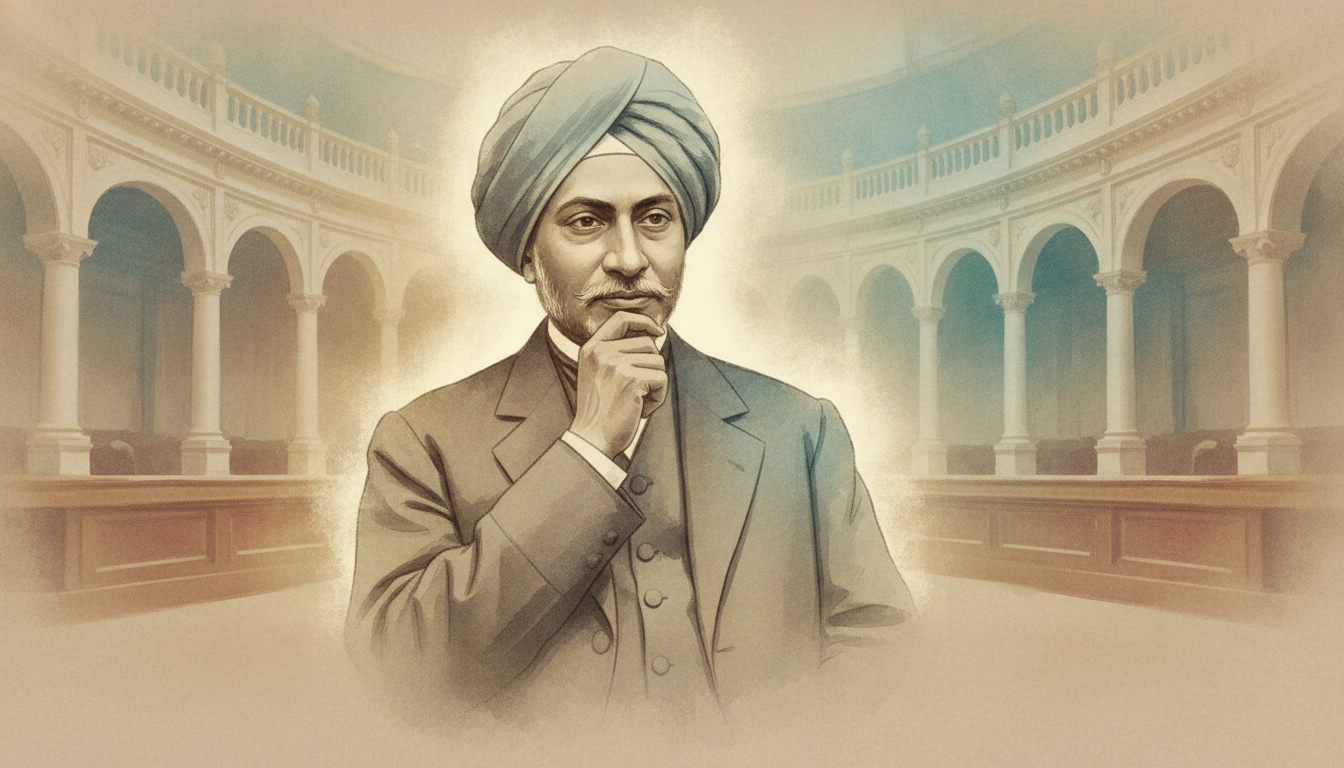
Picture this: London, 1892. A grand hall, hushed anticipation, the weight of history hanging in the air. A man, Dadabhai Naoroji, steps forward, newly elected to the British Parliament – the very first Indian to achieve such a feat. You can almost feel the weight of that moment, a true trailblazer. But when presented with the customary Bible for his oath of office, he gently, yet firmly, refused. Not out of disrespect, mind you, but because he was a Zoroastrian, and his faith, his whole being, was rooted in its own sacred text. He just wouldn’t. And they let him! It’s incredible, really, that such a thing could happen back then.
This wasn’t just a quirky historical footnote; it was a deeply personal, symbolic act of conviction. Naoroji, often called the ‘Grand Old Man of India,’ wasn’t just a politician. He was a merchant, a scholar, a writer – a true renaissance man who co-founded the Indian National Congress. He looked at the economic relationship between India and Britain, and he saw… well, he saw a problem. A big one. He formulated what became known as the ‘drain theory,’ meticulously detailing how wealth was systematically siphoned from India. It seems so obvious now, doesn’t it? But someone had to articulate it, provide the numbers, the undeniable evidence. His work, especially his book *Poverty and Un-British Rule in India*, really stirred the pot, becoming a cornerstone for Indian nationalism. Mahatma Gandhi himself looked up to Naoroji “as children look up to the father,” which, you know, speaks volumes about his character and influence.
He wasn’t just focused on India, either. He had genuine sympathy for the Irish in their own struggle for independence, seeing the parallels, the shared human desire for self-determination. It reminds you that sometimes, the fight for justice is universal, reaching across borders and cultures. Even today, his legacy resonates; the British government launched the Dadabhai Naoroji Awards in 2014 to honor contributions to UK-India relations. A truly remarkable, unflappable individual who, with quiet dignity, stood for what was right.
The 508 Takeaway
Naoroji’s story, starting with that simple refusal to take an oath on a text not his own, is a powerful reminder for ‘508 Life.’ It teaches us about the quiet strength of conviction. How often do we, in our daily lives, compromise on our own values, perhaps without even noticing, just to fit in or avoid a little friction? His unwavering integrity, his courage to be different even on a small, symbolic point, shows us the profound ripple effect that standing firm in your truth can have. Mindfulness, after all, isn’t just about meditation; it’s about being present and authentic in our beliefs, letting our actions, big or small, align with our inner compass. It’s about having the quiet, gentle fortitude to say, ‘This is who I am, this is what I believe,’ and trusting that integrity will, in the long run, move mountains. What a thought to carry into your day, eh?
This story was originally reported by Good News Network. You can read the full original article here.