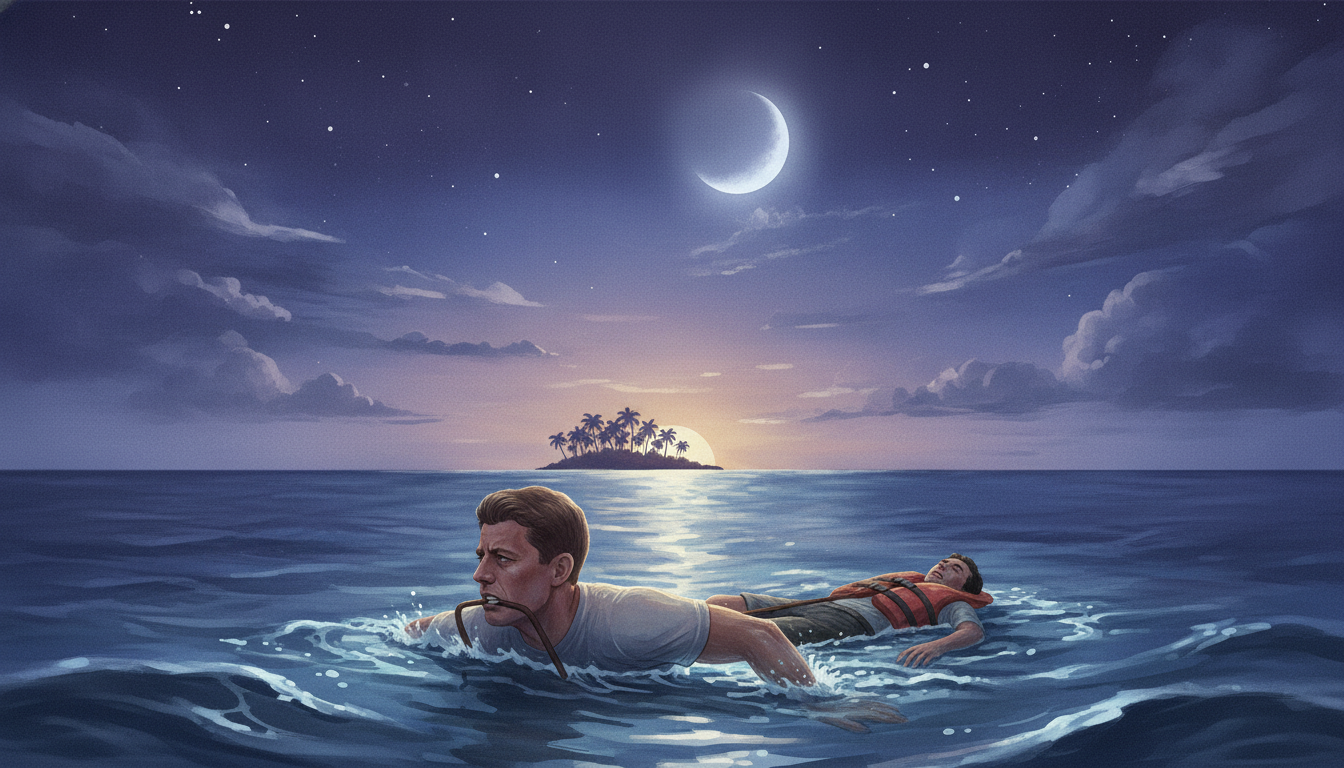
Picture this: it’s the dead of night, August 2nd, 1943, in the Solomon Islands. Lieutenant John F. Kennedy, a young man who’d later become a household name, is commanding PT-109. They’re idling, just one engine purring softly, trying their level best to avoid detection by enemy aircraft in those dark, dangerous waters. You know, the kind of dark where the sea and sky just blend into one inky canvas, making everything feel impossibly vast and, well, a little terrifying.
Then, out of nowhere, a shadow. A monstrous, fast-moving shadow. It’s the Japanese destroyer *Amagiri*, returning from a supply run, and she’s bearing down on them. No warning, no time to really react – not with a patrol boat that wasn’t exactly known for its nimble turns, especially on a single engine. Before anyone could even properly yell, let alone fire a torpedo, *CRUNCH!* The destroyer slammed into PT-109, tearing it apart. A hundred-foot fireball erupted into the night sky. Chaos, absolute pandemonium. Two crewmen, Andrew Jackson Kirksey and Harold William Marney, were lost in an instant. Others were thrown into the flaming, oil-slicked sea, badly burned.
But here’s where the story really grabs you. Despite being seriously injured himself – just imagine that impact – Kennedy didn’t hesitate. He started pulling men from the burning wreckage, literally swimming them to the floating bow of their shattered vessel. There was Patrick McMahon, severely burned, and others like Starkey and Harris. The boat was sinking, though, no two ways about it. So, what did they do? They improvised, using a wooden plank to keep themselves afloat, and began swimming, a grueling five-hour odyssey, to a deserted speck of land called Plum Pudding Island. And here’s a detail that always gets me: Kennedy, a former Harvard swimmer, towed McMahon behind him, a life jacket strap clenched between his teeth, for that entire, incredible journey. Five hours! Just think about that effort, that sheer will. Once on the island, he didn’t stop either, swimming out again for two more hours, trying to flag down passing allied vessels until, finally, they were found and rescued. It’s a testament to his grit, you know? Just an unbelievably gutsy move, saving almost his entire crew against all odds. What an experience that must have been.
The 508 Takeaway
This story, though born from the crucible of war, really shines a light on something fundamental to our ‘508 Life’ philosophy: the incredible wellspring of resilience and selflessness that lives within us. When everything around you is collapsing, when the odds are stacked impossibly high, where do you find the strength to not only keep going but to carry others? Kennedy’s actions weren’t about grand strategy or political maneuvering; they were about raw, human courage and an unwavering commitment to the people around him. It reminds us that even in our own smaller battles—the daily struggles, the unexpected setbacks—we possess a quiet, unyielding strength. We can choose to be resourceful, to care for each other, and to keep swimming, even when we feel like we’re towing the world behind us. It’s about finding that inner reserve, that deep breath, and just moving forward, one stroke at a time, for ourselves and for those we cherish.
This story was originally reported by Good News Network. You can read the full original article here.