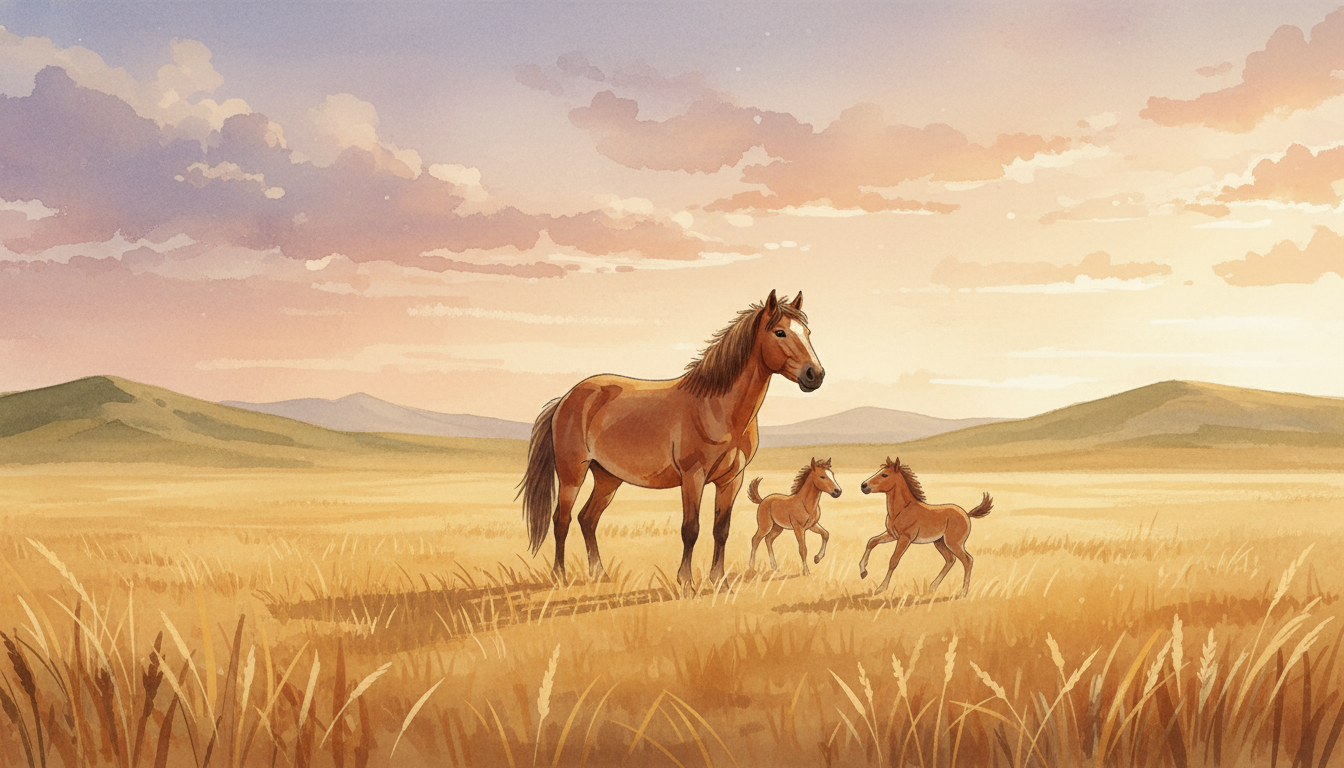
The image truly stuck with me: a Przewalski’s horse, all sturdy build and wild, untamed mane, galloping across a vast, golden steppe. Not a domestic horse, you understand, but a creature truly wild, a direct descendant of a lineage that almost vanished entirely. It’s a powerful picture, isn’t it? One that quietly landed in my lap while I was sipping my morning tea, a news snippet about a conservation success story in China that truly made me pause and, well, *feel* something.
Can you imagine, just a few decades ago, these magnificent creatures — the last non-domesticated horse species on Earth, by the way — were considered extinct in the wild in China? Gone. Finished. But here we are, celebrating the 40th anniversary of something truly extraordinary: the Wild Horse Return Program. Since 1986, dedicated folks have been working tirelessly, patiently, to bring them back. And boy, have they succeeded! Latest counts? A robust 900 strong, thriving autonomously across those sweeping grasslands. That’s a whole third of the global population, which, frankly, just blows my mind a little.
It started with just a few animals kept in zoos in Europe, a truly humbling thought. From those precious few, a whole new wild population has emerged. You know, a big chunk of them now roam the Dunhuang West Lake Nature Reserve in Gansu Province, a place known historically as the ‘Jade Gate.’ Two hundred horses, spread across 28 herds, just living their best wild lives. They even figured out a clever ‘loose relocation’ method for transporting them — no tranquilizers and crates, which can be risky, but giving them more room to move. It’s a testament to ingenuity, really.
Wang Hongjun, who heads up one of the centers, expects about six new foals this year. Six more little beacons of hope! It’s not just some dry scientific endeavor, if you catch my drift. It’s life, finding a way, supported by human hands and hearts. These horses carry 60 million years of evolution in their very being. Just think about that. Sixty million years, almost lost, now flourishing again.
The 508 Takeaway
This story, for me, really underscores the profound power of long-term commitment and the quiet joy found in watching nature heal. It’s easy, sometimes, to get caught up in the immediate, the urgent, the next thing on our to-do list. But this tale of the Przewalski’s horse reminds us that some of the greatest joys, the most meaningful triumphs, are often the result of patient, consistent effort over a very long haul. It teaches us to look for those subtle, slow-burning victories in our own lives, too — the relationships we nurture, the skills we slowly hone, the small acts of kindness that ripple outward. There’s a beautiful mindfulness in understanding that true restoration, whether in nature or within ourselves, often takes time, persistence, and an unwavering belief in what’s possible.
This story was originally reported by Andy Corbley. You can read the full original article here.