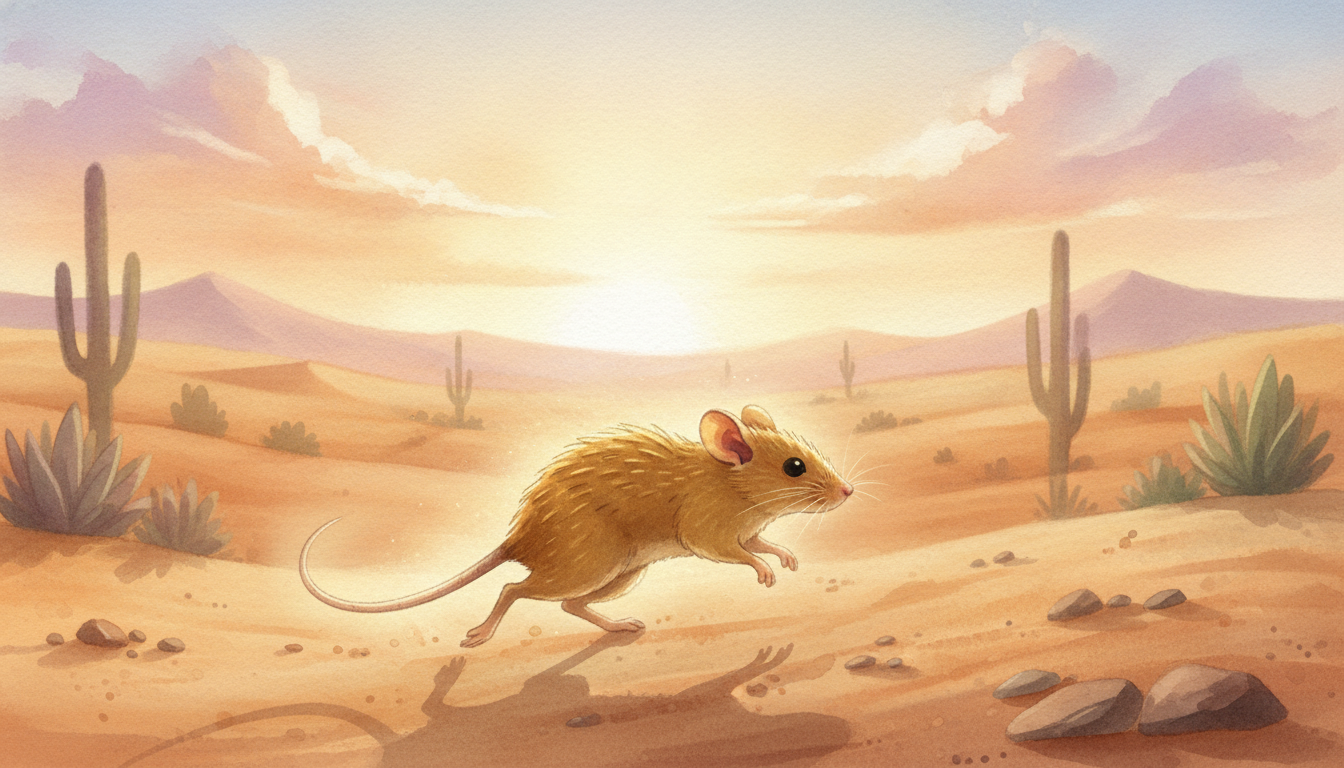
Picture this: a tiny mouse, no bigger than your palm, scampering across scorching desert sands, living not just for a fleeting moment, but for years. Most mice? Nine months, tops. A blink, really, in the grand scheme of things. But these golden spiny mice, these little rebels of the Middle Eastern deserts? Some are hitting *five years* out there in the wild. Five years! If humans had that kind of longevity equivalent, well, our Founding Fathers would still be around, perhaps debating modern policy over a cup of tea. Wild, right?
And here’s the kicker, according to Professor Vishwa Deep Dixit from Yale: they’re not just existing, they’re *living*. Healthy, active, dodging predators, foraging for food right up until their golden years. Not like, you know, us sometimes, hobbling along or feeling our energy wane. Their ‘healthspan’ is basically their ‘lifespan.’ What a concept!
Nature’s usually pretty brutal, isn’t it? Get to breeding age, do your thing, then… poof. But these spiny mice, they’ve found a loophole, a clever way around the usual biological script. Diurnal – active by day – they dodge the night-shift predators like snakes. And get this: they even have communal childcare! Fewer pups get picked off, more survive. It all adds up to a setup where longer life actually makes sense, biologically speaking.
So, Professor Dixit and his team dug in. And guess what they found? A protein called *clusterin*. Sounds fancy, right? Turns out, high levels of this same protein are often found in human centenarians – folks living to 100 and beyond. This clusterin seems to be a real hero, clearing out junk proteins, reducing inflammation, even linked to lower neuroinflammation in Alzheimer’s cases. Basically, it’s like a tiny internal clean-up crew, keeping things humming along beautifully. Oh, and another thing! Their thymus gland – that little organ near your heart crucial for immune function – stays robust well into old age. Ours? It starts to fade after adolescence. These mice, they just keep on ticking, immunologically speaking.
It really makes you wonder, doesn’t it? Could we humans have similar pathways, dormant or just not fully understood? More research is definitely needed, but what a thought: unlocking some of nature’s secrets for a longer, *healthier* life.
The 508 Takeaway
This little mouse, with its incredible knack for a long, vibrant life, really got me thinking about our own ‘healthspan.’ It’s not just about adding years to our lives, but adding *life* to our years, isn’t it? The spiny mouse isn’t just surviving; it’s thriving, active and engaged right to the end. For us, that means nurturing our bodies and minds, being present, and finding joy in the everyday moments – the very essence of ‘508 Life.’ When we commit to mindful living, to practicing kindness towards ourselves and others, we’re essentially investing in our own ‘clusterin’ – our internal well-being – ensuring that the years we’re given are filled with vitality, purpose, and genuine connection. It’s a gentle reminder that living fully, with intention, is perhaps the greatest longevity secret of all.
This story was originally reported by Andy Corbley. You can read the full original article here.