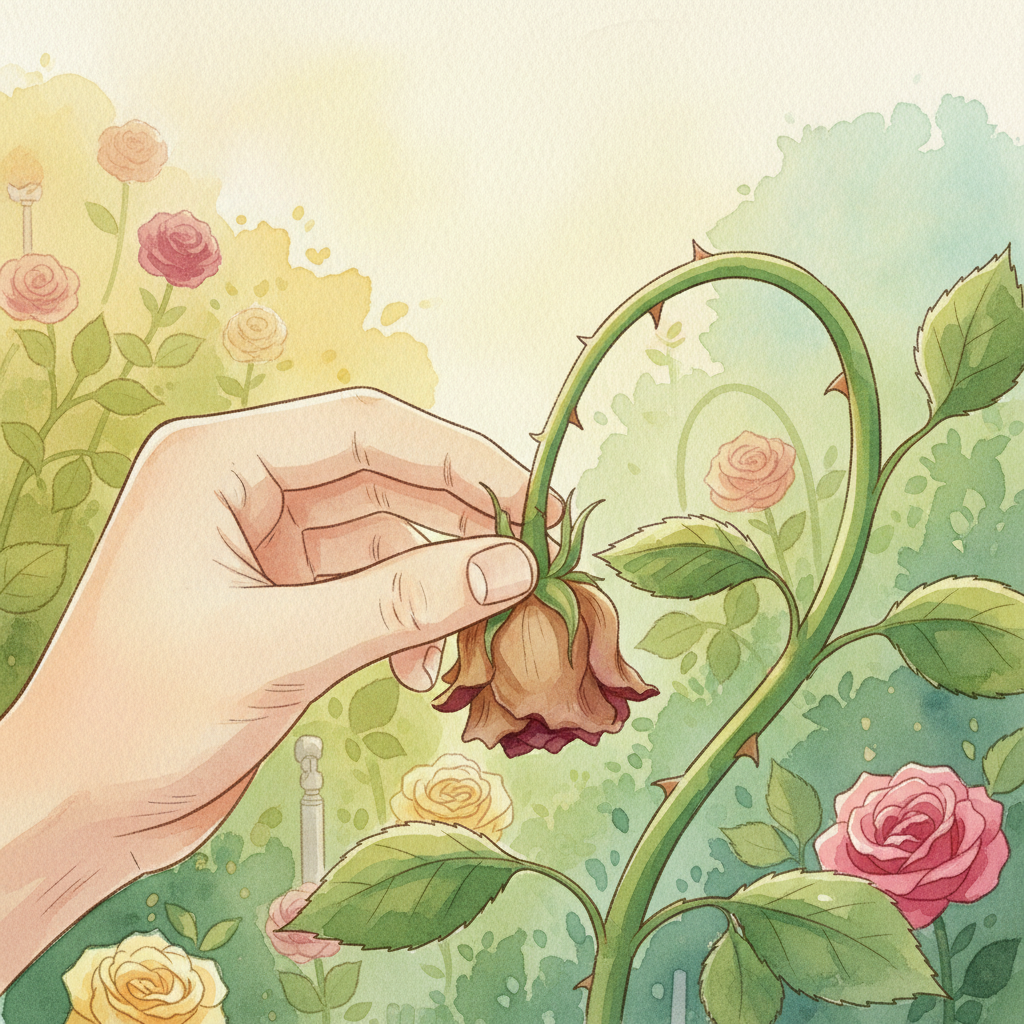
You know, just the other morning, I was out in my small, somewhat unruly backyard garden—a true labor of love, if I’m being honest, and sometimes just a labor!—and I found myself staring at a wilting rose. Its petals, once a vibrant crimson, were now papery and brown, clinging stubbornly to the stem. It wasn’t *bad*, not at all, but it certainly wasn’t adding any beauty to the patch anymore.
It got me thinking about something I’d heard a horticulturist friend explain once: “deadheading.” Sounds a bit morbid, right? But it’s actually this really vital practice. See, when you snip off those spent, faded blooms, you’re not just tidying up. You’re redirecting the plant’s energy. Instead of pouring all its precious resources into maintaining what’s already done, already withered away, it can focus on pushing out *new* growth. More vibrant leaves, more buds, a whole new burst of life. It makes perfect sense. If you don’t deadhead, the plant often just stops blooming as much, or the new flowers are smaller, less impressive.
And you know, this simple act in the garden, it really struck a chord deep inside me. How often do we do the exact opposite in our own lives? We cling to things that have run their course, don’t we? Maybe it’s an old argument we can’t quite let go of, a past disappointment that still stings, or even just habits that no longer serve us. They’re not necessarily *bad* memories or experiences, just… finished. Like those faded flowers, they’ve had their moment, offered their beauty or their lesson. But holding onto them, letting them drain our emotional energy, well, it kinda keeps us from blooming again. It stops us from discovering what new beauty might be waiting just around the corner.
It’s a subtle shift, this idea of metaphorical deadheading, but a powerful one. It’s about consciously choosing to clear space. It’s about acknowledging that some things, once vibrant and deeply meaningful, are now simply… complete. And that’s okay. In fact, it’s more than okay—it’s essential for what comes next.
The 508 Takeaway
So, as I walked back inside, a little lighter, I started looking at my own emotional garden. Where am I still holding onto faded forms? What attachments, once nourishing, have truly expired? Embracing this idea of “deadheading” in our mindfulness practice isn’t about forgetting or dismissing our past; it’s about being kind to our present selves. It’s about intentionally releasing the weight of what’s finished, making room for new vitality, new perspectives, and yes, new joys. When we gratefully clear the way for fresh growth, we find that our capacity for happiness and connection suddenly, wonderfully, expands. It’s a beautiful, messy, and utterly human process, isn’t it?
This story was originally reported by Good News Network. You can read the full original article here.