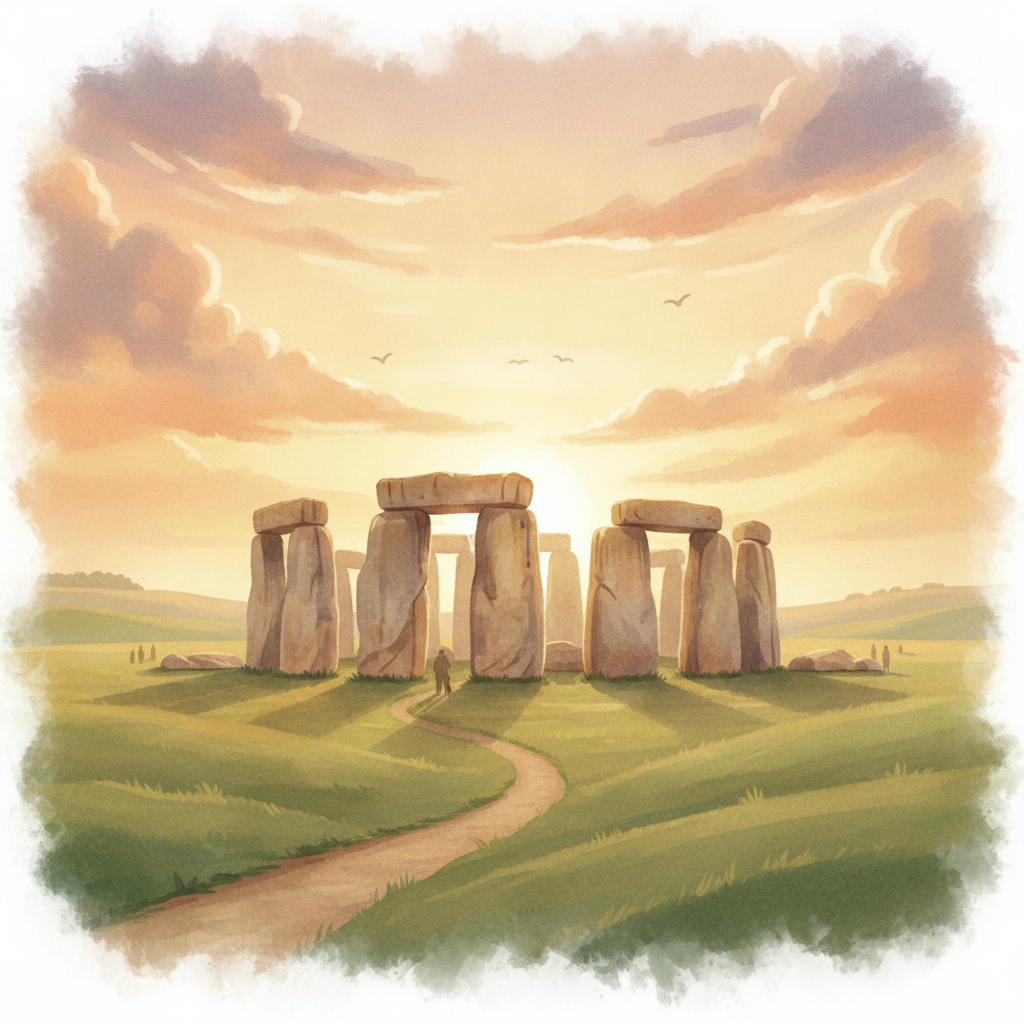
“Lot 15. Stonehenge with about 30 acres, 2 rods, 37 perches of adjoining downland.” Seriously, doesn’t that just sound like something straight out of a really dry, dusty property ledger? Yet, here we are, talking about an auction in 1915 where *Stonehenge*—yes, *that* ancient, mystical ring of stones—was literally on the block. Can you even fathom it? For centuries, this iconic landmark, a real wonder of the world, had actually been privately owned, passed down through blue-blooded families almost like an exceptionally grand, albeit rather immobile, garden ornament.
So, at this particular sale, after the death of the latest aristocratic owner, a fellow named Cecil Chubbs found himself in the room. He wasn’t even planning to bid, mind you! Cecil, a true local boy from Shrewton, just a stone’s throw (pun absolutely intended!) from the monument, had grown up with the sight of those imposing stones on Salisbury Plain. He’d done pretty darn well for himself, too, building a small fortune from managing a hospital, dabbling in horse racing, and breeding cattle. A proper self-made man, our Cecil. But as the bidding started, something just… clicked. He had this thought, a real gut feeling, that “a Salisbury man ought to buy it.” And so, he did. For a rather hefty £6,600, Stonehenge became his. Just like that. Poof.
Now, this is where the story truly shines, where it becomes something straight out of the ‘508 Life’ playbook, I think. Cecil didn’t buy it to fence it off, or turn it into some super-exclusive private estate. Oh no, that wasn’t his style at all. Just three years later, in 1918, he made an astonishing move: he formally handed Stonehenge over to Great Britain, gifting it to be held in trust for the entire nation. But, being the thoughtful, community-minded soul he was, he attached a couple of conditions. He stipulated that the money from ticket sales (which, even then, was a decent chunk of change!) should go to the Red Cross for the duration of the war. And here’s the kicker, the truly heartwarming part: he insisted on free admission, during normal opening hours, for all residents of Shrewton, his native parish, and other surrounding villages. This wasn’t just some grand, impersonal philanthropic gesture; it was a deeply personal act of love for his home and its people. And get this—that privilege? It’s *still* in force today. How incredible is that? It just goes to show, doesn’t it?
The 508 Takeaway
This story, it really makes you think, doesn’t it? About what it means to truly belong to a place, and how that sense of belonging can inspire such profound generosity. Cecil Chubbs didn’t just buy a landmark; he bought a piece of his childhood, a shared heritage, and then, with open hands, he gave it back to everyone. It reminds me that mindfulness isn’t just about quiet contemplation; it’s also about being aware of the beauty around us, the history beneath our feet, and the opportunities we have to contribute to the collective good. Kindness, in Cecil’s case, wasn’t a small, anonymous act, but a grand, public declaration of care for his community, ensuring that the wonder of Stonehenge could be enjoyed by all, especially those who lived closest to its magic. What a beautiful, lasting legacy of joy.
This story was originally reported by Good News Network. You can read the full original article here.