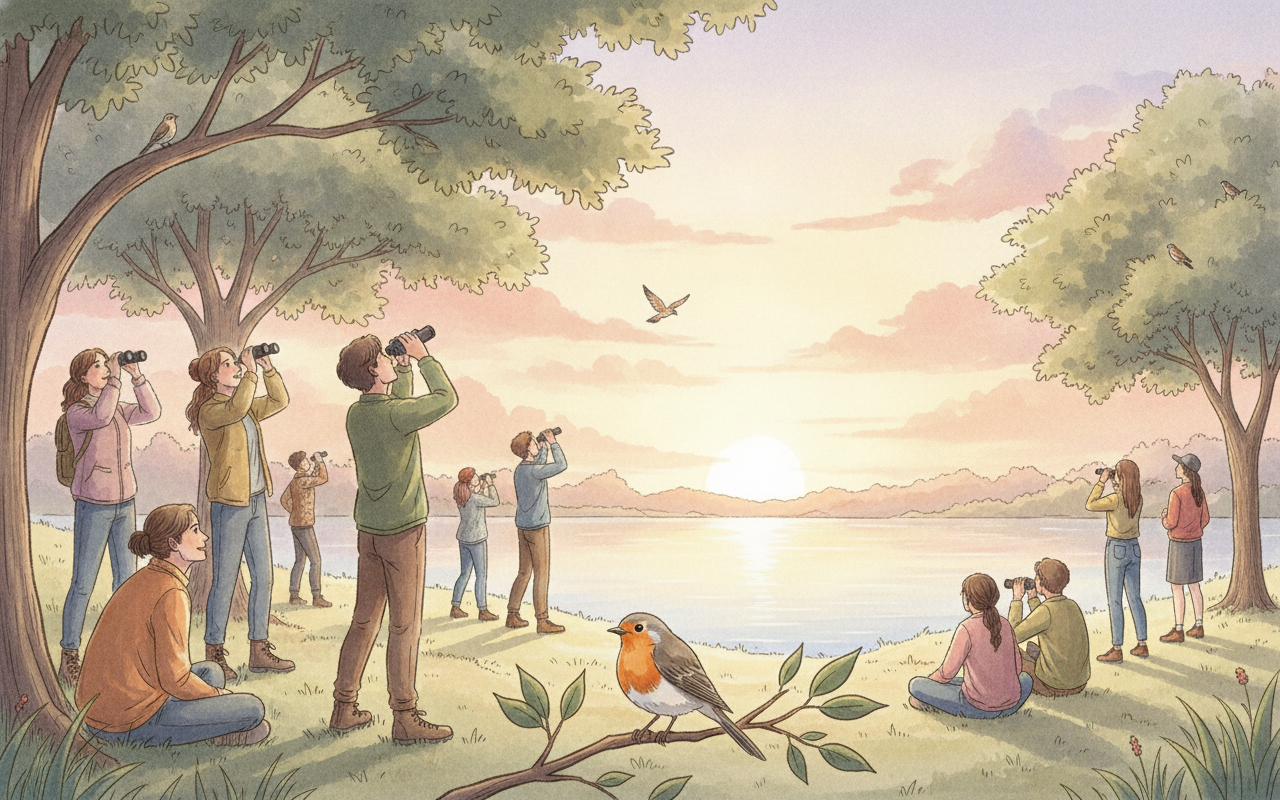
The first hint of pink barely kissed the horizon, but Ben Smith was already out there, thermos in hand, binoculars poised. It’s a ritual, you know? That quiet moment just before the world properly wakes up, when the air is crisp and the birds are just starting their daily symphony. For Ben, who’s only 23, it’s the perfect start to a day, and honestly, he doesn’t even need to spot anything super rare. Just being out there, jotting down whatever feathered friends cross his path, maybe snapping a quick pic – that’s the magic.
And get this: Ben isn’t some lone wolf in this. He’s part of a massive, almost unbelievable, surge. We’re talking nearly three-quarters of a million Gen Z Brits—yes, that’s 750,000 sixteen to twenty-nine-year-olds—who are regularly birdwatching. That’s not just a little bump; it’s an astronomical 1,088% increase since 2018! It’s actually the second-fastest-growing hobby for that age group, right behind jewellery making. So much for birdwatching being just for, well, the waterproof-clad retirees, eh?
Ben’s own journey, he’ll tell you, started way back with childhood road trips. His dad, a lorry driver, worked nights across rural Scotland, and young Ben would wake up in the van, eyes peeled for raptors—red kites, kestrels, peregrine falcons, even eagles—soaring against the vast Scottish sky. Later, he volunteered in his high school garden, joined the RSPB youth council, and now he’s studying zoology and ecology. It just makes sense, doesn’t it?
So, why the sudden feathered frenzy among the youth? Ben reckons it’s partly a response to the whole climate doom narrative they’ve grown up with. A kind of, “Hey, let’s actually appreciate and respect this natural world while it’s still here” vibe. Plus, he gives a nod to his grandparents, who always seemed to know every bird call. And, surprisingly, social media plays a role too. Instagram feeds once bursting with gym selfies are now dotted with stunning bird photos, ID videos, and clips of rare sightings. It’s made the hobby less intimidating, dare I say, even a little cool.
Technology, too, has lowered the bar. Apps like Merlin and iNaturalist are like having an expert in your pocket, making identification a breeze for beginners. But for Ben, it’s the in-person connections that truly seal the deal. Just recently, he and some friends spent an evening canoeing on Loch Lomond, listening to sandpipers and oystercatchers overhead. “That was a perfect evening for us,” he said. It’s that human link, that shared wonder. It’s infectious, really. Once you know someone who’s into it, you’re in.
His advice for anyone curious? “You don’t need fancy equipment, not even binoculars to start. Just get out there.” And, a little bonus: RSPB reserves are now free for 16- to 24-year-olds. Go on, give it a try. You might just find your flock.
The 508 Takeaway
Isn’t it fascinating how something as simple and seemingly old-fashioned as birdwatching can offer such a profound anchor in our fast-paced world? For me, this story isn’t just about birds; it’s a beautiful reminder that joy, genuine connection, and a deep sense of presence often lie in the quietest corners. Taking a moment—just a moment—to observe, to truly *see* the world around us, whether it’s the flutter of a robin’s wing or the intricate pattern of a leaf, can be an incredibly mindful act. It pulls us away from the digital noise, roots us in the now, and often, as Ben discovered, connects us with others in a shared, gentle appreciation. It’s a small act of kindness to ourselves, really, to slow down and notice the everyday miracles.
This story was originally reported by Robin Eveleigh. You can read the full original article here.