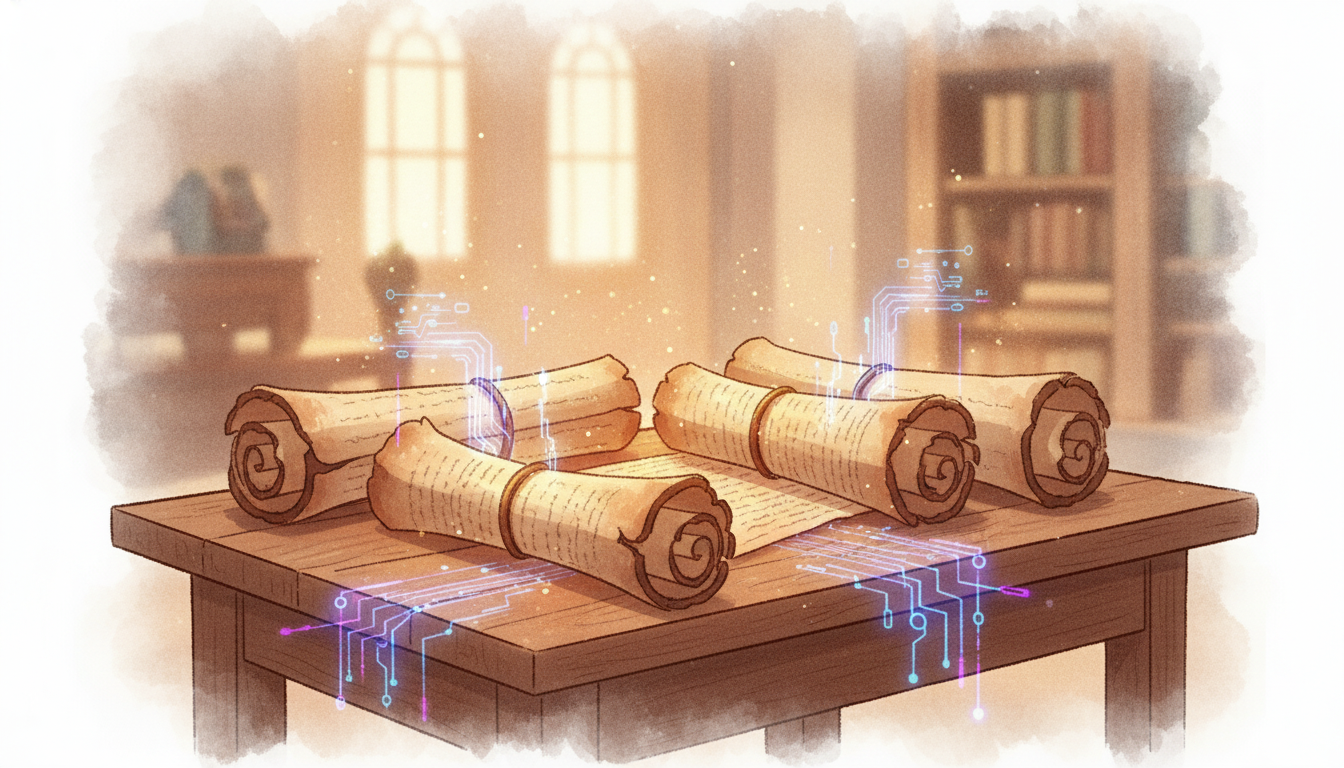
I was scrolling through the news the other day – you know, just trying to keep up with the world – when something truly stopped me in my tracks. It wasn’t the usual headlines, no, nothing about politics or the latest influencer drama. This was about ash, ancient ash, and whispers from nearly two millennia ago. And frankly, it’s just… incredible.
Turns out, those infamous scrolls from Herculaneum, carbonized by Vesuvius’s eruption way back in 79 AD, are finally starting to spill their secrets. For centuries, they’ve sat there, these brittle, charcoal-like cylinders, unreadable, impossible to unroll without turning to dust. Imagine holding a piece of history, the only intact library known from the Classical World, and not being able to read a single word! It’s a bit like having a treasure map you can’t quite unfold. Many brilliant minds tried, mind you, but always with heartbreaking failure and often, irreparable damage.
But here’s the kicker: modern technology, specifically a wild combination of CT scans and sophisticated AI, is actually doing it. Folks like Youssef Nader, Luke Farritor, and Julian Schilliger, spurred on by something called the Vesuvius Challenge, managed to train deep learning programs to virtually ‘unwrap’ these ancient texts. They’re literally seeing the ink through the layers of petrified papyrus. It’s no small feat, honestly, a real testament to human ingenuity reaching across time.
And what are they finding? Oh, just some profound thoughts from an unknown Stoic philosopher, for starters. And a lost book, “On Gods: Book 8,” by the Epicurean Philodemus. We’re talking about direct insights into what people were thinking, debating, and reading during the age of Caesar, before that volcanic fury froze their world. The texts mention Greek philosophical concepts like “horme” – a fancy word for impulse – and “phronesis,” which means practical wisdom. Impulse to guard against, practical wisdom as a virtue. How timely is that, even now?
The 508 Takeaway
It really makes you think, doesn’t it? Here we are, thousands of years later, grappling with the same fundamental human questions. “Horme” and “phronesis” – impulse versus practical wisdom. In our fast-paced, always-on lives, how often do we act on pure impulse, driven by the immediate ping of a notification or the fleeting urge for instant gratification? This ancient wisdom, unearthed by futuristic tech, serves as a gentle, yet powerful, reminder. Taking a moment, breathing, allowing “phronesis” to guide us – that practical wisdom – can truly transform our everyday experiences. It’s about choosing a mindful response over a knee-jerk reaction, cultivating a kindness rooted in understanding, not just reflex. The past, it seems, still has so much to teach us about living a richer, more intentional present.
This story was originally reported by Andy Corbley. You can read the full original article here.