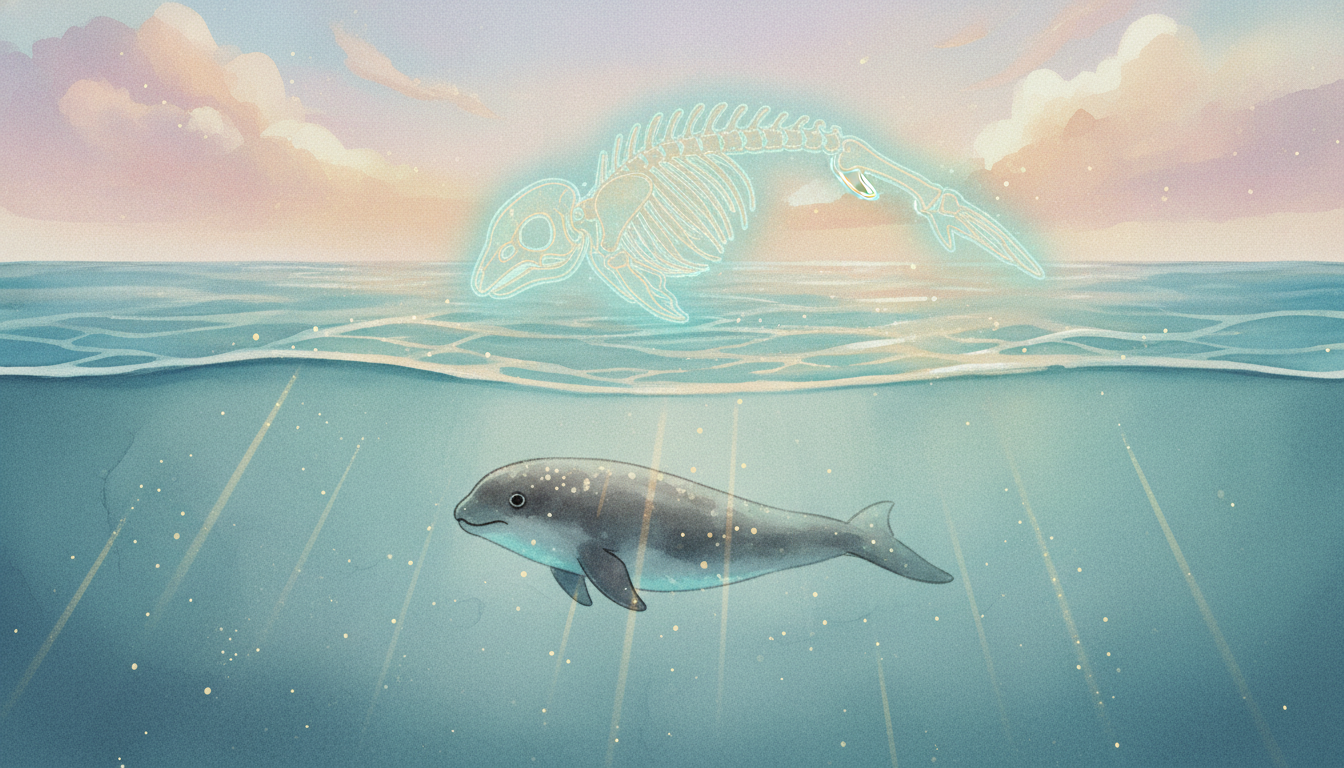
Sometimes, when you think about the vastness of our oceans, it’s easy to miss the quiet tragedies unfolding in their depths. Or perhaps, more accurately, the tragedies we’ve allowed to unfold. Take the vaquita porpoise, for instance. Have you ever heard of it? This tiny, tiny creature, no bigger than a grown man, swims only in a small corner of Mexico’s Gulf of California, and it’s, well, it’s practically gone.
Only about ten, folks. Ten! That’s the entire wild population of these shy, beautiful marine mammals left on Earth. Their fate, a heartbreaking tale, is tied directly to illegal gillnets meant for other banned species. It’s a gut punch, truly, to think of something so unique, with those distinctive dark rings around its eyes, simply vanishing from our world. Just *poof*.
But here’s where a little spark of ingenuity, a dash of human brilliance, actually steps in – a different kind of lifeline. Researchers from Florida Atlantic University, teaming up with folks from the San Diego Natural History Museum, SeaWorld California, and NOAA Fisheries, have done something pretty extraordinary. They’ve taken a rare vaquita skeleton, donated way back in ’66, and brought it into the 21st century with advanced imaging tech. Think about it: medical CT scans, the kind that peek inside us, applied to a fragile bone structure. High-res micro-CT imaging, digital photography – all to create an incredibly detailed, precise 3D model. This isn’t just some dusty old skeleton in a museum, mind you. It’s a permanent, shareable, digital archive.
Suddenly, this precious, almost mythical creature, becomes accessible to anyone with an internet connection. Students, scholars, even curious minds like you and me, can virtually explore every bone, every intricate detail, without ever touching the delicate original. They’ve made all this data freely available online, even providing downloadable 3D meshes. Imagine being able to 3D print a replica for a classroom or a museum! And while the real fight, the one to save the living vaquitas from those awful, illegal gillnets, that’s still very much happening, this digital work? It’s a different kind of lifeline. It’s about remembering, learning, and perhaps, inspiring a future we desperately hope for.
The 508 Takeaway
This story, though tinged with sadness, holds a profound lesson for ‘508 Life’. It reminds us that even when faced with what seems like insurmountable loss, our human capacity for innovation and care can create new forms of preservation and connection. Mindfulness, in this context, isn’t just about cherishing what’s present; it’s also about acknowledging what’s fading and finding ways to honor its memory and legacy. The digital vaquita isn’t just data; it’s a testament to our collective memory, a call to kindness for future generations, and a quiet whisper that even in near absence, there can be a profound, lasting presence. It encourages us to find joy and purpose in creative solutions, even when the odds feel stacked against us, and to never stop seeking ways to preserve the beauty around us, in all its forms.
This story was originally reported by Good News Network. You can read the full original article here.