Remember the last time? I mean, really remember. The last time you, or frankly, anyone you know, faced down actual, honest-to-goodness fear? The kind that makes your stomach clench, your breath catch, your very bones feel a little brittle? I’m talking about physical danger, mind you. Something where, if you made the wrong move, or if fate just decided to be a real jerk, you could actually, genuinely get hurt. Like, properly hurt. Not a paper cut, not a stubbed toe. We’re talking about a situation that would send our ancestors, those intrepid souls from back in the day, shaking in their boots – or, you know, their animal skins.
It’s a peculiar thing, isn’t it, this modern existence of ours? We’ve managed, through sheer grit, innovation, and perhaps a touch of blind luck, to build ourselves these magnificent, climate-controlled cocoons. Our homes are safe, our food is abundant (usually, anyway), and the biggest predator most of us face is the alarm clock on Monday morning. And don’t get me wrong, I’m not exactly pining for the days of saber-toothed tigers lurking just beyond the campfire. Absolutely not. Give me central heating and Wi-Fi over foraging for berries and fending off wolves any day of the week, and twice on Sundays.
But here’s the rub, the tiny little snag in this otherwise perfectly woven tapestry of comfort: when you take away the real threats, the palpable dangers that once kept humanity on its toes, what do you suppose happens to the mind? Well, if my observations are anything to go by – and believe you me, I’ve had plenty of opportunities to observe – it starts to get… creative. It begins to invent fears. Conjure up anxieties out of thin air, like a magician pulling a rabbit from an empty hat, only the rabbit is stress, and the hat is, well, pretty much everything.
I see it all the time. Everywhere. But perhaps nowhere more vividly, more hilariously, than in the hallowed halls of the modern airport. Oh, the airport! A veritable crucible of manufactured angst! You know the drill, right? You’re there, surrounded by gleaming floors, an endless parade of snack options, charging stations galore, and yet, the tension in the air? It’s thick enough to cut with a dull butter knife. People, bless their hearts, are absolutely tying themselves in knots over the most astonishingly trivial things. The security line, for crying out loud! “Oh, what if we miss our flight? What if the bag is overweight? Did I remember to take out my laptop? What if, what if, what if?”
And I’m just standing there, often with a slightly bewildered expression, thinking, chill, my friend. Just… chill. You are, for all intents and purposes, in a giant, climate-controlled shopping mall with wings. There’s food – glorious, often overpriced, but undeniably present food – on every corner. There’s coffee. There are plush seats. There’s an abundance of everything you could possibly need, and then some. Worst case scenario? You miss your flight. And then what? You get put on the next one. Maybe the one after that. You might even get a voucher for a mediocre hotel room. Is it ideal? No, of course not. Is it a life-threatening crisis? Is your very survival hanging in the balance? Good heavens, no! It’s an inconvenience. A minor, fleeting, utterly forgettable hiccup in the grand scheme of things.
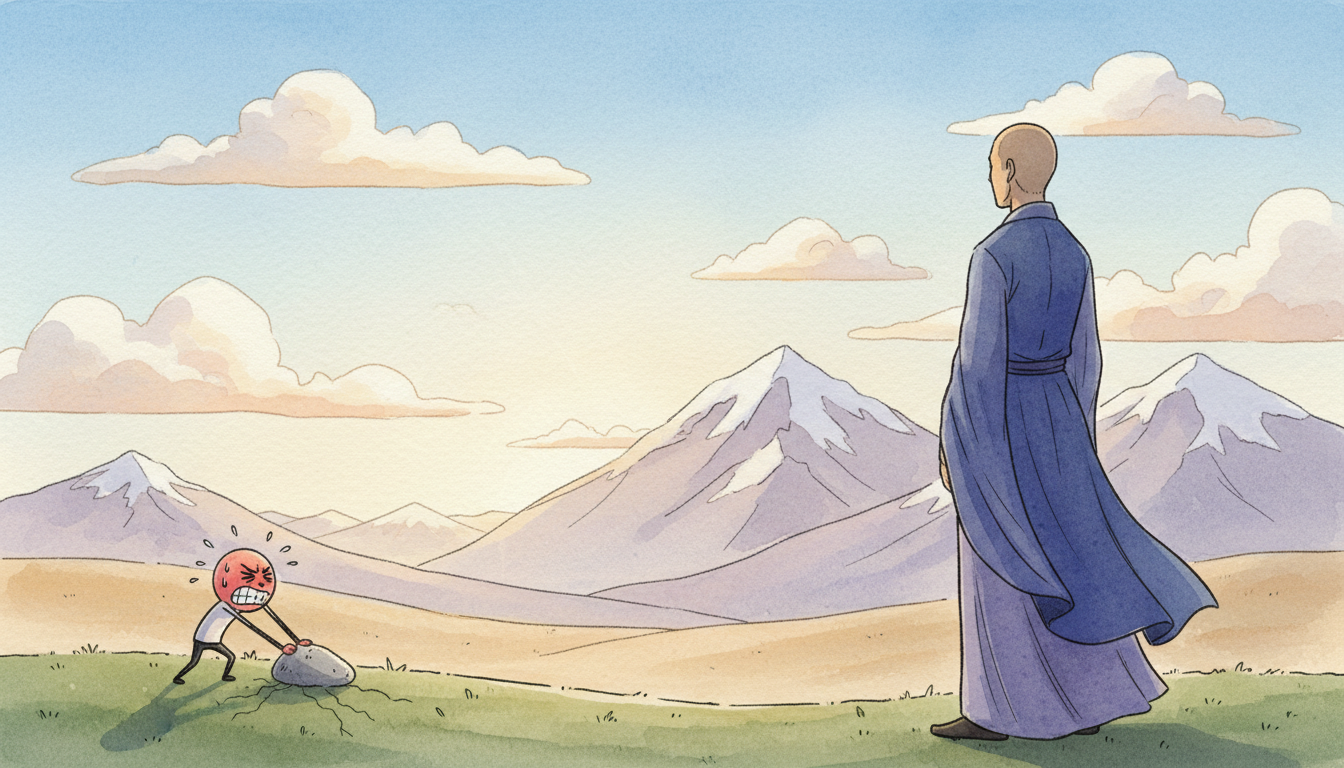
How do we get so utterly, completely worked up about things that, when you truly zoom out, when you apply even a smidgen of perspective, simply do not matter? It’s a phenomenon that truly fascinates me, and it’s one of the core tenets of what we explore here at 508 Life. This tendency to make mountains out of molehills. And I’ve come to believe, pretty strongly actually, that it’s directly linked to this absence of genuine, visceral fear in our daily lives.
The Calibration of Catastrophe: Why Real Fear Matters
Think of it like a scale. A mental scale, if you will. On one side, you have genuine, life-altering threats: a natural disaster, a serious illness, actual physical danger. On the other, you have the everyday annoyances. If the ‘real danger’ side of that scale rarely gets any weight, if it sits perpetually empty, then even the tiniest pebble on the ‘annoyance’ side starts to feel like a boulder. Our internal alarm system, designed by millennia of evolution to keep us safe from very real threats, gets a little… miscalibrated. It starts screaming “DANGER!” at a delayed flight, at a spilled coffee, at a less-than-perfect Instagram post. It’s like a smoke detector that goes off every time you toast bread. Highly sensitive, yes, but utterly useless for actual fires.
When you’ve genuinely faced something that made your heart pound, that put a knot in your gut, that reminded you of your own fragile mortality – even if it was just a near-miss, a close call, a moment where you thought, ‘whoa, that could have been bad’ – it changes things. It recalibrates that internal scale. It reminds you what real fear feels like. And once you’ve felt that, really felt it, the small stuff starts to shrink back down to its appropriate, manageable size. The airport drama? The minor social snub? The slow internet? They become what they truly are: molehills. Tiny, inconsequential bumps in the road, barely worth a shrug, let alone a full-blown stress spiral.
Beyond the Airport: Cultivating Resilience in Comfort
Now, before anyone gets the wrong idea, I’m not suggesting we all go out and wrestle bears or intentionally put ourselves in harm’s way just to gain some perspective. That would be, shall we say, counterproductive. But I do think there’s immense value in deliberately stepping outside our comfort zones, in seeking out experiences that challenge us, that push our boundaries, that invite a healthy dose of discomfort. Because discomfort, while not actual fear, is its cousin. It’s the training ground for resilience.
- Try a new, challenging hobby: Rock climbing, perhaps? A marathon? Learning a complex musical instrument? Things that demand focus, push your physical or mental limits, and have a genuine risk of failure (or, you know, a scraped knee).
- Embrace the unknown: Travel somewhere completely unfamiliar, without a meticulously planned itinerary. Get a little lost. Talk to strangers. Navigate a foreign language. These experiences, while rarely life-threatening, evoke a healthy sense of vulnerability and require adaptability.
- Practice intentional discomfort: Cold showers, fasting for a day, digital detoxes. These aren’t ‘fearful’ in the traditional sense, but they train your mind to tolerate and even embrace sensations it would normally avoid. They build mental fortitude.
- Seek out meaningful challenges: Volunteer work in a difficult environment, taking on a daunting project at work, having that tough conversation you’ve been avoiding. These can bring a different kind of ‘fear’ – the fear of inadequacy, of failure, of emotional pain – which, when faced, also builds incredible strength.
The truth is, our minds are powerful engines, always seeking purpose, always trying to solve problems. If we don’t give them real problems to chew on, they’ll invent them. They’ll take the mundane, the routine, the utterly harmless, and inflate it into a monumental crisis. It’s a survival mechanism, sure, but one that’s gone a bit haywire in our overly sanitized, overly comfortable world.
So, the next time you find yourself spiraling over something minor – that email you forgot to send, the slightly-too-long wait for your latte, the horror of having to wait an extra twenty minutes for your baggage carousel to start moving – just pause. Take a breath. Ask yourself, is this real fear? Or is this just my mind, bless its overactive little heart, trying to make a mountain where there’s really, truly, only a molehill? You might find that a little dose of self-awareness, coupled with a conscious effort to seek out genuine challenges, is all it takes to recalibrate your internal alarm, and maybe, just maybe, enjoy the abundance of life a little more, without all the manufactured drama. Go on, give it a shot. What have you got to lose, besides a few unnecessary worries?