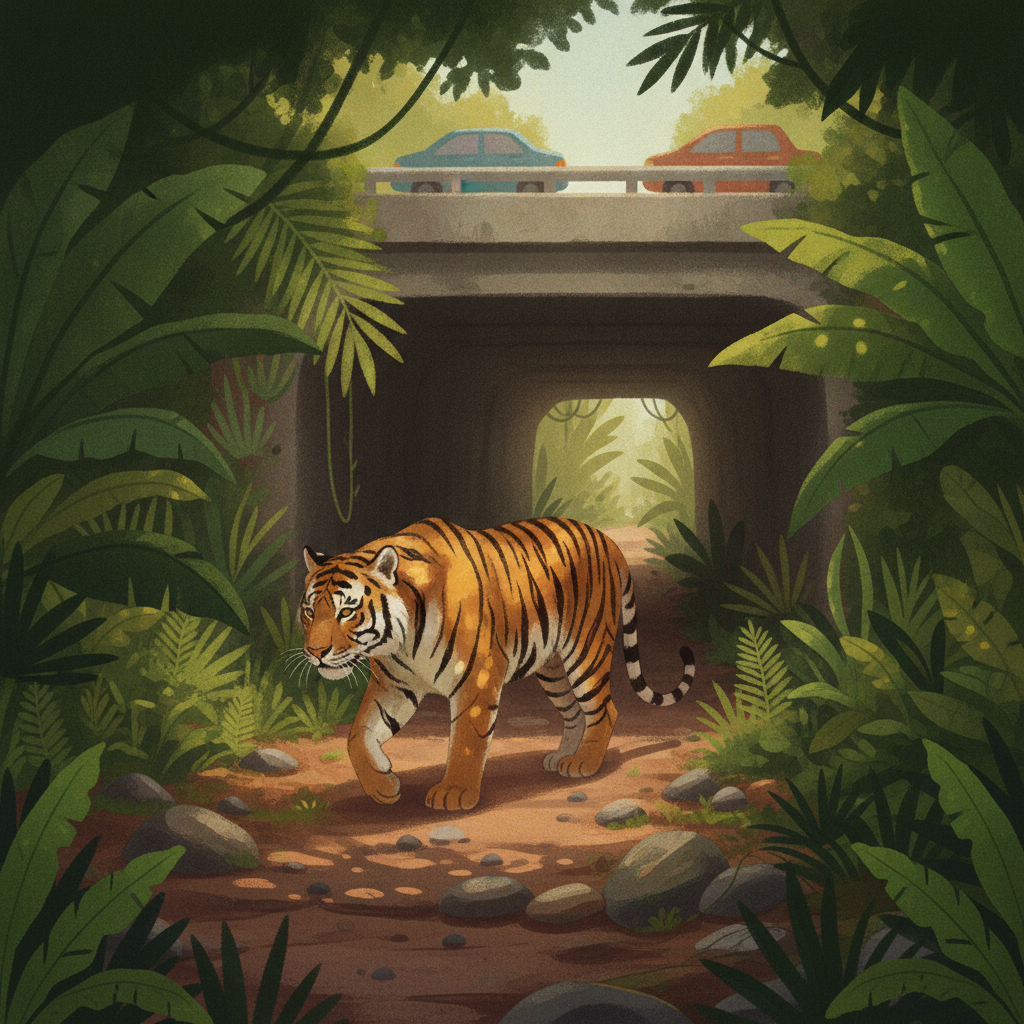
It was just after dawn, the kind of muggy late May morning in northern India where the air already hums with the promise of a scorching afternoon. I found myself squatting on the forest floor, a bit absurdly really, beneath the steady rumble of National Highway 72. Above, cars and trucks sped by, a constant, modern din. But down here, in a patch of moist mud, I was looking at the fresh footprints of a wild elephant – and a tiny thrill shot through me, a reminder of who *really* owns this land, or at least, who *used* to. This wasn’t just any underpass, you see; it was Teen Pani, or ‘Three Waters,’ a relatively short stretch, maybe 1,300 feet, designed to let everything from a scurrying mouse to a massive pachyderm pass safely. And, hopefully, T8.
T8, a magnificent Bengal tiger, had been relocated here to Rajaji Tiger Reserve just last year, one of five big cats brought from Corbett. He’s a roamer, a nocturnal wanderer, and the idea is that he’ll use this underpass, this marvel of human ingenuity, to navigate a landscape increasingly carved up by our own ambition. The expressway above, only opened in 2021, replaced an older, narrower road, but it still felt like a chasm. Yet, step a few meters off this concrete strip, and the traffic noise just… recedes. The forest, it swallows you whole, doesn’t it? The silence is suddenly profound, broken only by the insistent drilling of an unseen woodpecker, or the almost comical ‘brain fever’ calls of a hawk cuckoo. It’s a miracle, frankly, that this jungle has not only survived but is actually *reviving* in a country of 1.4 billion people and an economy that’s been practically sprinting.
India has made this incredible comeback for its tigers, a true conservation success story, with numbers more than doubling since the 70s. But now, these magnificent creatures need space, more than ever. They’re dispersing, pushing out from crowded reserves, and that means they’re bumping up against us, against our roads, our towns. It’s a huge challenge, no doubt about it. But what really blew me away was India’s commitment: they’ve built more wildlife mitigation structures – underpasses and overpasses – than any other country in Asia. We’re talking about the world’s 10 largest wildlife crossings, just to give these tigers, these elephants, these deer, a fighting chance. It’s an imperfect solution, sure, but it’s a tangible, monumental effort to bridge the gap between our world and theirs.
The 508 Takeaway
Standing there, under that rumbling highway, contemplating T8’s journey, it really struck me. These physical corridors, built for tigers to roam and connect, aren’t so different from the ‘corridors’ we need to build in our own lives, you know? Our days, our minds, they get so fragmented by the constant traffic of demands, expectations, and noise. We need to intentionally create those spaces, those ‘underpasses’ of quiet reflection or moments of genuine connection, to allow our inner wildness, our authentic selves, to move freely and find new ground. It’s about recognizing that our well-being, much like a tiger’s survival, depends on our ability to bridge those divides and nurture connections, both with nature and with each other. Sometimes, the most profound peace comes from making space for what truly needs to exist, even if it means building a bridge where you thought only a barrier could be.
This story was originally reported by www.goodgoodgood.co. You can read the full original article here.