You know that feeling when you hear something so utterly incredible, it just… shifts your perspective a little? Like a tiny earthquake in your brain, but the good kind. I had one of those moments recently, reading about a place I’d only ever imagined as vast, empty, and utterly hostile: the Taklamakan Desert.
For centuries, this colossal expanse in China was literally known as the “Sea of Death.” Imagine a landscape so parched, so isolated from any ocean — hemmed in by the Himalayas and other towering ranges — that it could scarcely support a single blade of grass. It was a place of relentless sandstorms, where the desert seemed to be constantly, inexorably, swallowing everything around it. A pretty bleak picture, right?
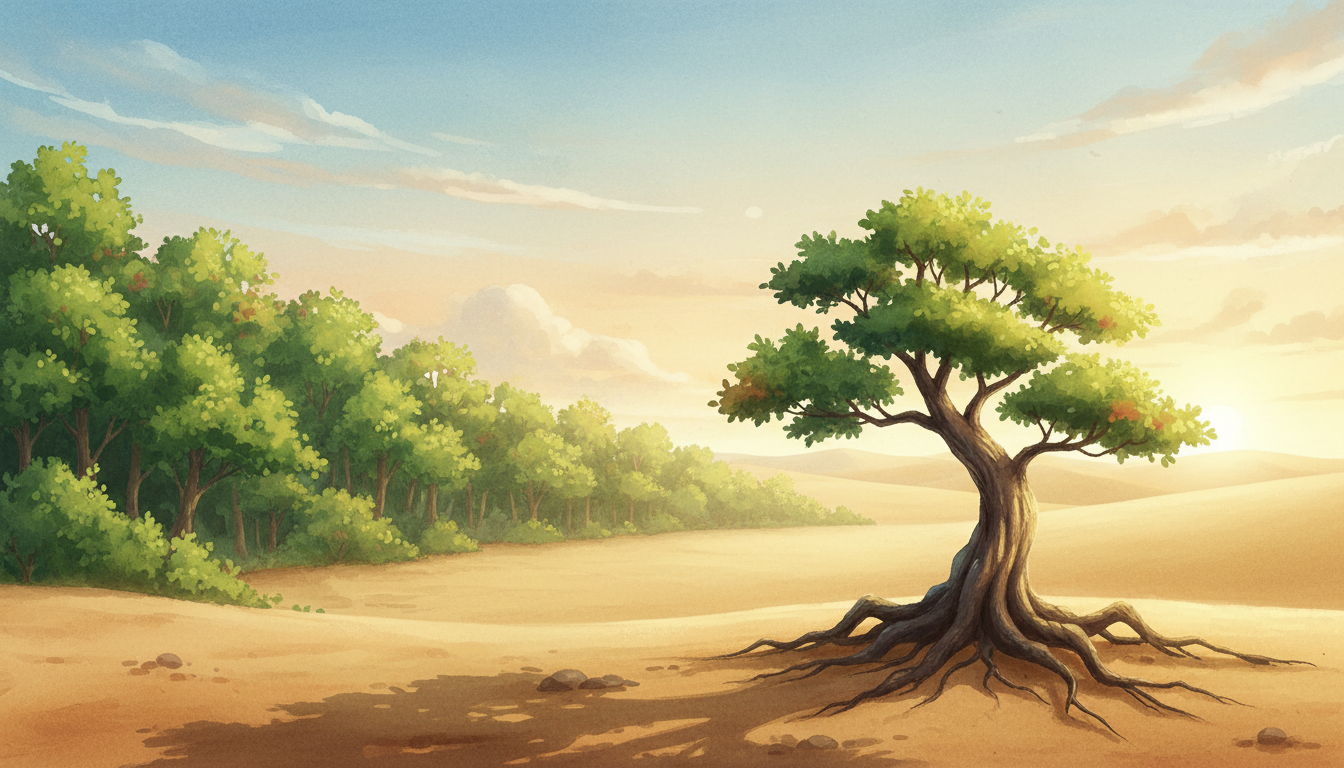
Well, get this: China decided to fight back. Not with armies or walls of concrete, but with trees. This isn’t some small community garden, nope; we’re talking about a project that kicked off way back in 1978, a multi-decade marathon to plant a colossal ring of trees around the desert’s edges. They called it the Three-North Shelter Belt program, but it’s more famously known as the “Green Great Wall.”
Sixty-six *billion* trees, folks. Just let that number sink in for a second, because my jaw hit the floor when I first read it. Sixty-six billion! That’s an astonishing, almost incomprehensible figure. The program officially wrapped up in 2024, and what they’ve achieved is nothing short of miraculous.
And here’s the kicker – the truly mind-blowing part: this wasn’t *just* about stopping sand from swallowing up fertile farmlands, though that was a huge deal, obviously. A recent study by NASA and Caltech used satellite data to confirm something even more profound. This massive afforestation effort has actually transformed parts of the Taklamakan into a legitimate carbon sink! It actually, demonstrably, started pulling carbon dioxide right out of the atmosphere, reducing the local average from 416 parts per million to 413 ppm. Who knew a desert could become such a hero in the fight against climate change, eh? It’s raised average rainfall by several millimeters too, boosting natural growth. It’s a testament to long-term vision and sheer, stubborn human effort.
The 508 Takeaway
This story, for me, isn’t just about environmental triumph; it’s a powerful metaphor for our own lives. How many times do we look at a seemingly ‘barren’ situation — a difficult relationship, a stubborn habit, a goal that feels light-years away — and just decide it’s impossible? This Green Great Wall reminds us that even the most hostile landscapes, both external and internal, can be transformed with persistent, patient effort. It teaches us about the quiet power of small, consistent actions accumulating over time, and the incredible impact of a long-term vision. It’s a beautiful, humbling reminder that hope isn’t just a feeling; it’s an action, a seed planted in the sand, watered with determination, that can truly change the world, one tiny, green leaf at a time.
This story was originally reported by Andy Corbley. You can read the full original article here.