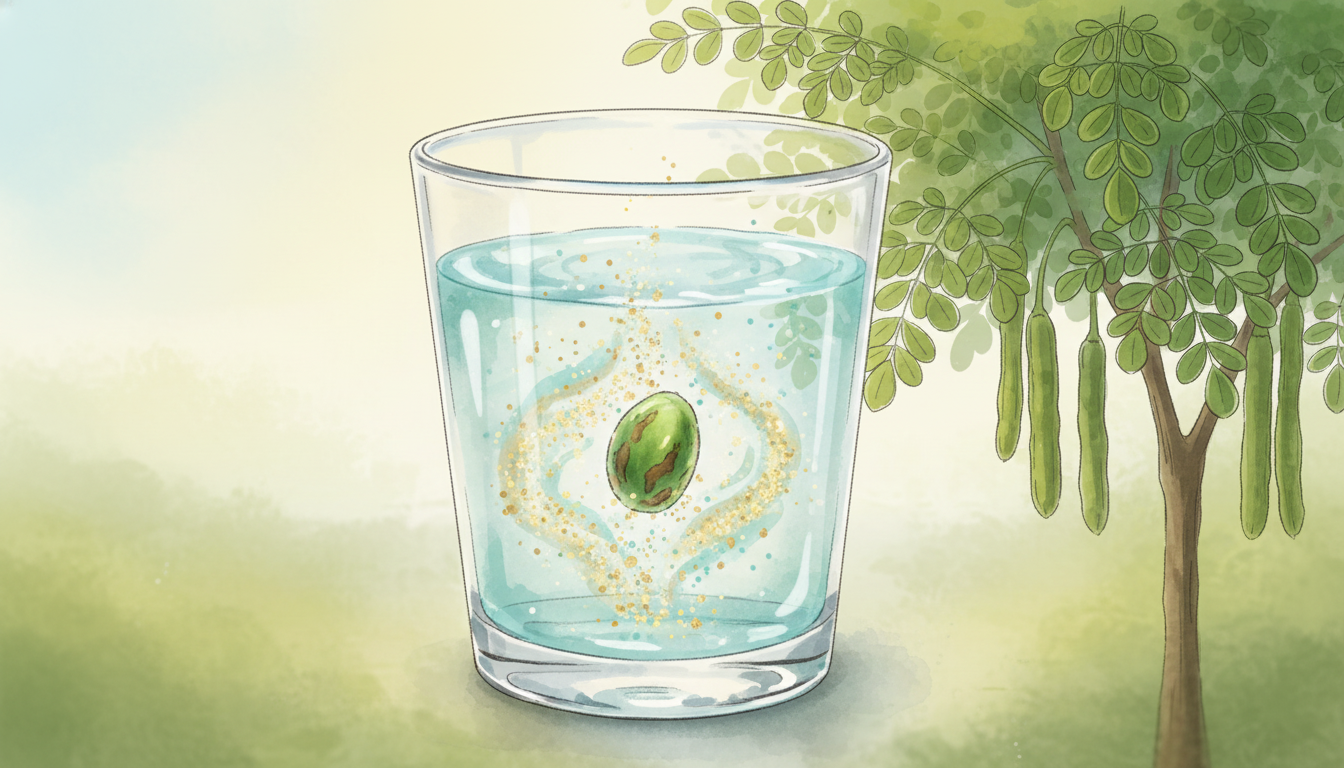
You ever just stare into a clear glass of tap water and wonder what *else* might be in there? I do, more and more these days, especially with all the talk about microplastics. It’s a genuinely baffling problem, isn’t it? These invisible bits of plastic are everywhere – from the deepest oceans to, well, our own bodies. They’ve been found in every single human organ examined, even in the brain and placenta. Pretty sobering, if you ask me. We’re talking about potentially consuming the equivalent of ten credit cards worth of plastic every year, just from water and air. And while the full health implications are still being unraveled, we know plastics can mess with our hormones. Not exactly a comforting thought.
But here’s a little glimmer of hope that genuinely brightened my week. Turns out, a tree that’s been revered for its medicinal properties for thousands of years – the Moringa tree, sometimes called ‘the Miracle Tree’ – might just hold a key to cleaning up our water. Dr. Adriano Gonçalves dos Reis, a professor at São Paulo State University, has been digging into this, and what he and his team found is, frankly, gobsmacking.
They discovered that the humble Moringa seed can filter a staggering 98.5% of microplastic particles from water. We’re talking about PVC, one of the nastiest offenders! This isn’t some wild lab experiment, either; they mimicked how municipal water treatment facilities work. And get this: the Moringa seeds performed *as effectively* as aluminum sulfate, which is the current synthetic standard. The kicker? Aluminum is a toxic heavy metal, linked to neurological disorders, whereas Moringa is, you know, a plant. A natural, organic solution that even works better than alum in more alkaline water. It’s like nature just quietly whispered, ‘Hey, I got this.’
Now, it’s true, one tiny seed can treat about ten liters of water, so we’d need a *lot* of seeds for urban centers, and it would create organic waste. But compare that to the toxic sludge aluminum sulfate produces, and the environmental cost of mining aluminum. Dr. Gonçalves dos Reis sees this as a huge win for smaller, rural communities, especially in the tropics where Moringa is already cultivated for food and medicine. Imagine, leveraging a crop you already grow to clean your drinking water! It’s a beautifully simple, elegant solution, isn’t it?
The 508 Takeaway
This story, for me, really underscores the quiet wisdom of the natural world. It reminds us that often, the most profound solutions aren’t complex, high-tech marvels, but rather simple, elegant gifts from nature right under our noses. It’s a call to mindfulness – to pay attention to the resources around us, to appreciate their inherent power, and to consider the kinder, more sustainable paths forward. Finding joy in everyday moments, sometimes, means finding joy in the ingenuity of a tiny seed doing monumental work, cleaning up our world. It’s a hopeful thought, a little spark of optimism in a world that often feels overwhelmed.
This story was originally reported by Andy Corbley. You can read the full original article here.