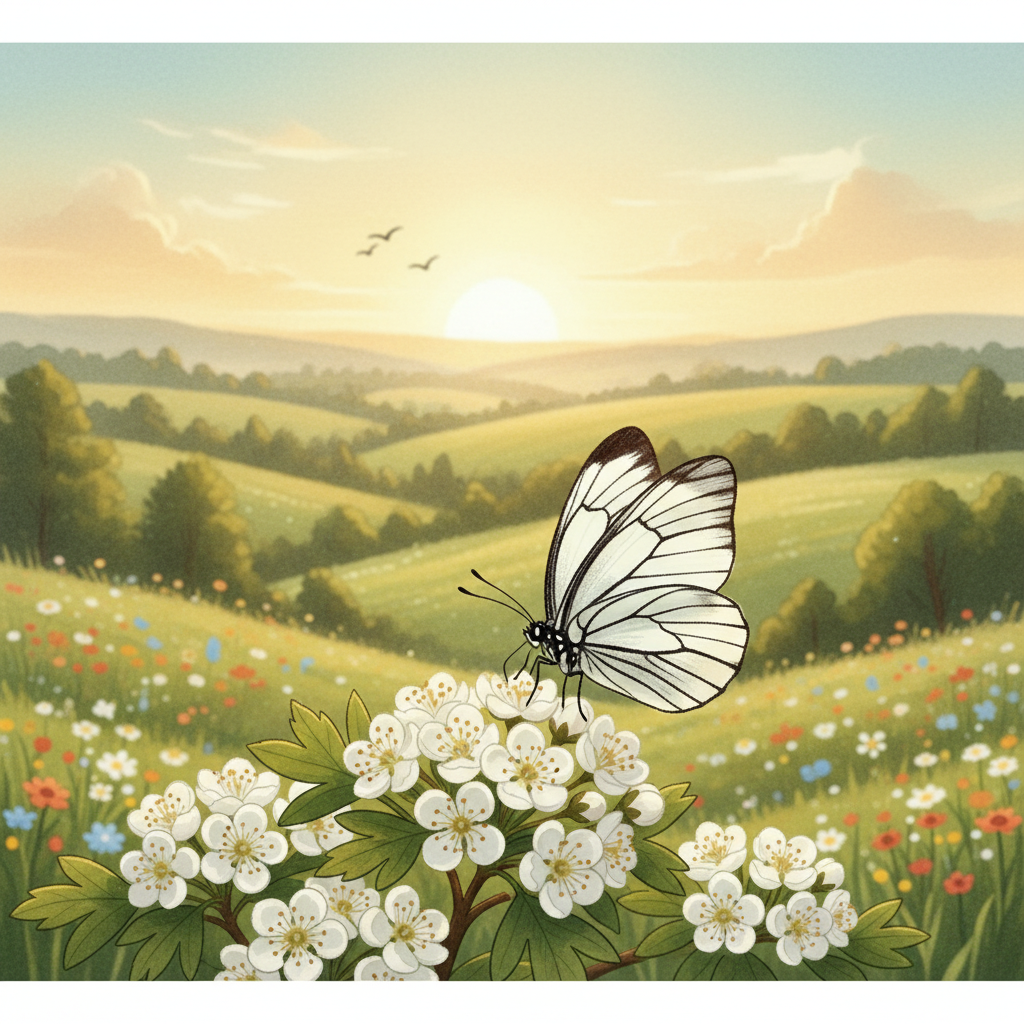
You know those moments when a small, almost insignificant detail just… *lands*? Like a feather settling on your palm, and suddenly, you’re seeing the whole world a little differently. That happened to me this week. I was scrolling through the news, probably half-distracted by the kettle whistling, when a headline about butterflies, specifically one that went extinct in Britain a whole century ago, just stopped me cold. A *black-veined white butterfly*, imagine that. Gone since the early 20th century, vanished from the UK landscape because, well, we humans messed with its home, as we so often do.
But here’s the truly astonishing bit: it’s coming back. Thanks to some utterly dedicated folks at the Knepp Wildland Foundation, these beautiful creatures are being reintroduced to the Knepp Estate in West Sussex. Now, if you haven’t heard of Knepp, it’s a proper marvel. It used to be a struggling ancestral farm, but the owner, Isabella Tree and Charlie Burrell, had this brilliant, brave idea: let nature take over. They rewilded the whole estate, turning it into this incredible, vibrant mosaic of wooded grasslands that now absolutely *teems* with life. Nightingales, purple emperor butterflies, you name it. It’s truly, truly inspiring.
So, these tiny black-veined white butterfly larvae, they were flown over from continental Europe in special containers, given a cozy spot to overwinter, and are now, apparently, thriving on hawthorn and blackthorn shrubs. Can you even believe it? After a hundred years! They did all the homework too, climate studies and everything, to make sure this wasn’t just a hopeful whim, but a real, viable return. Previous attempts had actually failed, which makes this success all the more poignant. It’s a testament to patience, to careful planning, and to the sheer resilience of nature when given half a chance. And if all goes well, they’re hoping to connect this new population to ancestral spots like Devon down the line. It just feels… profound, doesn’t it?
This story, for me, it’s more than just about a butterfly, though those little wings are a wonder unto themselves. It’s about the profound power of giving things a second chance, of recognizing what was lost and then, with deliberate kindness and effort, helping it find its way back home. Think about it: a species, vanished for a lifetime, now fluttering back into existence, one tiny, hopeful larval stage at a time. It reminds us that even when things seem gone for good, when habitats are lost or spirits are dim, there’s always, always room for restoration. For rewilding, not just our landscapes, but perhaps even parts of ourselves we thought were long past saving. It’s a gentle whisper that says, ‘Don’t give up on the comeback story.’
The 508 Takeaway
This little butterfly’s incredible journey back from extinction offers such a beautiful lesson for our own lives, doesn’t it? It’s a vivid reminder that mindfulness isn’t just about noticing the present moment, but also about mindfully *nurturing* what’s around us, and within us. We all have those ‘extinct’ parts of ourselves – perhaps a forgotten passion, a neglected friendship, or a sense of inner peace we misplaced somewhere along the way. The Knepp Estate didn’t just passively hope; they actively created the conditions for life to thrive again. What ‘habitats’ in our own lives, or in our communities, could we rewild with a little more kindness, a little more patience, a little more intentional effort? Let this butterfly be a symbol of hope: that with gentle care and persistent belief, even the most deeply lost things can unfurl their wings and find their way home.
This story was originally reported by Andy Corbley. You can read the full original article here.