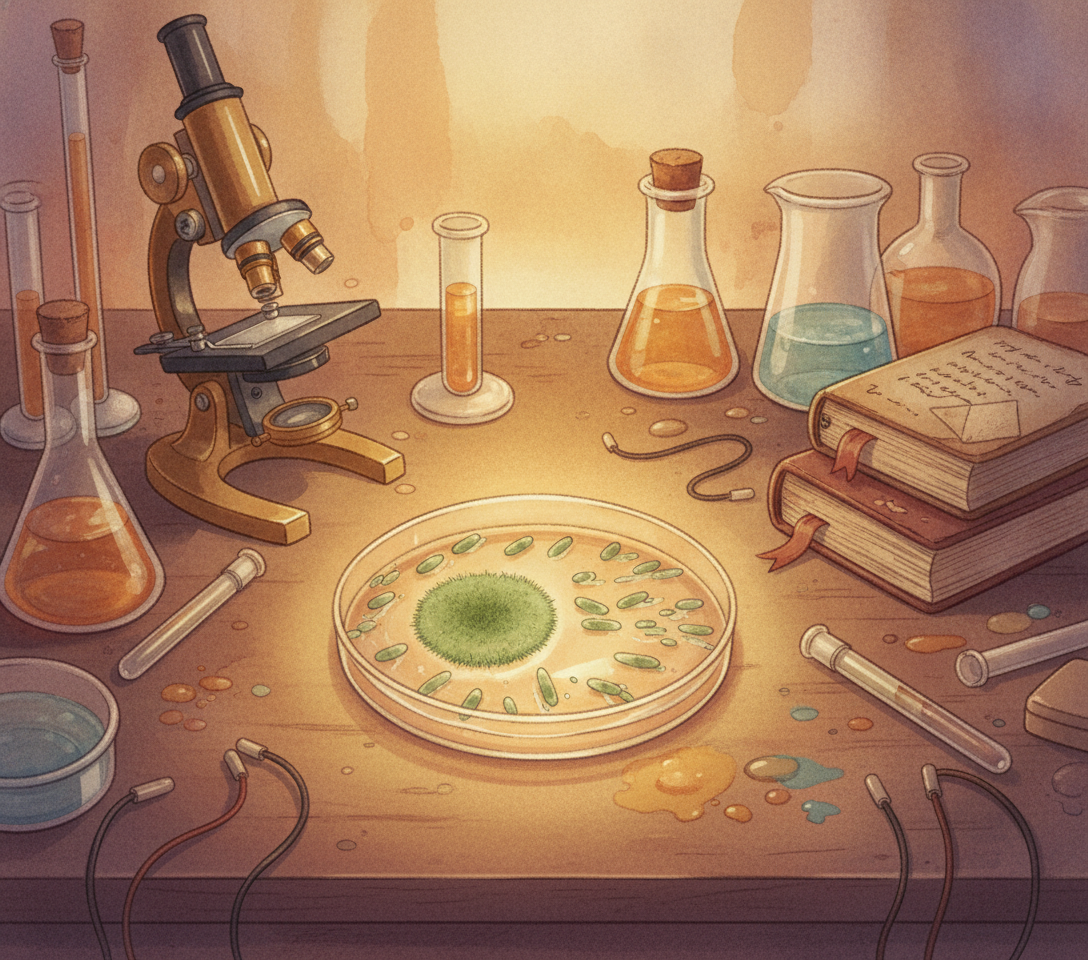
You know those mornings, right? The ones where you finally get back to your desk after a bit of a break, and it’s just… a glorious disaster. Papers piled sky-high, coffee rings multiplying like some strange scientific experiment, maybe a forgotten snack wrapper or two. Well, imagine that, but in a 1928 laboratory, belonging to a Scottish physician named Sir Alexander Fleming. He’d just returned from vacation, and his lab, bless its heart, was a genuine mess. Petri dishes, half-forgotten, sat around, probably looking a bit sad and neglected, awaiting their fate.
Now, most of us, we’d just sigh, maybe even roll our eyes a bit, and get straight to tidying up, wouldn’t we? But Fleming? He paused. He noticed something truly peculiar in one of those abandoned dishes. A mold, you see, had started growing right there, and here’s the absolute kicker: it was actively, almost aggressively, killing the staphylococci bacteria he’d been cultivating. “That’s funny!” he apparently remarked. Simple words, really, for a moment that would literally, irrevocably, change the course of human history. Can you even fathom it?
This wasn’t just some random doodle in a notebook; this was penicillin, the world’s first antibiotic. Think about it for a second: during World War I, Fleming had watched countless soldiers die from infected wounds, a truly heartbreaking reality that fueled his relentless search. He was yearning for a way to fight these invisible killers, these insidious microscopic foes. And then, there it was, not in a grand, meticulously planned experiment, not under perfect conditions, but in a slightly untidy dish, a quiet, unexpected gift from the universe. His initial findings, published the following year in a scientific journal, didn’t exactly set the world on fire right away – funny how truly groundbreaking things sometimes need a moment to sink in, isn’t it? But eventually, oh, it did. It kick-started a medical revolution, saving millions, maybe even billions, of lives since. What an absolutely incredible thought, isn’t it?
The 508 Takeaway
Fleming’s story, for me anyway, isn’t just about science; it’s a powerful whisper about how we navigate our own lives. How often do we rush past the “funny” little anomalies, the unexpected detours, or even the slight imperfections in our everyday? We’re so focused on the grand plan, the perfectly clean desk, that we might miss the quiet miracle unfolding right beside us. This, I think, is where mindfulness truly shines. It’s about cultivating that gentle curiosity, that willingness to pause, to really *see* what’s happening, even in a mess. Because sometimes, the most profound acts of kindness – whether it’s a world-changing discovery or just a simple moment of connection – aren’t found on the well-trodden path. They emerge from the beautiful, unpredictable chaos of being truly present. And that, my friends, is a kind of joy worth seeking.
This story was originally reported by Good News Network. You can read the full original article here.