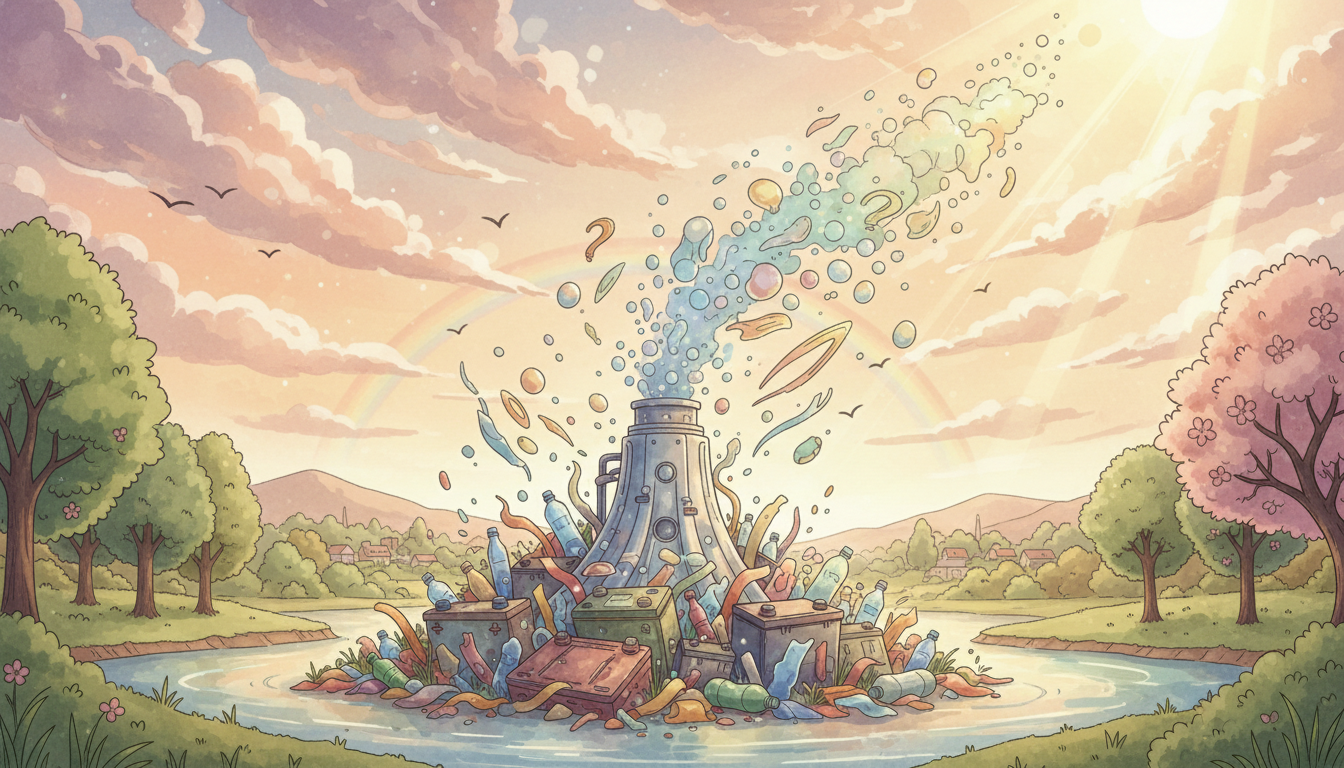
You know those clunky, spent car batteries? The ones we all just… well, dispose of? And then, over there, mountains of plastic waste — the drink bottles, the nylon gear, the foam packaging that feels impossible to truly get rid of. Now, what if I told you that a brilliant, persistent bunch of folks at the University of Cambridge found a way to use the acid from those old batteries to transform some of our toughest plastic trash into clean hydrogen fuel and valuable industrial chemicals? I know, right? My jaw dropped a little too.
Turns out, sometimes the best breakthroughs happen when you’re not even looking for them. Professor Erwin Reisner and his team, alongside PhD candidate Kay Kwarteng, were tinkering with solar-powered reactors, trying to find better ways to recycle. And in an “almost accidental” discovery, as Professor Reisner put it, they stumbled upon a photocatalyst robust enough to withstand highly corrosive acid. For ages, scientists thought acid was a no-go in these systems; it’d just dissolve everything. But this one? It didn’t. Suddenly, a whole new world of possibilities, like using the very acid from those discarded car batteries, burst open.
Think about it: global plastic production is absolutely staggering, over 400 million tonnes a year, and only a tiny fraction, maybe 18%, actually gets recycled. The rest? Landfills, incinerators, or, sadly, our precious ecosystems. This new method, which they’ve dubbed ‘acid photoreforming,’ uses sunlight to power the whole shebang. First, the waste plastic gets a bath in battery acid, breaking it down. Then, the special photocatalyst, hit by the sun’s energy, spins those broken-down bits into hydrogen and acetic acid – yeah, like the main ingredient in vinegar! It’s a real win-win, using one waste stream to tackle another, creating something genuinely useful in the process. And get this, in lab tests, it hummed along for over 260 hours without so much as a hiccup in performance, tackling plastics even beyond the usual suspects like PET. It’s a pretty neat trick, if you ask me.
The 508 Takeaway
This discovery, this elegant solution to two massive problems at once, really makes you pause, doesn’t it? It’s a powerful reminder that even in what we deem ‘waste’ or ‘spent,’ there’s often untapped potential, a hidden resource waiting to be seen differently. For our ‘508 Life’ approach, this translates beautifully into mindfulness. How often do we rush to discard ideas, situations, or even parts of ourselves because they seem ‘used up’ or ‘too difficult’? This story encourages us to look closer, to consider the unexpected connections, and to believe in the transformative power of ingenuity and a fresh perspective. It’s about finding the inherent value, the future possibility, even in the most overlooked corners of our world – and our lives. What seemingly ‘wasteful’ part of your day or mind could be a resource in disguise?
This story was originally reported by Andy Corbley. You can read the full original article here.